Skip to main content Skip to footer
Written and technically reviewed by Steven Watt, NICEIC Approved Contractor enrolment 620239. Last reviewed 13 September 2026.
The appliances that use the most electricity are normally those that create heat or run for long periods. Electric showers, immersion heaters, tumble dryers, ovens, portable heaters and electric vehicle chargers have high power ratings. Fridges and freezers use less power at any one moment, but they cycle throughout the year. The real cost depends on the appliance, programme, temperature, duration and your electricity tariff.
This guide shows how to calculate electricity consumption by appliance without pretending that every kettle, television or washing machine uses the same amount. The figures below are realistic working ranges for household estimates. For an exact answer, use the wattage plate, the product’s energy label, a smart plug suitable for the load, or direct measurement by a competent electrician.
Every example cost in this article uses an illustrative electricity rate of 25 pence per kilowatt hour, including VAT. That is a calculation rate, not a claim about the tariff you pay. Replace 25 pence with the unit rate shown on your own bill. Standing charges are excluded because they are payable regardless of which appliance is used.
Quick answer which appliances use the most electricity
| Appliance | Typical input or energy use | Example use | Cost at 25p per kWh |
|---|---|---|---|
| Electric shower | 7.5 to 10.5 kW | 10 minutes | 31p to 44p |
| Immersion heater | Usually about 3 kW | 1 hour while heating | About 75p |
| Portable electric heater | 1 to 3 kW | 1 hour at full output | 25p to 75p |
| Electric oven | Often 2 to 3.5 kW rated input | 1 hour, thermostat cycling | Usually less than rating multiplied by one hour |
| Tumble dryer | Label gives kWh per 100 cycles | One programme | Read label and divide by 100 |
| EV home charger | Up to about 7.4 kW single phase | Add 20 kWh to battery | About £5.00 plus charging losses |
| Kettle | About 2 to 3 kW | Boil only the water needed | Usually a few pence |
| Fridge freezer | Label gives annual kWh | One year | Annual label kWh multiplied by £0.25 |
A power rating is not the same as energy consumption. A 3 kW kettle used for three minutes consumes about 0.15 kWh. A 100 W device left on continuously consumes 2.4 kWh in a day. Time can matter more than the number printed in watts.
How to calculate an appliance running cost
Use this calculation: power in kilowatts multiplied by time in hours equals energy in kilowatt hours. Multiply the kilowatt hours by your electricity unit rate to find the cost.
Power in kW × time in hours = energy in kWh
Energy in kWh × unit rate in pounds = running cost
To convert watts to kilowatts, divide by 1,000. A 2,000 W heater is 2 kW. If it runs continuously for two hours, it uses 4 kWh. At 25 pence per kWh, the example cost is £1.00.
For appliances controlled by a thermostat, inverter, sensor or variable speed motor, this calculation gives the maximum only if the appliance draws its full rated input for the whole period. Real consumption is often lower. Cycle energy from an energy label or an energy monitor is usually a better basis.
Why electricity figures online often disagree
Two websites can publish different figures without either calculation being fraudulent. They may be using different appliance models, programme temperatures, cycle lengths, electricity prices or assumptions about daily use. One may quote rated input in watts while another quotes measured energy per cycle in kilowatt hours.
Modern energy labels help, but the unit depends on the product. Washing machines and dishwashers commonly show kWh per 100 eco cycles. Refrigerating appliances show annual kWh. Televisions and electronic displays use kWh per 1,000 hours. Tumble dryer labelling and test conventions depend on the label applicable to the model and market.
The UK Government’s energy label service defines dishwasher energy consumption as kWh per 100 eco cycles. This is why dividing the label figure by 100 gives a sound estimate for one tested eco cycle. Actual consumption can still vary when a different programme, load or temperature is selected.
Kitchen appliance electricity use
| Appliance | Typical rated input | Useful calculation method | What changes actual use |
|---|---|---|---|
| Kettle | 2 to 3 kW | Rated kW × boiling time | Water volume, starting temperature, scale and automatic cut off |
| Toaster | 0.8 to 1.8 kW | Rated kW × minutes used | Slot count, browning time and repeated batches |
| Microwave | Input often 1 to 1.6 kW | Use input rating, not advertised cooking output | Power level, duration and standby display |
| Electric oven | Often 2 to 3.5 kW | Use measured kWh or manufacturer programme data | Preheating, thermostat cycling, temperature and door opening |
| Induction hob zone | Often 1.4 to 3.7 kW | Power setting × time, allowing for cycling | Pan size, boost setting and food quantity |
| Air fryer | About 1.2 to 2.2 kW | Rated kW × cooking time as an upper estimate | Capacity, temperature, preheat and batch count |
| Dishwasher | Use label kWh per 100 cycles | Label kWh ÷ 100 × your rate | Eco or intensive programme, load and water heating |
| Extractor fan | Roughly 20 to 250 W | Rating × operating time | Fan speed, lighting and motor design |
Kettle running cost
A 3 kW kettle running for three minutes uses about 0.15 kWh because three minutes is 0.05 hours. At 25 pence per kWh, that costs about 3.75 pence. A smaller quantity usually boils faster, so filling only what you need is more meaningful than comparing wattage alone.
Air fryer compared with an oven
An air fryer is not automatically cheaper for every meal. It often uses less energy for a small portion because the heated space is smaller and cooking time may be shorter. A full size oven can be more practical when cooking several items together. Compare total kWh for the complete meal, including repeated air fryer batches and oven preheating.
Microwave input and output
A microwave described as 900 W may have a higher electrical input, perhaps around 1.4 kW. The 900 W figure can describe cooking output. Running cost calculations should use electrical input from the rating plate or manual, not the cooking power printed prominently on the front.
Laundry appliance electricity use
| Appliance | Best source for consumption | Typical pattern | Best way to reduce use |
|---|---|---|---|
| Washing machine | Energy label kWh per 100 eco cycles | Most energy heats the water | Wash full loads at a suitable lower temperature where fabric and hygiene needs allow |
| Heat pump tumble dryer | Product label or measured cycle kWh | Longer cycles with lower energy use than many conventional dryers | Use sensor drying, clean filters and avoid overdrying |
| Condenser or vented dryer | Product data or measured cycle kWh | Electric resistance heating can use substantial energy | Dry outdoors where practical and use a high spin speed first |
| Washer dryer | Separate wash and wash and dry label figures | Drying capacity may be lower than washing capacity | Check both label figures and avoid assuming one full wash equals one full dry load |
| Iron | About 1 to 3 kW rated, but thermostat cycles | High input for short periods | Iron batches together and stop when finished |
For a washing machine labelled 47 kWh per 100 eco cycles, one labelled eco cycle is 0.47 kWh. At the example rate of 25 pence per kWh, that is 11.75 pence for electricity. Water, detergent and standing charges are not included. Other programmes can use a different amount, particularly hotter or shorter programmes.
Dryer comparisons must be model specific. Heat pump dryers generally reuse heat and can consume much less electricity than resistance heated designs, but programme length, load moisture and maintenance affect the result. The label is more reliable than a universal internet average.
Fridges and freezers
Fridges and freezers cycle on and off, so multiplying the compressor’s wattage by 8,760 hours gives a misleading annual figure. Use the energy label’s annual kWh. If a fridge freezer is labelled 200 kWh per year, the example annual electricity cost at 25 pence per kWh is £50.
Room temperature, ventilation, door opening, thermostat setting, damaged seals, ice build up and the appliance’s age affect real consumption. Keep ventilation spaces clear and check that doors seal properly. Do not set the appliance colder than needed.
A plug in energy monitor can measure many domestic refrigeration appliances, but it must be suitable for the plug and load. Measure over several days rather than a few minutes because compressor and defrost cycles vary.
Home entertainment and office equipment
| Equipment | Typical range while operating | Annual example | Important limitation |
|---|---|---|---|
| LED television | About 40 to 200 W | 100 W for 4 hours daily = 146 kWh, or £36.50 at 25p | Screen size, brightness, picture mode and HDR affect demand |
| Desktop computer | About 60 to 500 W or more | 200 W for 5 hours daily = 365 kWh, or £91.25 | Gaming and workstation loads can vary greatly |
| Laptop | About 20 to 100 W while charging or working | 50 W for 5 hours daily = 91.25 kWh, or £22.81 | Power falls when the battery is charged or the device sleeps |
| Games console | Roughly 50 to 220 W during play | 150 W for 2 hours daily = 109.5 kWh, or £27.38 | Game, model and power mode matter |
| Wi Fi router | Often about 5 to 20 W | 10 W continuously = 87.6 kWh, or £21.90 | Check the adapter or measure the complete setup |
| Monitor | About 15 to 100 W | 30 W for 8 hours on 250 days = 60 kWh, or £15 | Size, brightness and technology vary |
These ranges are deliberately broad. A compact office computer and a high end gaming system do not belong under one fixed number. Power management settings, automatic sleep and switching displays off during long breaks can reduce wasted hours without affecting useful work.
Heating and hot water
Direct electric heating converts electricity to heat at the point of use, but that does not mean every heating system has the same running cost. A 2 kW panel heater drawing full power for one hour uses 2 kWh and costs 50 pence at the example rate. Once the thermostat reaches temperature, it may cycle and use less than 2 kWh in the next hour.
An immersion heater is commonly rated around 3 kW. One hour of continuous heating would therefore use about 3 kWh and cost 75 pence at 25 pence per kWh. The thermostat will stop heating when the cylinder reaches temperature. Heat loss, cylinder size, water temperature and the amount of hot water used determine how long it runs.
An electric shower is a high power appliance. A 9.5 kW shower used for ten minutes consumes about 1.58 kWh, costing about 40 pence at the example rate. The water cost is separate. Shorter showers save both energy and water, while the exact electrical input is shown on the shower rating plate.
Heat pumps need a different calculation
A heat pump moves heat rather than producing all of it through resistance heating. Its electrical input varies with outdoor temperature, flow temperature, system design and controls. Heat output should not be confused with electrical input. Seasonal performance data and measured electricity use provide a better cost estimate than the headline heating capacity.
Electric vehicle charging
A typical single phase home charge point can supply up to about 7.4 kW, but charger power alone does not tell you the cost of a charging session. The simplest estimate uses energy added to the battery. Adding 20 kWh at 25 pence per kWh costs £5.00 before charging losses. The electricity drawn from the meter will be somewhat higher than the increase stored in the battery because the vehicle and charging system are not lossless.
The car may reduce charging power because of battery temperature, state of charge, load management or its onboard charger limit. A 7.4 kW charge point therefore does not guarantee that every vehicle draws 7.4 kW continuously.
Time of use tariffs can reduce cost when charging is scheduled in cheaper periods. Compare the complete tariff, including peak rate and standing charge. A low overnight rate may not save money if it makes the electricity used during the rest of the day substantially more expensive.
Standby electricity use
Standby power is the electricity used when equipment is waiting, connected to a network, displaying a clock or ready for remote control. One modern appliance may use very little, but multiple devices running continuously can add up. Some equipment cannot be switched off routinely because it provides refrigeration, security, internet, medical support or scheduled updates.
To estimate annual standby energy, multiply watts by 8.76. One watt used continuously for a year is approximately 8.76 kWh. At 25 pence per kWh, that is about £2.19 a year. Ten watts continuously is about 87.6 kWh and £21.90.
Measure before buying remote switches or replacing equipment solely to eliminate standby use. Smart plugs also consume electricity, and automatic disconnection may interfere with recordings, alarms, updates or manufacturer requirements.
How to measure your own appliances accurately
Read the energy label
Use the exact model’s label and product information sheet. Note whether the figure is annual kWh, kWh per 100 cycles or kWh per 1,000 hours. Do not compare two products until the units and test basis match.
Check the rating plate
The rating plate shows electrical input or current, but it may represent maximum demand rather than average use. It is useful for fixed output equipment and for safety checks, but less accurate for thermostatically controlled or variable appliances.
Use a suitable plug in monitor
A plug in monitor measures energy at the socket and is helpful for fridges, televisions, computers and many portable appliances. Check its current and power limits. Do not use it for hardwired appliances, electric showers, cookers, EV chargers or equipment beyond its rating.
Use smart meter data carefully
An in home display shows whole house demand, not necessarily one appliance. Switching a distinct load on and off can reveal an approximate change, but fridges, heaters and other equipment may cycle at the same time. Supplier apps can be useful for daily patterns but may not provide sufficiently detailed data for individual appliances.
Ask an electrician about fixed loads
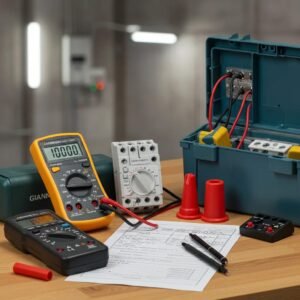
A competent electrician can measure current or energy safely where plug in monitoring is unsuitable. This is useful when checking immersion heaters, showers, heating circuits, EV chargers or unexplained background demand. Electrical testing may also be needed if consumption has risen because equipment is faulty.
Signs high consumption may indicate a fault
- An immersion heater runs continuously or hot water is excessively hot.
- A fridge or freezer runs almost constantly, has damaged seals or heavy ice build up.
- Electric heating remains on despite the thermostat setting.
- An appliance becomes unusually hot, smells of burning, buzzes or repeatedly trips a protective device.
- Smart meter demand remains high after normal large loads have been switched off.
- A bill rises sharply without a matching change in tariff, occupancy, weather or appliance use.
High electricity use alone does not prove an electrical fault. Billing periods, estimated meter readings, tariff changes, seasonal heating and new household routines must also be checked. Burning smells, scorching, electric shocks or repeated tripping require urgent electrical attention regardless of the bill.
The most effective ways to reduce appliance electricity use
- Use the energy label to compare exact models and comparable units.
- Run washing machines and dishwashers with full, suitable loads.
- Choose an appropriate lower temperature wash where hygiene and fabric care allow.
- Avoid overfilling the kettle.
- Use thermostat and timer controls correctly rather than heating empty rooms.
- Dry clothes outdoors where practical and avoid overdrying.
- Enable sleep settings on computers, consoles and displays.
- Keep fridge and freezer ventilation clear and maintain door seals.
- Move flexible loads to cheaper tariff periods only after comparing the full tariff.
- Measure unexplained demand before replacing appliances.
Frequently asked questions
How much does it cost to run a 1 kW appliance for one hour
It uses 1 kWh if it draws 1 kW continuously for the full hour. Multiply 1 kWh by your unit rate. At the illustrative rate of 25 pence per kWh, the cost is 25 pence.
Does a 2 kW heater cost twice as much as a 1 kW heater
While both draw continuously at full power, yes. The 2 kW heater uses twice the energy per hour. In real rooms, thermostats cycle and heat loss affects how long each heater operates, so total daily use may not follow the simple rating comparison.
Which appliance uses the most electricity in a house
It depends on the home. Direct electric space heating, water heating, showers and EV charging can dominate because of their power or duration. In homes heated by gas, laundry, cooking, refrigeration and entertainment equipment form a larger share of the electricity bill.
Does switching appliances off at the plug save money
It saves the standby energy that the device would otherwise use. The saving may be small for one efficient product and more meaningful across many devices. Do not switch off equipment that needs continuous power for safety, refrigeration, medical support, security or manufacturer required operation.
How much electricity does a washing machine use
Read the model’s energy label. If it states kWh per 100 eco cycles, divide by 100 for the tested energy per cycle. Other programmes and loads can produce different results.
How much electricity does a tumble dryer use
Use the exact model’s label or measure a full cycle. Dryer type, programme, load size, initial moisture and filter condition have too much influence for one universal figure to be accurate.
How much electricity does a fridge use
Use annual kWh from the exact model’s energy label. A short wattage reading is misleading because the compressor and defrost system cycle. Room temperature and ventilation also affect real use.
Are watts or kilowatt hours shown on my bill
Electricity bills charge for kilowatt hours. Watts and kilowatts describe power at a moment in time. Kilowatt hours describe energy used over time.
Can a smart meter tell which appliance is using electricity
A standard in home display mainly shows total household demand. It may reveal a large load when that appliance switches on, but it does not always identify devices separately. Some third party monitoring systems estimate individual loads, with varying accuracy.
Can solar panels make appliance use free
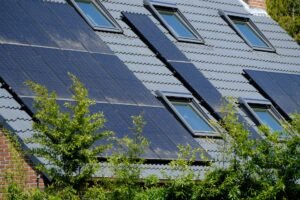
An appliance can use electricity being generated on site, but this electricity still has value because it could otherwise charge a battery or be exported. Solar output changes with daylight and weather. Scheduling flexible loads during surplus generation can reduce imported electricity.
Electricity monitoring in Aberdeen and Aberdeenshire
Faithful Spark Electricians helps homeowners and businesses investigate unexplained consumption, test fixed electrical loads and plan circuits for electric heating, EV charging, solar PV and battery storage. We work across Aberdeen, Peterhead, Ellon, Fraserburgh, Mintlaw, Balmedie, Westhill and the surrounding North East.
If your electricity use has changed suddenly, begin with actual meter readings, tariff details and a list of new or heavily used appliances. If the figures still do not make sense, or if equipment is overheating or tripping, call 07304 027013 or request a written quote through faithfulsparkelectricians.co.uk.
About the author
Steven Watt is the founder of Faithful Spark Electricians, an NICEIC Approved Contractor based in Peterhead and working across Aberdeen, Aberdeenshire and the wider North East of Scotland. He holds City and Guilds 2391-52 in inspection and testing, 2382-22 in the BS 7671 wiring regulations, 2365-03 in electrical installations and 2921-34 in electric vehicle charging installation, plus an HNC in Engineering Systems. Faithful Spark Electricians Ltd is TrustMark registered (licence 4205123), an OZEV approved installer (EVHS/WCS14254), an Aico Gold Standard installer and an Aberdeen Trusted Trader.
Faithful Spark Electricians | NICEIC Approved Contractor | Peterhead, Aberdeen and Aberdeenshire