Skip to main content Skip to footer
EICR in Fraserburgh: What Landlords and Homeowners Need to Know
If you own or rent out a property in Fraserburgh, you have probably come across the term EICR. It stands for Electrical Installation Condition Report, and it is the formal check that tells you whether the electrics in a building are safe. This guide explains what an EICR actually involves, why Fraserburgh’s housing stock throws up some specific issues, what the report costs, and how to make sense of the result once it lands in your inbox.
This is not a sales pitch. It is a plain English explanation written for people in AB43 who want to understand the process before they book anything. If you do want to arrange an inspection once you have read this, our EICR Fraserburgh service page has current pricing and availability.
What an EICR actually is
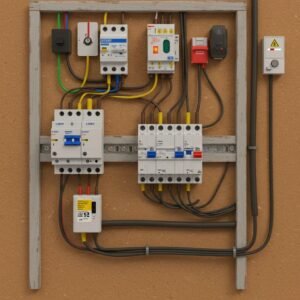
An EICR is an inspection of the fixed electrical installation in a property. That means the consumer unit, the wiring buried in the walls and floors, the sockets, the switches, the lighting circuits, and the earthing and bonding arrangements. It does not cover portable appliances like kettles or lamps, which is a separate check called PAT testing.
A qualified inspector tests each circuit using calibrated instruments, checks the condition of every accessory they can safely access, and compares what they find against the current wiring regulations, BS 7671. At the end, the property is given an overall result of either Satisfactory or Unsatisfactory, and any problems found are recorded using a coding system explained below.
People also call this a periodic inspection, a fixed wire test, or a landlord safety certificate. They all mean the same document.
Why Fraserburgh’s older housing stock matters here
Fraserburgh has a mix of property types that each tend to throw up different EICR findings, and knowing which category your property falls into helps you understand what to expect before the inspector even arrives.
Granite terraces in the town centre
Streets like Saltoun Square, Broad Street, and Mid Street have a lot of pre 1970s granite stock. Many of these properties have been rewired at some point, but it is common to find rubber insulated cable still in service in older sections, along with fuse boards that have never been upgraded to include RCD protection. Missing main bonding to gas and water pipework is another frequent finding in this part of town, usually because a modern supply was fitted at some point without updating the earthing arrangements to match.
1960s and 1970s council era estates
Areas such as Kirkton, Broadsea, and Dalrymple were largely built in this period. The wiring itself has often been through at least one rewire cycle since, but the original consumer units in some properties still lack RCD protection on every circuit. Since March 2024, Scotland’s Repairing Standard requires RCD protection on every circuit in a rented property, so this is now one of the most common reasons a Fraserburgh rental fails its EICR.
Coastal cottages
Rosehearty, Sandhaven, and St Combs sit right on the coast, and salt laden air is genuinely harsh on electrical accessories. Earth terminals corrode faster here than inland, outdoor socket weatherproofing tends to fail earlier, and outbuilding supplies often show signs of moisture ingress. If your property is in one of these villages, do not be surprised if the inspector spends extra time on anything located outside.
Harbour front and industrial premises
Fraserburgh’s harbour, its retail units, and the Industrial Estate bring a different set of considerations entirely, largely around washdown environments and heavier plant. Commercial testing follows a different framework under the Electricity at Work Regulations 1989, and the inspection intervals are usually shorter than for a domestic property.
Who legally needs an EICR in Fraserburgh
Under the Housing (Scotland) Act 2006, every private landlord in Scotland must have a satisfactory EICR for each rental property, renewed at least every five years. This sits within the wider Repairing Standard, which sets out the minimum condition a rented home must meet. Aberdeenshire Council can request a copy at any time and can act through the First Tier Tribunal if a landlord cannot produce one. You can read the government’s own guidance on the Repairing Standard on gov.scot, and the underlying legal duty is set out in Section 19A of the Housing (Scotland) Act 2006 on legislation.gov.uk.
Homeowners are not legally required to get an EICR, but there are good practical reasons to have one anyway. A standard Home Report does not include electrical testing, so buying a property without one can mean you have no independent evidence of the condition of the wiring. Insurers increasingly ask about the age and condition of the electrical installation too, particularly after a claim.
If you want a deeper explanation of the certificate itself, our guide on what an EICR actually covers goes into more detail on the testing process, and our piece on the Housing (Scotland) Act 2006 and electrical safety unpacks the legislation further.
What happens during the inspection
A typical three bedroom Fraserburgh property takes somewhere between two and four hours to inspect properly. The inspector will need reasonably clear access to the consumer unit and to every room in the property, because sockets, switches, and light fittings all get checked individually.
The tests carried out include:
- Visual inspection of every accessory, the consumer unit, and visible cabling for damage, overheating, or incorrect installation.
- Insulation resistance testing, which checks that cable insulation has not degraded to the point where it could leak current.
- Continuity testing on protective conductors, to confirm the earthing path is intact throughout the property.
- Polarity checks, confirming live, neutral, and earth are wired the correct way round at every point.
- Earth fault loop impedance testing, which confirms a fault would be cleared quickly enough to protect against electric shock.
- RCD testing, checking that residual current devices trip within the correct time at the correct current.
Expect the power to be switched off briefly, circuit by circuit, during testing. It is worth warning tenants in advance if the property is occupied.
Understanding your results: the coding system
Every observation on an EICR is given a code. This is the part people usually want explained in plain terms, because the difference between a C2 and a C3 changes what you legally need to do next.
- C1, Danger present. There is an immediate risk to people. This might be exposed live parts or a serious fault. The installation, or the affected part of it, should not be used until it is made safe.
- C2, Potentially dangerous. Not an immediate danger, but a defect that could become one under certain conditions, such as a fault developing elsewhere. A missing RCD on a socket circuit is a common C2. Under the Repairing Standard, these must be fixed within 28 days for rented properties.
- C3, Improvement recommended. The installation is not unsafe, but it does not meet current best practice. An older but functioning fuse board is a typical example. A C3 alone does not fail the report.
- FI, Further investigation required. The inspector could not fully assess something within the scope of the visit, for example a circuit that was not safely accessible. This must be resolved for the report to be marked Satisfactory.
An EICR is Satisfactory when there are no C1, C2, or FI codes outstanding. C3 observations do not affect the overall result on their own. For a full breakdown with examples of each code, see our dedicated guide on EICR C1, C2, and C3 codes explained.
Common findings in Fraserburgh properties
Based on the pattern of results seen across AB43, the most frequent issues are:
- Missing or partial RCD protection, especially in pre 2000 consumer units around Kirkton, Broadsea, and Dalrymple.
- Corroded earth terminations in coastal properties near Rosehearty, Sandhaven, and St Combs.
- Failed weatherproofing on outdoor sockets and outbuilding supplies.
- Missing main bonding in older granite flats where a modern gas or water supply was fitted without updating the earthing.
- Old rewirable fuse boards that still work but no longer meet current guidance.
- Bathroom zone violations, where a socket or switch is positioned too close to a bath or shower.
For a wider look at what turns up across the region, not just Fraserburgh, read our article on the most common electrical issues found during EICRs.
What happens if your property fails
An Unsatisfactory result is not the end of the world, and it is a lot more common than people expect, particularly on older housing stock. The report will list exactly what needs fixing and against which code. For landlords, C1 and C2 items must be dealt with within 28 days under the Repairing Standard. Once the remedial work is done, a follow up visit or partial retest confirms the fix and updates the certificate.
A frequent trigger for a full Unsatisfactory result on older Fraserburgh properties is the consumer unit itself. If the board lacks RCD protection across all circuits, replacing it with a modern unit resolves the issue in one go rather than patching individual circuits. Under Amendment 4 of BS 7671, which becomes mandatory from October 2026, full RCBO protection on every circuit is the standard expected in new and upgraded installations, rather than a shared RCD covering half the board. Split load boards, where only some circuits sit behind an RCD, are increasingly seen as outdated for exactly this reason. If you are weighing up a replacement, our guide to consumer unit upgrades with full RCBO protection explains the difference in more detail, and NICEIC’s own guidance on Electrical Installation Condition Reports is a useful independent reference point.
How much does an EICR cost in Fraserburgh
Prices vary with the size of the property and the number of circuits to test. As a general guide, EICRs in Fraserburgh start from £150 for a one bedroom flat, rising for larger properties. Landlord EICRs, HMO inspections, and commercial fixed wire testing are priced separately because the scope and frequency differ. All figures quoted anywhere are starting prices for a straightforward job, not fixed fees, and a written quote should always be confirmed before work begins. Our EICR cost guide for Aberdeenshire breaks pricing down by property size and type in more detail, and the EICR Fraserburgh service page has current local pricing.
Landlords: staying ahead of the five year cycle
The five year rule sounds simple, but a surprising number of landlords miss it because the deadline for a portfolio of properties never lines up neatly. Keep a simple record of when each property’s last EICR was carried out and set a reminder well ahead of the five year mark rather than waiting for it to lapse. If you manage more than one property, ask whether inspections can be grouped together on the same visit, since most inspectors can offer a discount for block bookings and a single point of contact for the paperwork.
If you are new to letting property in Scotland, our guide on EICR requirements for landlords in Scotland covers the wider legal picture, and should I get my electrics tested is a useful starting point if you are still deciding whether an inspection is worthwhile for a property you occupy yourself.
Homeowners: is an EICR worth it if you are not renting out the property
There is no legal requirement for an owner occupied home, but there are several situations where getting one done makes sense regardless:
- Buying an older property, since a standard Home Report does not include electrical testing.
- Before a renovation, so you know the condition of the wiring before you start knocking down walls.
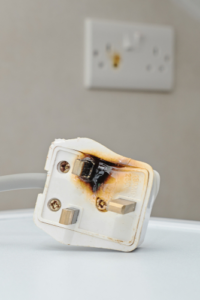
- After a claim or a near miss, such as a scorched socket or a fuse that keeps tripping.
- Simply as a health check if the property has not had one in ten years or more, which is the general recommendation for owner occupied homes.
Choosing who carries out the inspection
Not everyone offering EICRs is properly qualified to issue one. Look for an inspector who holds the City & Guilds 2391 and 2392 qualifications specifically for inspection and testing, and who operates under a recognised scheme such as NICEIC. The certificate should carry a registration number you can verify independently. Our guide on how to find a good electrician in Aberdeenshire covers the questions worth asking before you book anyone, and our comparison of SELECT versus NICEIC in Scotland explains the difference between the two main schemes if you are unsure what to look for.
Related reading
If you are also considering wider electrical work alongside your EICR, our guides on rewiring in Aberdeen and Aberdeenshire and electrical fault finding across Aberdeenshire cover related topics that often come up once an inspection has been carried out. Landlords managing HMO properties should also read our piece on EICR requirements for HMO properties, since licence renewal cycles can differ from the standard five year rule.
In summary
An EICR is a formal, tested assessment of your property’s fixed wiring, not a guess or a visual once over. In Fraserburgh, the age and location of your property tells you a lot about what an inspector is likely to find, whether that is a coastal cottage with corroded earth terminals or a granite town centre flat with missing bonding. Landlords have a clear legal duty to renew this every five years under the Repairing Standard, and homeowners benefit from the peace of mind even without a legal obligation. When you are ready to book, our EICR Fraserburgh page has current pricing and availability for AB43 and the surrounding villages.