
Most homeowners do not think about rewiring until something goes wrong. The wiring sits hidden in the walls and ceilings for decades, doing its job quietly until age, deterioration, or a developing fault forces the issue. By the time the problem becomes urgent, the safety and disruption picture is much harder to manage. This guide sets out 7 clear warning signs that your Scottish home may need rewiring, so you can act on them before they become urgent. Each sign is something you can check yourself or recognise in the day to day behaviour of your home.
1. Your home was wired before 1980
The age of the wiring is the strongest single indicator. Homes wired before 1980 typically have:
- Cable insulation that has aged for 45 years or more.
- Earthing arrangements that do not meet current standards.
- No RCD protection on socket or bathroom circuits.
- Rewireable fuse boards rather than modern circuit breakers.
- Insufficient circuit count for modern household demand.
Pre 1980 wiring is not necessarily dangerous in immediate terms, but it is well past its design life and lacks the protection features expected by current BS 7671 Wiring Regulations. A rewire is the route to bringing the installation up to current standards across all dimensions at once.
2. The cables visible at the consumer unit are fabric or rubber insulated
Open the consumer unit replacement Aberdeen cover (carefully, with the supply turned off if you can do so safely) and look at the cables entering the unit. Modern PVC insulated cables are smooth and grey or black. Older cables may show:
- Fabric or cotton braided outer covering, characteristic of pre 1960s wiring.
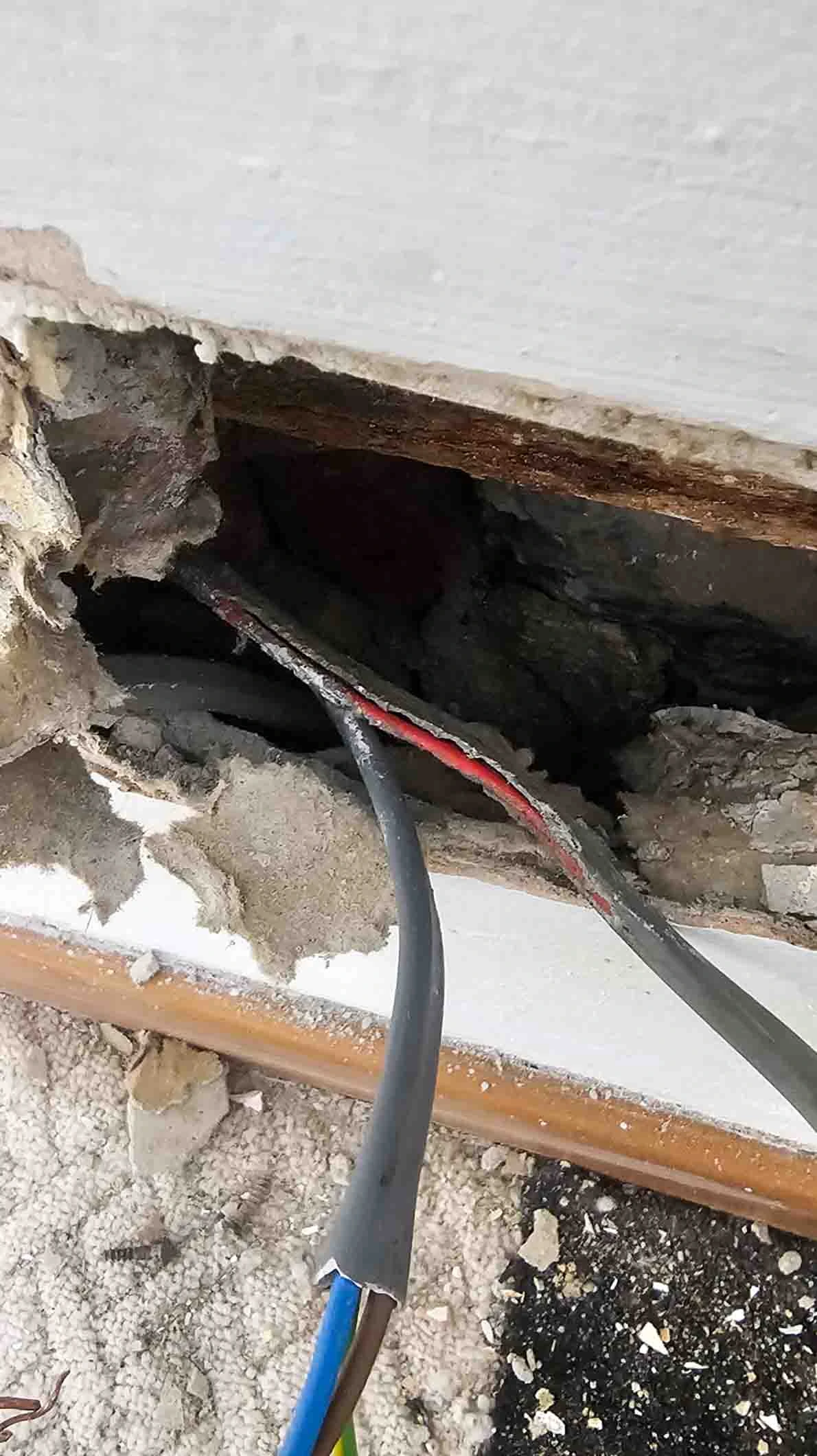
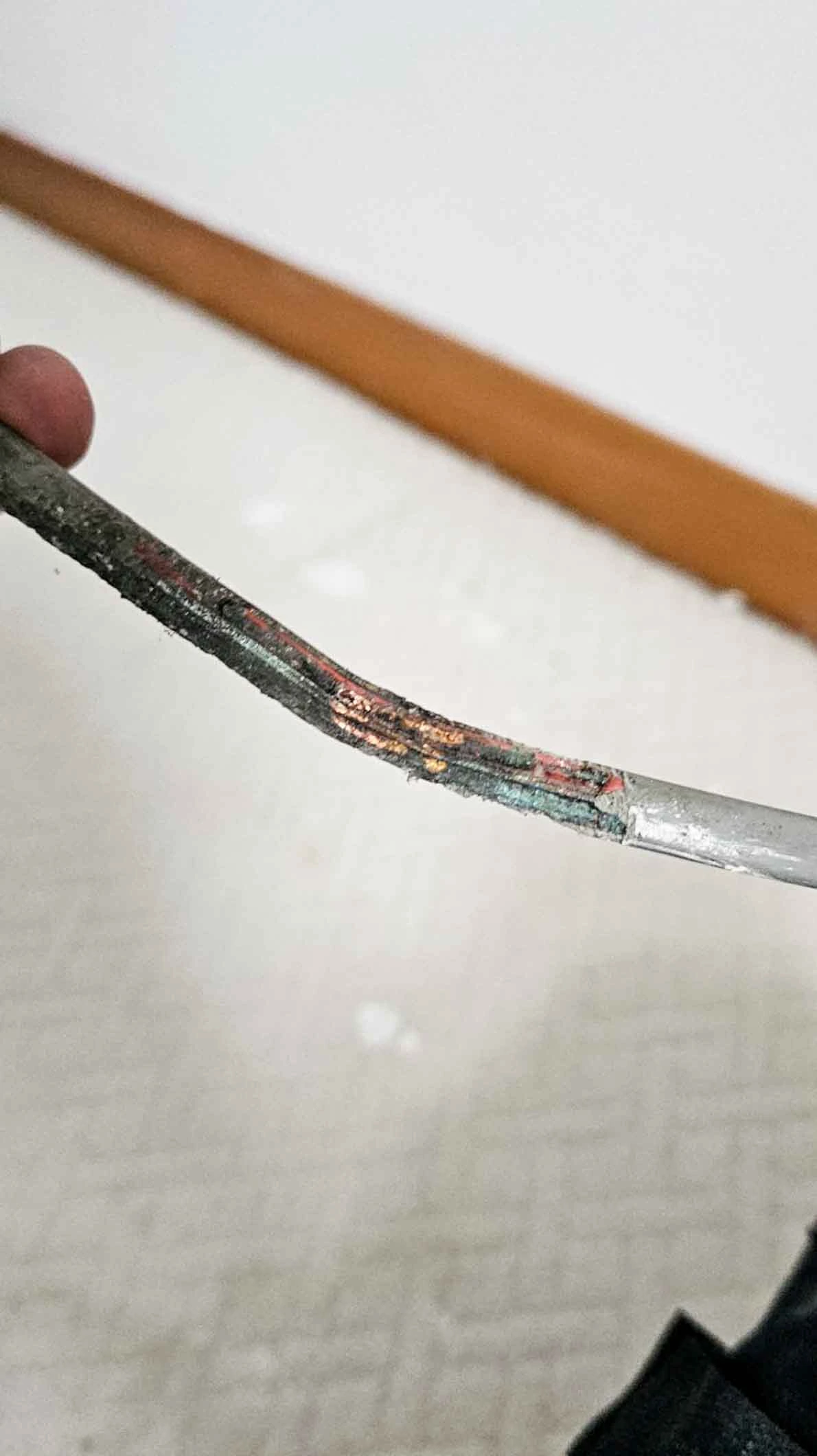
- Rubber insulation that has become brittle, cracked, or sticky to the touch.
- Discoloured or yellowed PVC, suggesting decades of heat exposure.
Any of these indicates wiring that has reached or exceeded its service life. A full house rewire Aberdeen is the right answer.
3. Frequent breaker or RCD trips without obvious cause
Modern protective devices trip when there is a real fault or overload. If your installation is tripping frequently without an obvious cause (no specific appliance involved, no clear pattern), the underlying issue may be:
- Cable insulation deterioration causing leakage to earth.
- Damaged cable sections inside walls or ceilings.
- Junctions that have developed over time as connections age.
- Circuits that are running close to their rated capacity due to load growth.
Where individual circuit issues can sometimes be resolved with targeted repair, multi circuit recurring trips often indicate broader wiring deterioration that warrants a rewire.
4. Visible scorching, discolouration, or evidence of overheating
Scorching at sockets, switches, or accessories indicates that something has been hot enough to damage the surrounding plastic. Common locations:
- Around the back of socket faceplates.
- At the cable entry to the consumer unit.
- At light fittings, particularly older brass or metal fittings.
- Visible through socket faceplate venting.
Localised overheating can sometimes be remedied with accessory replacement and connection tightening. Multiple locations of scorching suggest broader installation issues that point toward rewiring.
5. Your fuse board is rewireable rather than circuit breakers
A rewireable fuse board (white or grey ceramic holders containing replaceable wire) is a strong indicator that the rest of the installation is similarly aged. Rewireable boards were standard until the early 1980s. Properties that still have them typically have wiring of the same era throughout. The board replacement is part of the rewire rather than an alternative to it.
For more on the difference between rewireable boards and modern consumer units, see our companion guide on the full house rewire in Aberdeen.
6. Your EICR has identified multiple C2 issues
An EICR with several EICR C1 C2 C3 codess across different circuits indicates that the issues are not localised. A common pattern in older Scottish properties:
- C2: rewireable fuse board.
- C2: no RCD protection on socket circuits.
- C2: inadequate earthing.
- C2: damaged accessories at multiple locations.
- C2: cable insulation deterioration.
- C3: plastic consumer unit enclosure.
- C3: cable colour scheme from older era.
Addressing each item individually accumulates cost and disruption. A full rewire resolves all of them at once and produces a satisfactory follow up EICR. The threshold where a rewire becomes more cost effective than item by item remedial work is typically when the cumulative remedial estimate exceeds 50% of the rewire cost.
7. The installation cannot support modern loads
If you have tried to add new circuits for modern loads (an EV charger installation, a heat pump, an induction hob, an electric shower upgrade) and run into limits with the existing installation, a rewire may be the right response:
- The consumer unit has no spare ways and cannot easily be expanded.
- The existing earthing is inadequate for the new load’s protection requirements.
- The existing cabling is sized for older lighter loads and cannot carry the new circuit’s current.
- The supply itself is inadequate (typically a pre 1980 60A supply that needs upgrading by SSEN).
Adding modern loads to an installation that does not support them is unsafe. The choice is to limit the additions or to rewire to support them properly.
Bonus signs that often appear together
Several softer indicators support the case for a rewire when seen together:
- Round pin sockets (pre 1947 standard) still in service.
- Two pin lighting circuits without earth.
- Visible exposed cables or accessories.
- Sockets that feel warm to the touch.
- Lights that flicker when major appliances start up.
- A burning smell from any electrical equipment.
- The smell of hot plastic from sockets or accessories.
Any one of these is a reason to call an electrician for a closer look. Several together suggest a comprehensive rewiring discussion is overdue.
When the answer is partial rewiring rather than full
Not every property needs a full rewire even when several warning signs are present. A partial rewire (replacing specific circuits while leaving the rest in service) makes sense when:
- The issues are concentrated in particular areas (a specific room, a particular circuit) rather than spread throughout.
- The existing wiring is mid age (1990s to 2000s) and otherwise in good condition.
- The consumer unit is recent and meets current standards.
- Budget constraints make a full rewire impractical in the short term.
Faithful Spark assesses the right approach at the survey stage and provides quotes for both partial and full rewire options where appropriate.
What to do if you spot multiple warning signs
- Book a NICEIC certified electrician for a survey or EICR. The inspection identifies which circuits are most affected and what the right scope is.
- Get a written quote that distinguishes between full rewire, partial rewire, and individual remedial work where applicable.
- Consider the timing: aligning the rewire with planned decoration, kitchen or bathroom refit, or extension work reduces overall disruption.
- Plan accommodation arrangements if the family will struggle with the disruption of the working week.
- Schedule the work and complete the certification at the end.
For more on what is involved in the work itself, see our companion guide on the full house rewire in Aberdeen and our pillar guide on EICR services in Aberdeen.
Frequently asked questions
My house was rewired in the 1990s. Does it need rewiring again now?
Probably not. A 1990s rewire used PVC insulation that has good service life. The protective devices may need updating (RCDs may not be present on every circuit; the consumer unit may need replacing) but the cables themselves are typically still serviceable. An EICR confirms the position.
Can a rewire be done in stages over time?
A partial rewire of specific circuits is feasible. A full rewire spread over months is not practical because the disruption of opening up walls multiple times outweighs the convenience of incremental work. Most full rewires are completed as a single project.
Is a rewire required if I am renovating only part of the house?
Not necessarily. A renovation that affects specific rooms can include partial rewiring of those rooms while leaving the rest of the installation in service. The renovation electrical work is documented in an electrical installation certificate covering the affected circuits.
Will the lender require a rewire on my mortgage application?
Some lenders request Electrical Safety First documentation as part of the mortgage process, particularly on older properties or where the surveyor has flagged the installation. A satisfactory EICR is usually sufficient evidence; a rewire is rarely a specific lender requirement. Faithful Spark can provide an EICR as part of the conveyancing if needed.
My EICR was satisfactory but I have read this list and recognise several signs. What should I do?
Have a follow up conversation with the inspecting electrician. A satisfactory EICR confirms the installation meets the standards at the inspection date but does not preclude future investment in modernisation. The signs in this guide are useful even within a satisfactory EICR for planning longer term work.
Book a rewire assessment
Faithful Spark provides rewire assessments and full house rewires areas we cover and Aberdeenshire. Free survey, written quote, and clear advice on whether a full rewire, partial rewire, or targeted remedial work is the right answer for your specific property. See our companion guide on the full house rewire in Aberdeen for cost and timeline detail.
Faithful Spark Electricians. niceic approved. Local Aberdeen team. Full house rewires, partial rewires, and Electrical Installation Certificates for Aberdeen, Peterhead, Ellon, Fraserburgh and across Aberdeenshire.