Skip to main content Skip to footer
Electrical Fault Finding in Aberdeenshire — What Is Actually Going On With Your Electrics
If you have ever stood at your consumer unit at half past nine on a wet Tuesday night flicking a switch back on for the third time, you already know why we get so many calls about electrical faults across Aberdeenshire. A breaker that trips once is annoying. A breaker that trips every day is trying to tell you something, and ignoring it is rarely a good idea.
We are Faithful Spark Electricians, based in Peterhead and working right across Aberdeenshire and into Aberdeen itself. This guide is written from years of standing in front of consumer units in farmhouses, granite terraces, new builds and everything in between, working out why the power keeps cutting out. Whether you have searched for electrical fault finding Aberdeen, a tripping fuse board, or simply typed in that your circuit breaker keeps tripping and you want to know why, this page is for you. We want you to understand what is actually happening in your home before anyone touches a screwdriver, and to know what a fair, honest fault finding visit should look like.
Why electrical faults are more common in Aberdeenshire than you might think
Aberdeenshire has a housing stock that is quite different from a typical city suburb further south, and that shows up in the faults we find. A huge number of properties out here are older granite built houses, converted farm steadings, or cottages that have been extended two or three times over the decades. Each extension usually brought its own wiring, sometimes done to the standard of the day and sometimes not, and those layers do not always sit well together.
Rural properties bring their own problems too. Longer cable runs to outbuildings, sheds, stables and garages mean more opportunities for moisture to get in, more joints buried in walls or under floors, and more cable exposed to rodents and general wear. We see a lot of fault finding jobs that trace back to an outbuilding supply that was installed years ago and has slowly been breaking down ever since, often triggered by heavy rain or a hard frost.
The weather here does not help either. Salt laden coastal air along the Aberdeenshire coastline, from Peterhead down to Stonehaven and up towards Fraserburgh and Banff, speeds up corrosion in outdoor sockets, junction boxes and cable connections. Add in exposed properties that take a real battering from wind and driving rain, and you get more water ingress problems than you would expect in a drier, more sheltered part of the country.
Then there is age. A lot of housing stock in the North East was wired in the 1960s, 70s and 80s, and some rural properties still have wiring that is older again. Insulation breaks down over decades, connections loosen, and consumer units that were perfectly acceptable when fitted are now well past doing their job properly. None of this means your house is dangerous, but it does mean electrical faults are simply more likely here than in a street of ten year old new build homes.
The most common electrical faults we find in Aberdeenshire homes
Most call outs fall into a handful of categories, and it is worth knowing what they usually mean before we even arrive.
Loose or corroded connections are probably the single biggest cause of intermittent faults. Screw terminals in older sockets, switches and consumer units can work themselves loose over years of thermal expansion and contraction, especially where a circuit carries a heavy load like an electric shower or cooker. A loose connection creates heat, and heat causes more loosening, which is exactly the kind of slow decline that ends with a burning smell or a tripped breaker.
Damp and water ingress is close behind, particularly in older solid granite walls that were never designed with cavity insulation or modern damp proofing in mind. Water finds its way into cable runs, junction boxes and outdoor sockets, and it does not take much moisture to cause a circuit to trip, especially on an RCD protected circuit.
Damaged cables are common in properties that have had work done over the years without proper certification, or where cables have been chewed by rodents in lofts and under floors, which is a genuine problem in a lot of the rural properties we visit. We also see cable damage from DIY shelving, picture hanging and loft boarding where someone has drilled or nailed straight through a cable without knowing it was there.
Overloaded circuits show up a lot in older homes that were wired for a much lighter electrical load than modern life demands. A kitchen circuit designed in the 1970s was never built to run a dishwasher, a microwave, an air fryer and a kettle at the same time, and it will let you know eventually.
Finally, ageing consumer units themselves are often the fault, not just the messenger. Older fuse boards with rewireable fuses or even early miniature circuit breakers can fail in ways that look like a fault elsewhere in the house, when actually the board itself needs replacing.
What happens when a circuit keeps tripping
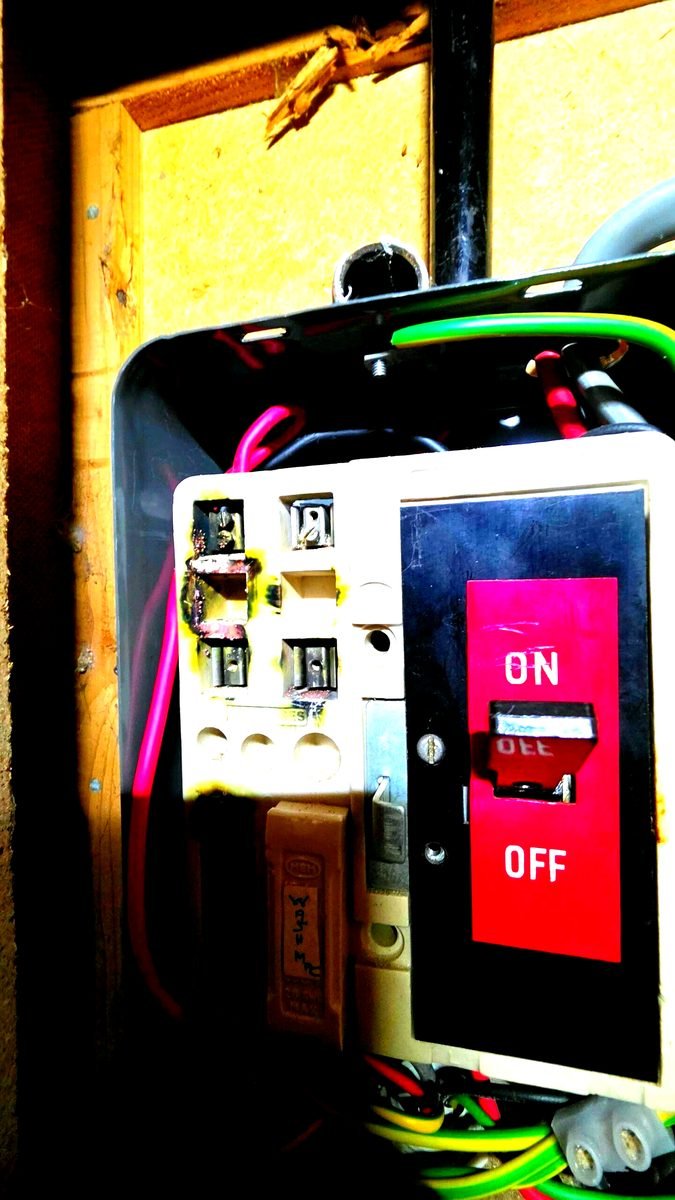
A circuit breaker’s whole job is to protect the wiring by cutting the power if the current gets too high. When a breaker trips repeatedly, it is doing exactly what it is supposed to do, which is stopping a problem before it becomes a fire risk.
The usual culprits are a short circuit, where a live and neutral wire touch somewhere they should not, or an overloaded circuit where too many appliances are drawing more current than the circuit is rated for. A short circuit will usually trip the breaker instantly and repeatedly, often the moment you try to switch it back on. An overload tends to trip after the circuit has been under load for a while, for example after the oven and kettle have both been running for twenty minutes.
Sometimes the appliance itself is the problem rather than the house wiring. A faulty kettle, an old tumble dryer, or a heater with a damaged element can trip a breaker every time it is switched on. Unplugging everything on that circuit and reintroducing appliances one at a time is a useful first step before assuming the wiring itself is at fault.
If a breaker keeps tripping and you cannot find an obvious cause, that is exactly when proper fault finding earns its money. Guessing and resetting the breaker over and over risks masking a genuine fault that is quietly getting worse. This applies whether it is a single socket circuit or a tripping fuse board affecting most of the house, and it is one of the most common reasons we get called out across Aberdeenshire.
RCD tripping — what it means and what to do
An RCD, or residual current device, is a safety device that monitors the balance of current flowing out and back on a circuit. If it detects current going somewhere it should not, such as through a person or into damp earth, it cuts the power in a fraction of a second. It is one of the most important safety devices in your home and it has almost certainly saved lives.
An RCD tripping occasionally is not automatically an emergency, but a pattern of tripping is a clear sign something needs looking at. Common causes we find in Aberdeenshire homes include damp affecting outdoor sockets and garden lighting circuits, particularly after heavy rain, faulty appliances with worn insulation, and cumulative earth leakage where several older appliances each leak a small amount of current that adds up across a circuit until the RCD trips.
If your RCD keeps tripping, try to notice the pattern. Does it happen with a specific appliance plugged in. Does it happen after rain, or when the outdoor circuit is in use. Does it happen at a particular time of day. This kind of detail genuinely speeds up fault finding because it narrows down where to start looking rather than testing every circuit in the house from scratch. We have a more detailed guide on this if you want to read further on RCD keeps tripping.
Flickering lights and what they usually indicate
Flickering lights get dismissed as a minor annoyance more often than they should. Sometimes it genuinely is a cheap bulb or a dimmer switch that is not compatible with LED lamps, and that is an easy fix. Other times it points to a loose connection somewhere in the lighting circuit, a poor connection at the consumer unit, or a voltage fluctuation caused by a shared neutral being overloaded elsewhere in the house.
One useful way to narrow it down is to notice whether the flickering is isolated to one light, one room, or the whole house. A single flickering bulb is usually the lamp or fitting. Flickering across an entire circuit or the whole property points towards something further back, potentially at the consumer unit or even the incoming supply, and that is worth having checked properly rather than living with it for months.
In older granite properties especially, we sometimes find that lighting circuits were extended or altered years ago using connections that have simply degraded with age. It looks like a small thing on the surface, but a loose neutral connection can generate real heat, so flickering lights are worth taking seriously rather than just replacing bulb after bulb and hoping it settles down.
How electrical fault finding actually works
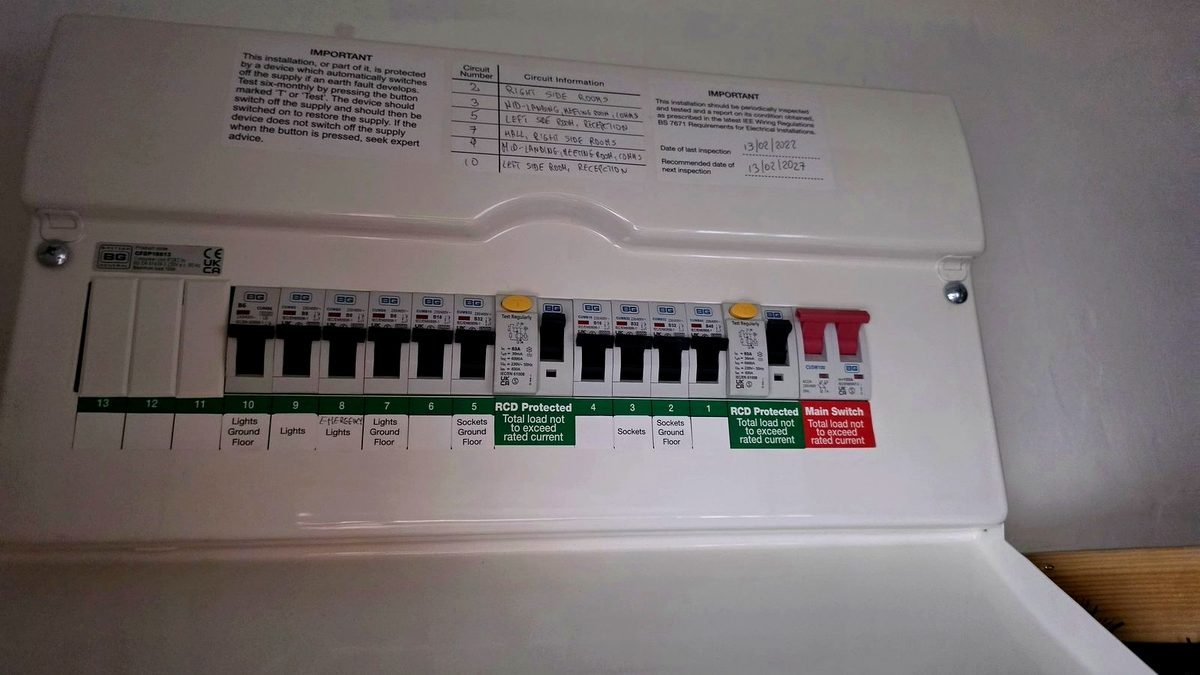
Electrical fault diagnosis is a process, not a guess. We start with questions, because what you tell us about when the fault happens, what was on at the time, and whether it is getting more frequent, often points us in the right direction before we even open the consumer unit.
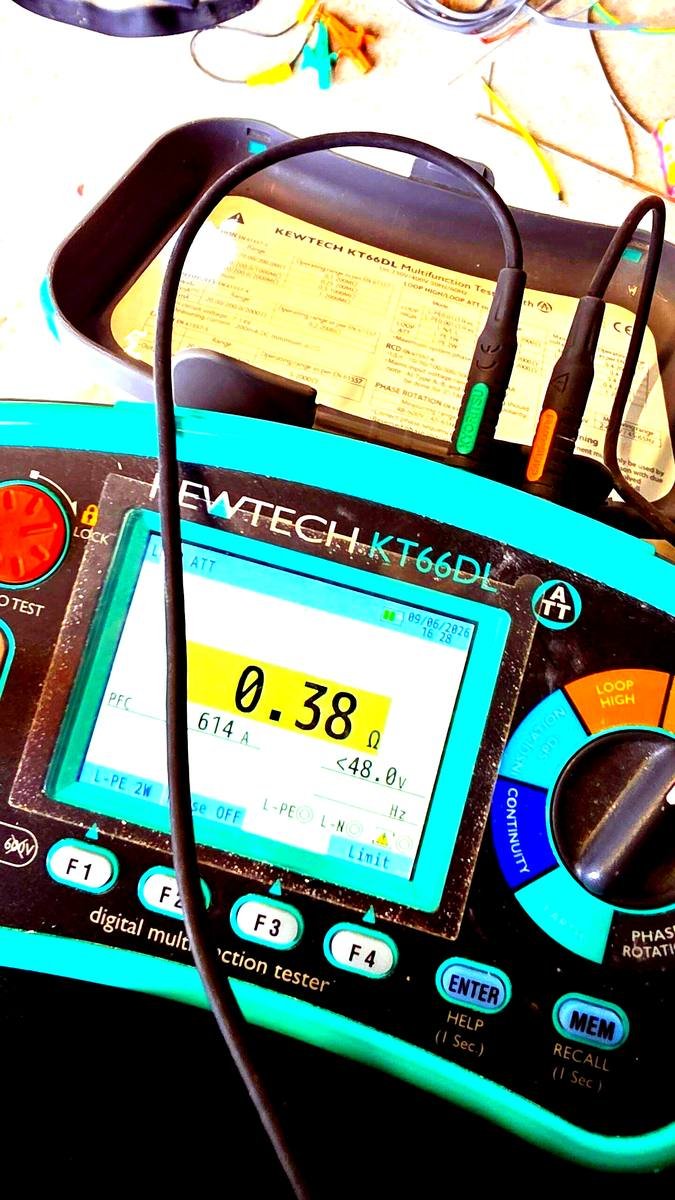
From there we do a visual inspection of the consumer unit, accessible wiring, and any obvious trouble spots such as outdoor sockets, loft cabling and areas where previous work has been done. We then use proper test equipment to check insulation resistance, continuity, polarity and earth loop impedance, isolating circuits one at a time where needed to identify exactly where the fault sits rather than where it appears to sit.
This methodical approach matters because faults do not always show up where the symptom appears. A trip on a bedroom socket circuit can sometimes trace back to a damaged cable in the loft or a failing connection at the consumer unit itself. Skipping steps to save time usually means coming back out again a few weeks later once the same fault reappears, so we would rather do it properly the first time.
All our work is carried out to BS 7671 Amendment 4, the wiring regulations that govern safe electrical installation and testing across the country, and we test and certify accordingly so you have a proper record of what was found and what was done.
When fault finding leads to bigger work
Sometimes a fault finding visit turns up something that goes beyond a simple repair. If we find a consumer unit that is genuinely at the end of its working life, using old fuse types or split load boards that no longer meet current safety standards, we will tell you plainly and explain why. We only fit full RCBO consumer units, which give each circuit its own dedicated protection rather than grouping several circuits under one shared RCD, so a fault on one circuit does not knock out power to half the house. A consumer unit upgrade starts from £550 plus VAT depending on the size and condition of your installation, and if you want more detail on what that involves we have a dedicated page on consumer unit upgrade work.
If the fault finding process suggests wider issues with the wiring itself, particularly in an older property that has never had a full inspection, we may recommend an Electrical Installation Condition Report. This is a formal inspection that checks the whole installation against current standards and flags anything that needs attention, from minor observations to more serious safety concerns. An EICR starts from £150 and gives you a clear, documented picture of where your electrics stand, which is particularly useful if you are buying, selling or simply have not had one done in years. You can read more about the process on our EICR inspection page.
Occasionally, especially in older granite properties or converted steadings that have been extended piecemeal over the years, the most sensible long term solution is a full rewire rather than patching fault after fault. This is not a recommendation we make lightly, but if your wiring is decades old, uses outdated cable types, or has been altered so many times that its history is unclear, a full rewire can actually work out more cost effective than repeated repairs. Our full rewire page covers what that process looks like from start to finish.
How much does electrical fault finding cost in Aberdeenshire?
We will be straightforward with you here. Fault finding costs vary depending on how complex the problem is, how accessible the wiring is, and how long the diagnosis takes. A straightforward fault on a single circuit in a modern consumer unit is a very different job from tracing an intermittent fault through decades of altered wiring in an old farmhouse, and it would not be honest to quote one flat price for both.
What we can tell you is that we always explain our approach and give you a clear idea of cost before we start any diagnostic work, and we will not keep testing indefinitely without talking to you first. If the fault finding visit uncovers a need for further work, such as a consumer unit upgrade from £550 plus VAT or an EICR from £150, we will explain exactly why that work is recommended and what it involves, so you can make an informed decision rather than feeling pushed into anything.
As an NICEIC approved contractor, enrolment number 620239, our work is checked against national standards, and we hold City and Guilds 2357, 2365 and 2391-52 qualifications covering electrical installation, inspection and testing, and fault diagnosis. Everything we do is carried out to BS 7671 Amendment 4 and, because we operate in Scotland, we work to the Scottish Building Regulations rather than Part P, which applies only in England and Wales.
Can you find an electrical fault yourself?
There is a limit to what you should attempt yourself, and it is worth being honest about that limit rather than pretending otherwise. You can safely do some basic checks. Unplug appliances one at a time to see if a specific one is causing a trip. Check whether a tripping breaker is isolated to one circuit or affecting several. Have a look at outdoor sockets and garden lighting for obvious signs of water ingress, cracked casings or visible damage. Make a note of when the fault happens and what was in use at the time, because that information is genuinely useful when you call an electrician.
What you should not do is open the consumer unit and start testing live circuits, poke around behind sockets or switches, or keep resetting a breaker over and over hoping it eventually stops tripping. Electrical faults can involve live parts, damaged insulation and hidden wiring, and testing them properly requires calibrated equipment and training. Repeatedly resetting a tripping breaker without understanding why it is tripping can also allow a genuine fault, such as an overheating connection, to get worse rather than better.
If you have done the basic checks and the fault is still there, or if you are not comfortable doing even those checks yourself, that is the point to bring in a qualified electrician in Aberdeen or across Aberdeenshire who can test properly and tell you exactly what is going on.
Book an electrical fault finding visit in Aberdeenshire
If your breaker keeps tripping, your RCD will not stay reset, or your lights have been flickering for longer than you would like to admit, it is worth getting it looked at properly rather than living with it. Most electrical faults do not fix themselves, and the ones that seem to settle down on their own tend to come back at a worse moment.
We cover fault finding across Peterhead and the wider Aberdeenshire area, from coastal towns to rural farms and steadings, and into Aberdeen itself. We explain what we find in plain terms, we are upfront about cost before we start, and we only recommend further work such as a consumer unit upgrade or an EICR when it is genuinely needed. If what you are dealing with looks more serious, such as visible burning, exposed wiring or a strong smell of burning plastic, that counts as an urgent electrical fault and should be treated as a priority rather than something to book in for next week.
To book an electrical fault finding visit or to talk through what you are experiencing with your electrics, call Faithful Spark Electricians on 07304 027013 or visit faithfulsparkelectricians.co.uk to get in touch.