Skip to main content Skip to footer
Security Lighting in Fraserburgh — What to Install, Where to Put It, and Why It Has to Be Done Right
If you have ever walked along the harbour at Fraserburgh on a January evening, you will know how dark this town gets. Streetlights thin out quickly once you move away from the town centre, and in places like Broadsea, Inverallochy Road, and the streets running up towards Mormond Hill, a lot of the light on a property at night comes from the house itself. That makes security lighting one of the most practical upgrades a homeowner here can make, and one of the most commonly done badly.
We are Faithful Spark Electricians, based in Peterhead and working across Fraserburgh and the wider Aberdeenshire coast as an outdoor electrician for homes that need proper outdoor security lights fitted, not a quick job with the wrong fittings. This guide covers what actually works for security lighting in this area, what to avoid, and why the installation side of things matters just as much as the light fitting you choose.
Why Fraserburgh properties need good security lighting
Fraserburgh has a mix of housing that most towns this size do not. You have granite terraces in the older parts of town, traditional fishermen’s cottages around Broadsea and the harbour area, council built semis on the newer estates, and a growing number of bungalows and detached houses on the outskirts towards Philorth and Inverallochy. Each of these comes with its own lighting problem.
Granite terraces tend to sit close to the pavement with narrow side access and small back yards, so the main need is usually a single well placed light covering the entry point and maybe a rear passage. Fishermen’s cottages, especially the older ones near the shore, often have irregular boundaries, low walls, and multiple small outbuildings, which means shadows in places you would not expect. Council semis usually have driveways and side gates that need covering separately. Detached properties on the edge of town tend to have longer driveways, more garden, and more perimeter to think about, which changes the whole approach to placement and light spread.
Beyond the property type, there is the simple fact that Fraserburgh is a working harbour town with early starts and late finishes for a lot of trades, plus long, dark winters this far north. Good lighting around a home is not just about deterring anyone with bad intentions. It is about being able to see your own path, find your keys, get the bins out, or walk to the car without a torch. A lot of the security lighting jobs we do end up being as much about convenience as security once people see the difference it makes.
The most popular types of security lighting for Fraserburgh homes
There are a handful of options that come up again and again when we are asked to look at outdoor lighting in this area, and most Fraserburgh homes end up needing more than one type to cover the property properly.
PIR motion sensor lights are the most requested option by a wide margin. These detect movement and switch on automatically, then switch off again after a set period. They suit entrances, side passages, and driveways well.
Dusk to dawn lights work on a light sensor rather than motion, so they come on as it gets dark and stay on until morning. These are more about general illumination and a visible presence than reacting to movement.
Floodlights, whether PIR triggered or on a dusk to dawn sensor, are used where you need a wider spread of light, such as covering a full driveway, a large garden, or the gap between a house and a detached garage or shed.
Bulkhead lights are a smaller, more understated option often used at back doors, over garages, or along a side passage where you want steady light without a strong beam.
Smart lighting is becoming more common too, with app controlled fittings that let you check and adjust settings from your phone, or link lights to a camera or doorbell system. These have their place, but they are not always the right answer, and we will get into why below.
Most Fraserburgh properties end up with a combination rather than a single light. A PIR at the front door, a dusk to dawn or PIR floodlight covering the driveway, and a bulkhead at the back door is a fairly typical setup for a semi detached or detached house.
PIR motion sensor lights — what to know before you buy
A PIR security light installation is the job we are asked for more than any other in Fraserburgh, usually to cover a front door, side passage, or the approach to a back gate.
PIR stands for passive infrared. The sensor detects the change in infrared radiation caused by a moving body, such as a person walking past, and triggers the light. It sounds simple, and in principle it is, but getting a PIR light to behave properly takes some care in both the choice of fitting and the way it is set up.
The biggest complaint we hear about PIR lights that were not installed properly is false triggering. Lights that come on every time a cat crosses the garden, or every time a car passes on the road, quickly become annoying and get switched off altogether, which defeats the purpose. This usually comes down to sensitivity settings being left on factory defaults, or the sensor being aimed too widely rather than at the specific area that needs covering.
The other common issue is placement height. Too high, and the sensor struggles to pick up movement close to the house. Too low, and it can be triggered by anything moving through the garden, including wildlife, which is a genuine consideration in a coastal town with a lot of gulls and the occasional deer coming down off the hill. There is a balance to strike, and it depends on the specific layout of the property, which is really something that needs to be judged in person rather than guessed from a box.
Most PIR lights also let you set the time delay, meaning how long the light stays on once triggered, and the operating mode, meaning whether it works as pure motion detection or only at night. Getting these settings matched to how the household actually uses the space, rather than leaving everything on default, makes a real difference to whether the light is useful or just irritating.
Dusk to dawn security lighting — is it worth it?
Dusk to dawn lighting has a straightforward appeal. It comes on when it gets dark and stays on all night, so there is no relying on a sensor picking up movement correctly, and no chance of someone walking past a dark, unlit corner of the property.
The obvious downside is running cost, since the light is on for many hours every night rather than only when triggered. This is far less of an issue than it used to be. Modern LED fittings use a fraction of the electricity that older halogen floodlights did, so an LED dusk to dawn light left on for twelve hours through a Fraserburgh winter night costs very little to run compared to what people often assume.
Where dusk to dawn tends to make the most sense is in spots where motion detection is impractical or unreliable, such as a light that faces a public path or a busy side street where it would trigger constantly anyway, or a light meant purely to illuminate a house number, entrance, or step for safety reasons rather than security.
Many properties end up using both types together. Dusk to dawn for general presence and safety lighting, and PIR for the areas where a sudden burst of bright light actually serves a deterrent purpose, such as a side passage or the approach to a back door.
Driveway and perimeter lighting in Fraserburgh
Driveways in Fraserburgh vary enormously. Some are short and tight to the house, particularly in the older granite terraces where there may be no real driveway at all, just kerbside parking. Others, especially on the outskirts and in the newer developments, are long enough to need more than one light to cover properly.
For longer driveways, a single floodlight at the house is often not enough. Movement at the far end of the drive, near the road, may not trigger a sensor mounted above the front door, and even if it does, the light thrown that far often is not bright enough to be useful. A better approach is usually a light at the entrance to the property, triggered by anyone arriving on foot or by car, paired with lighting closer to the house for the immediate approach and entry points.
Perimeter lighting, meaning lights along boundary walls, fences, or the edges of a garden, is worth considering for detached properties with more ground to cover, or for anyone who has had issues with access at the sides or rear of the property rather than just the front. This is where PIR floodlights earn their keep, since a wide beam angle can cover a long fence line from a single well positioned fitting rather than needing several separate lights.
Cabling is the part people often overlook when planning driveway or perimeter lighting. Running cable to a light at the end of a long driveway, or around the side of a house to a rear boundary, needs to be done properly, at the right depth if buried, in suitable conduit, and connected back to the consumer unit correctly. This is not a job for a length of extension cable run along the ground, however tempting that might seem as a quick fix.
Why security lighting in Fraserburgh has to handle coastal conditions
This is the part of the job that separates a lighting installation that lasts from one that fails within a couple of years. Fraserburgh sits right on the North Sea coast, and the salt air here is genuinely harsh on outdoor electrical fittings. Anyone who has seen what sea air does to a car left outside for a few winters will understand what it does to light fittings, junction boxes, and cable glands that are not properly rated for the environment.
Standard indoor rated fittings, or budget outdoor lights not designed with coastal exposure in mind, corrode quickly here. Screws rust, seals perish, and moisture gets into places it should not, which leads to lights failing, flickering, or in worse cases becoming unsafe. We see this a lot with fittings bought online without much thought given to the specific conditions they will face on this coast, particularly on properties in Broadsea and along the harbour front where the exposure is most direct, but really anywhere in Fraserburgh gets more salt in the air than most electricians further inland ever have to think about.
The fix is straightforward in principle. Use fittings with an appropriate IP rating for outdoor and coastal use, make sure any metal components are corrosion resistant, and pay proper attention to sealing at every joint and entry point. It is also worth thinking about wind. Fraserburgh gets its fair share of exposed weather, and a floodlight or fitting mounted loosely, or on a bracket not built for the load, will work its way loose over time and eventually fail or become a hazard.
None of this is complicated, but it does mean that a lighting job done properly for a Fraserburgh property should look a little different from the same job done inland. Getting the right fittings and mounting them correctly the first time saves a lot of hassle and cost later on, compared to replacing corroded lights every couple of winters.
What the regulations say about outdoor electrical work in Scotland
There is no Part P requirement in Scotland, since that is an England and Wales building regulation. Electrical work here falls under the Scottish Building Regulations, and all our work is carried out to BS 7671 Amendment 4, which is the wiring regulation that governs how electrical installations should be designed and installed safely, whether that is indoors or out.
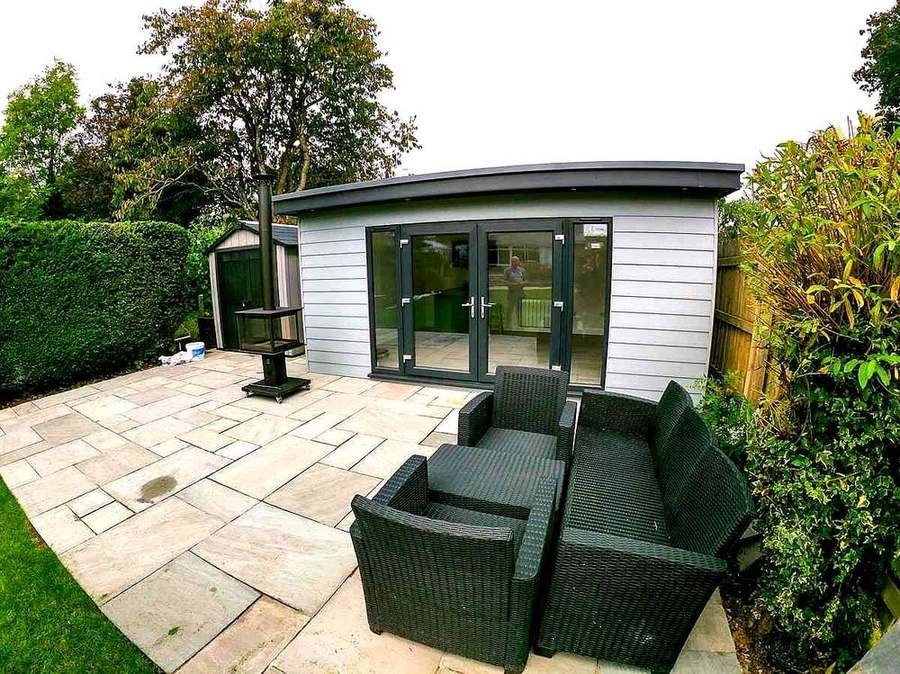
For outdoor lighting specifically, this covers things like the correct IP rating for the location, appropriate cable protection, correct earthing and bonding, and the right kind of circuit protection back at the consumer unit. RCD protection is a requirement for outdoor circuits, since the risk of electric shock is higher outside where damp, wet ground, and metal fittings are all in play. Every consumer unit we install is a full RCBO board, giving each circuit its own dedicated protection rather than sharing protection across several circuits on a split load board, which means a fault on an outdoor lighting circuit will not take out anything else in the house.
We are a NICEIC approved contractor, enrolment number 620239, and our electricians hold City and Guilds 2357, 2365, and 2391-52 qualifications. That matters for outdoor lighting work specifically because testing and inspection of outdoor circuits needs proper competence, not just the ability to wire a light fitting to a switch. Getting it inspected and certified properly at the time of installation also means you have the right paperwork if you ever come to sell the property or need to show the work was done to standard.
How a security lighting installation actually works
Most jobs start with a visit to look at the property in person, since photos and phone descriptions only tell you so much about layout, existing wiring, and where cable can realistically run. We look at where the dark spots actually are, where movement typically happens, what is already on the property in terms of wiring and consumer unit capacity, and what the client actually wants to achieve, whether that is deterring unwanted visitors, lighting a path safely, or covering a driveway.
From there we plan the circuit. This means working out where the cable needs to run, whether that is through a loft space, along a wall in conduit, or buried in the garden to reach a driveway light, and connecting back to a suitable point on the consumer unit with correct RCBO protection. On older properties, this sometimes throws up wider issues. A consumer unit that is out of date, or a supply that was never really designed for additional outdoor circuits, might need attention before new lighting can be added safely. This comes up fairly often in older Fraserburgh properties, particularly the granite terraces and fishermen’s cottages where the original electrics were installed decades before anyone was thinking about PIR floodlights or driveway lighting.
Once the circuit is run, the fittings go in, positioned and aimed based on what we saw during the initial visit rather than a generic default. PIR sensitivity and timing get set to suit the property, not left on factory settings. Everything then gets tested, which includes checking earth continuity, insulation resistance, and that the RCBO trips correctly, along with a visual check of sealing and mounting given everything discussed above about coastal exposure. We issue a certificate for the completed work, which you should keep along with any other electrical paperwork for the property.
Can you install security lighting yourself?
Some very basic plug in lights, such as a solar powered light with no mains connection, are within reach of most competent DIYers. Anything connected to the mains supply is a different matter, and this is where we would strongly encourage caution.
Outdoor electrical work carries real risk if done incorrectly. Water and electricity are a bad combination, and a poorly sealed connection or an incorrectly wired circuit outside is more dangerous than the equivalent mistake indoors, simply because of the exposure to weather. There is also the practical issue that outdoor circuits need to be connected back to the consumer unit correctly, with the right protection, which usually means opening up the consumer unit itself, and that is not something to attempt without the right training and testing equipment.
We would also point out that a lot of the DIY lighting problems we get called out to fix, things like constant false triggering, lights that stopped working within a year, or fittings that have corroded and become unsafe, trace back to the wrong fitting being chosen for the location, or a connection that was not sealed properly against the weather. Getting it right the first time, with fittings suited to the coastal conditions here and a properly protected circuit, tends to work out cheaper over the life of the installation than a DIY job that needs revisiting.
How much does security lighting installation cost in Fraserburgh?
Being honest about cost is more useful to you than a made up fixed price, because the truth is that security lighting jobs vary a lot depending on the specifics. A single PIR light added to an existing circuit near the consumer unit is a small, quick job. A full driveway and perimeter lighting setup on a detached property, needing new cable runs buried across the garden and additional circuits at the consumer unit, is a considerably bigger undertaking.
The main factors that affect price are the number of fittings, how far cable needs to run and whether it needs to be buried, whether the existing consumer unit has capacity for a new circuit or needs attention first, and the quality and rating of the fittings chosen, since coastal rated outdoor fittings cost more than standard indoor rated ones but last considerably longer here. Access also plays a part. A light that needs a cable run through a loft and down an external wall takes longer than one fed from a socket already close by.
Electricians typically work to a day rate that reflects time, materials, and testing and certification at the end of the job, and lighting work is priced against that rather than a flat per light fee that ignores how different every property actually is. The only way to get an accurate figure is to have someone look at the property and talk through what you actually want to achieve, which is why we always start with a proper look rather than a guess over the phone. This applies whether you are after a single PIR fitting in Fraserburgh or a fuller external lighting scheme for a property nearer Aberdeen with a longer driveway to cover.
Book your Fraserburgh security lighting installation
Security lighting is one of those jobs that is easy to get wrong if it is rushed or bought off the shelf without much thought, and genuinely useful when it is planned properly around how a property is actually used and what the coast here throws at outdoor fittings. Whether you are dealing with a granite terrace near the town centre, a fishermen’s cottage in Broadsea, a council semi on one of the estates, or a detached house with a long driveway on the edge of town, the right setup is different in each case, and it is worth getting an opinion from someone who has actually looked at the property.
As a NICEIC approved electrician in Fraserburgh, we handle everything from a single PIR light at the front door through to full driveway and perimeter lighting schemes, all tested and certified to BS 7671 Amendment 4. If your home is due a wider check, we also carry out EICR inspection work across the AB43 area, which is worth considering if you are adding new outdoor circuits to an older installation. Where a property needs a consumer unit upgrade before new lighting circuits can be added safely, or needs wider rewiring work, we can advise on that at the same time rather than leaving you to discover it halfway through a lighting job. This applies particularly often to older Fraserburgh properties, where the existing wiring was never designed with modern outdoor lighting in mind. We also cover jobs further afield as an Aberdeen electrician for anyone based between Fraserburgh and the city.
To arrange a visit and a proper look at your property, call us on 07304 027013 or get in touch through faithfulsparkelectricians.co.uk.