Skip to main content Skip to footer
If you rent out a property in Ellon, you have a legal obligation to ensure the electrical installation is safe. That obligation is not advisory. It is a statutory requirement under the Housing (Scotland) Act 2006, and it has been in force since December 2015.
An EICR — Electrical Installation Condition Report — is how you demonstrate compliance. This guide covers exactly what the law requires, what happens during the inspection, what the report means, and what to do if it comes back unsatisfactory. Everything here is specific to Scotland, where the rules differ from England in important ways.
What the law actually says
Sections 19A and 19B of the Housing (Scotland) Act 2006, as amended by the Housing (Scotland) Act 2014, place a duty on private landlords to ensure the electrical installation in any rented property is safe before a tenancy begins and throughout its duration.
To comply with the Scottish Government’s Repairing Standard guidance, landlords must arrange an electrical safety inspection — comprising a Periodic Inspection and Testing of the fixed installation and an in-service inspection of any electrical appliances provided under the tenancy — at least every five years.
This is not the same as the English regulations. In England, the Electrical Safety Standards in the Private Rented Sector (England) Regulations 2020 apply. In Scotland, the obligation comes from the Repairing Standard under the Housing (Scotland) Act 2006. The practical outcome is the same — a five-yearly EICR — but the legal basis is different, and penalties for non-compliance go through the First-tier Tribunal for Scotland rather than local councils.
When does the EICR need to be done?
An EICR must be in place:
- Before the start of any new tenancy
- Every five years from the date of the previous inspection (or sooner if the report recommends an earlier date)
- After any significant electrical work is carried out on the property
The five-year clock runs from the date of the last inspection, not from the start of a tenancy. If you let the same property continuously, the inspection must still be renewed every five years regardless of whether there has been a change of tenant.
A valid Electrical Installation Certificate (EIC) issued following a complete rewire or new installation can stand in place of an EICR for the purpose of the Repairing Standard, but only until the five-year interval is reached. After that, a full EICR is required.
What does the EICR actually involve?
An EICR is a thorough inspection and test of everything that forms the fixed electrical installation — the wiring, consumer unit, sockets, light fittings, switches, and any other fixed electrical equipment. It does not cover portable appliances, which are covered separately by PAT testing.
During the inspection our engineer will carry out:
- Visual inspection of the consumer unit, wiring, and accessories throughout the property
- Dead testing — insulation resistance testing on every circuit to check for deterioration or damage in the wiring
- Live testing — loop impedance testing to confirm the earthing and fault protection will operate correctly
- RCD testing — verifying that any residual current devices operate within the required time and current parameters under BS 7671
- Continuity testing — confirming that protective conductors are intact and correctly connected throughout
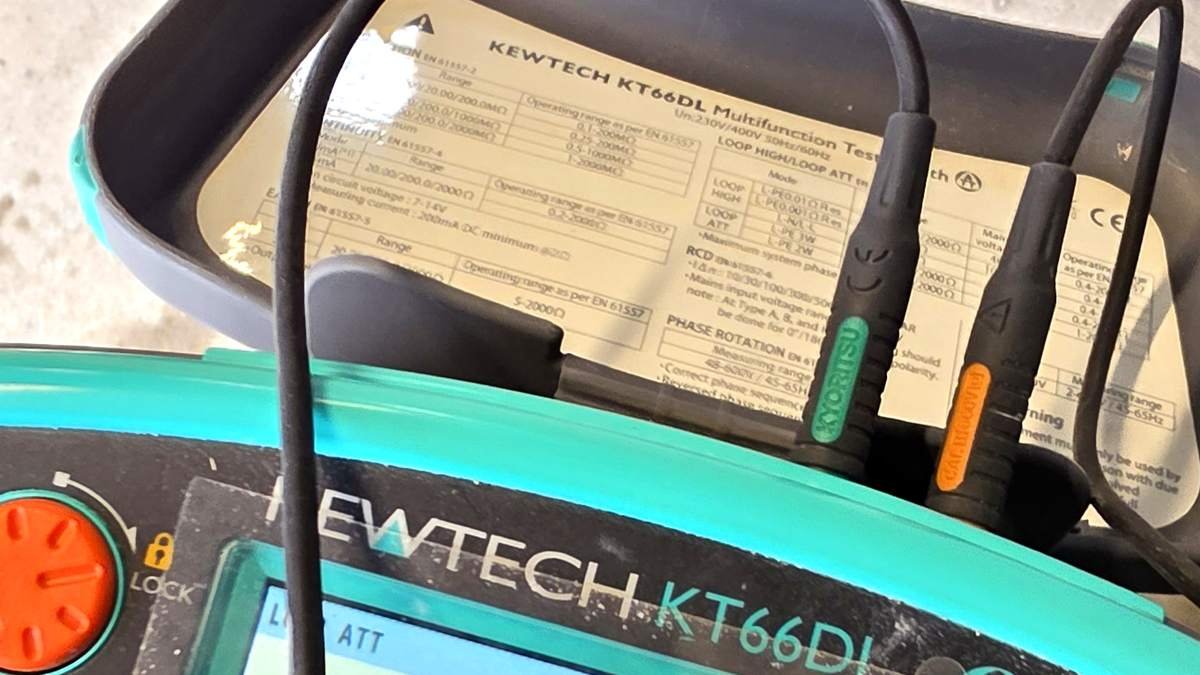
All test results are recorded and form part of the completed EICR certificate. The inspection is conducted against the current edition of BS 7671 — the IET Wiring Regulations. We work to BS 7671 Amendment 4, which became mandatory in Scotland in October 2026.
Our EICR inspections in Ellon are carried out by a City and Guilds 2391-52 qualified inspector — the inspection and testing qualification, not just an installation qualification. That distinction matters: the 2391-52 covers the full scope of periodic inspection and testing that an EICR requires.
What do the codes on the report mean?
The EICR uses a coding system to classify any observations or defects found during the inspection:
| Code | Meaning | Action required |
|---|---|---|
| C1 | Danger present — risk of injury | Immediate action required |
| C2 | Potentially dangerous | Urgent remedial action required |
| C3 | Improvement recommended | Not a failure, but advisable |
| FI | Further investigation required | Cannot be determined without further work |
If the report contains any C1 or C2 codes, the overall outcome is Unsatisfactory. A report containing only C3 codes or no defects at all is Satisfactory.
An unsatisfactory EICR does not mean your property is not compliant in itself — it means you now have a defined obligation to carry out remedial work to address the C1 and C2 findings. C3 codes are recommendations, not failures, though they do indicate areas worth addressing when budgeting for future maintenance.
What happens if your Ellon rental property fails its EICR?
If the report comes back unsatisfactory, you must arrange for the C1 and C2 defects to be remedied by a competent electrician and obtain written confirmation that the work has been completed. In practice this usually means a further inspection and updated certificate once the remedial work is done.
You must give your tenant a copy of the EICR within 28 days of it being carried out, and a copy to any prospective tenant before a new tenancy begins. Tenants cannot be required to pay towards the cost of the inspection — that is stated explicitly in the Scottish Government guidance.
A tenant who believes their landlord is not complying with the Repairing Standard can apply to the First-tier Tribunal for Scotland (Housing and Property Chamber). The Tribunal can issue a Repairing Standard Enforcement Order, which requires the landlord to carry out work within a set timeframe. Failure to comply with an enforcement order is a criminal offence.
Common reasons Ellon properties fail their EICR
Based on what we see regularly across Ellon and Aberdeenshire, the most common issues are:
Older consumer units without RCD protection
Properties built or last rewired before around 2008 frequently have consumer units that do not provide adequate RCD protection for all circuits. Under BS 7671 and the Repairing Standard guidance, the absence of an RCD means the property does not comply. This is one of the most common C2 codes we record. A consumer unit upgrade in Ellon is usually the right solution, replacing the old board with a full RCBO unit that protects every circuit individually.
Deteriorated wiring
Properties with older rubber-insulated or aluminium wiring — common in pre-1970s housing stock, of which there is a fair amount in and around Ellon — regularly produce C1 and C2 codes on insulation resistance testing. The insulation degrades over time, increasing the risk of fault and shock. In these cases a partial or full rewire is typically required.
Missing or inadequate earthing
Earthing defects — missing supplementary bonding, deteriorated main earth connections, or inadequate earth electrode resistance — are a common source of C2 codes, particularly in older properties.
Overloaded or incorrectly rated circuits
Extensions to the electrical installation carried out without proper certification, or circuits that have had additional loads added over the years, can produce overcurrent protection issues that show as C2 codes.
EICR and PAT testing: what’s the difference?
The EICR covers the fixed installation — the wiring and anything permanently connected to it. PAT testing (Portable Appliance Testing) covers any portable electrical equipment you provide as part of the tenancy: white goods, lamps, electric heaters, and so on.
Both are required under the Scottish Repairing Standard if you provide appliances. They are separate inspections and produce separate documentation. We can carry out both on the same visit to minimise disruption to your tenant.
How much does an EICR cost for an Ellon rental property?
Our EICR pricing for Ellon landlords starts from £150 plus VAT for a standard one or two-bedroom property. Larger properties, HMOs, or properties with complex or ageing installations will be priced accordingly. We provide a fixed quote before starting work — no surprises on the day.
If remedial work is required following an unsatisfactory report, we provide a separate fixed quote for that work. For properties where a consumer unit upgrade is needed, we can usually complete the EICR and the upgrade on the same day or across consecutive visits, which reduces overall cost and means your property is compliant sooner.
See our EICR Ellon service page for full details and to request a quote.
Do you need an EICR before every new tenancy?
Not necessarily. You need a valid EICR in place before a new tenancy begins — but if your existing EICR is still within its five-year validity period, it can be used for the new tenancy. You do not need a new inspection every time you get a new tenant, as long as the report is current.
However, if you have had significant electrical work carried out between tenancies — a new kitchen, an extension, an EV charger installation — it is good practice to have a new inspection to confirm the installation is still fully compliant. If an EV charger has been installed at your Ellon property, an Electrical Installation Certificate will have been issued for that circuit, but the rest of the installation is not covered by that certificate.
Can a tenant refuse access for the EICR?
This is a question we are asked regularly by landlords in Aberdeenshire. The short answer is: a tenant can refuse access, but that refusal does not remove the landlord’s legal obligation to have the inspection done. If a tenant refuses access, the landlord should document the refusal in writing and take reasonable steps to arrange an alternative appointment.
There is a separate blog on this topic — can a tenant refuse an EICR in Scotland — which covers the practical and legal position in detail.
Booking an EICR in Ellon
We carry out EICR inspections across Ellon and the surrounding AB41 area, typically within a few days of enquiry. All inspections are carried out by a qualified 2391-52 inspector and fully certificated. We are NICEIC-approved, which means our work is independently audited.
To book or get a quote, call us on 07304 027013 or visit our EICR Ellon page. If you have multiple Aberdeenshire properties, get in touch to discuss a landlord inspection schedule — we can often combine visits to reduce costs and minimise disruption to your tenants.
If your property also needs an Ellon electrician for any remedial work identified in the report, we handle that too — one company from inspection through to completion and certification.
Frequently asked questions
Does the EICR need to be carried out by a SELECT-registered electrician in Scotland?
The Scottish Government guidance refers to a “skilled person” competent in the relevant work. NICEIC-approved contractors are accepted as meeting this requirement. SELECT registration is one route to demonstrating competence, but it is not the only one — NICEIC approval is equally recognised. We are NICEIC-approved and our 2391-52 qualified inspector has full competence to carry out periodic inspection and testing in Scotland.
What if the property has no consumer unit, just a fuse box with rewireable fuses?
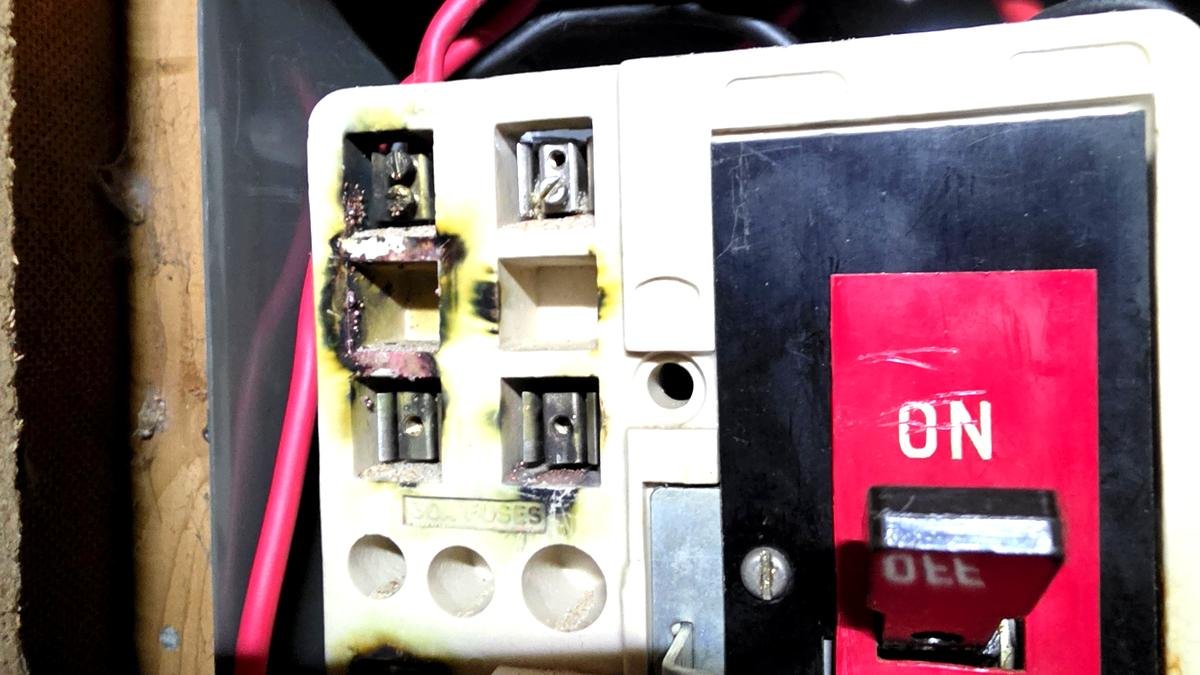
A property with an old rewireable fuse board almost certainly has other issues that will produce C1 or C2 codes on an EICR — lack of RCD protection being the most significant. In most cases a consumer unit upgrade is the most cost-effective resolution, bringing the entire board up to current standards in one job. We can advise at the time of inspection.
How long does an EICR take?
For a standard two or three-bedroom rental property in Ellon, allow two to three hours. Larger properties or those with complex installations take longer. We will give you an estimated time when we quote so your tenant can plan accordingly.
Do I need to give my tenant notice before the EICR?
Yes. You must give your tenant reasonable notice before any inspection — at least 24 hours is standard practice, though 48 hours is more courteous and avoids disputes. The inspection should be arranged at a time that is reasonably convenient for the tenant.
What is the difference between an EICR and an EIC?
An Electrical Installation Certificate (EIC) is issued when new electrical work is carried out — a new installation, a rewire, a consumer unit replacement, or an EV charger circuit. An EICR is a periodic inspection of an existing installation. They serve different purposes. A valid EIC can satisfy the Repairing Standard requirement for the initial inspection, but an EICR is required for subsequent periodic inspections.