Skip to main content Skip to footer
What to Expect When You Book a Local Electrician in Fraserburgh
Booking an electrician for the first time can feel like a leap of faith. You are letting someone into your home to work on something you cannot easily inspect yourself, and you often do not know what a normal, well run job actually looks like.
This guide walks through the full process, from your first phone call to the paperwork you should be left with, using the experience of a typical Fraserburgh household as the example throughout.
Step One: The First Call or Enquiry
A good electrician will ask specific questions on the first call rather than just booking a time slot. Expect to be asked what the issue is, how old the property is, whether you have had any electrical work done recently, and whether there is anything unusual about the installation, such as an outbuilding supply or a mix of old and new wiring.
Fraserburgh has a wide range of property ages, from harbourside granite cottages to newer estates on the edge of town. Telling the electrician the approximate age of your property at this stage helps them plan the visit properly and bring the right equipment.
If you are calling about a specific concern, such as a tripping circuit or a burning smell, say so clearly. This affects how urgently the job should be scheduled and what safety advice you should be given over the phone in the meantime.
Step Two: Getting a Quote
For straightforward jobs, many electricians can give a fixed price quote over the phone or by email once they understand the scope. For anything involving inspection, testing, or work on an unfamiliar installation, an accurate quote usually needs a site visit first.
A clear quote should tell you:
- What work is included and what is excluded.
- Whether the price is fixed or an estimate subject to survey.
- What certificate or report you will receive once the work is finished.
- How long the work is expected to take.
- Whether materials are included in the price or charged separately.
Remember that quoted prices for common work are starting prices. An EICR, for example, starts from £150, but the final price depends on property size and the number of circuits. A consumer unit upgrade starts from £550 plus VAT, and an EV charger installation starts from £900 plus VAT. Larger or more complex properties will cost more, so treat these figures as a starting point for discussion, not a fixed ceiling.
Step Three: Checking Qualifications Before You Book
This is the step most homeowners skip, and it is the one that matters most. Before confirming a booking, ask for the contractor’s registration number with NICEIC or SELECT and check it on the relevant public register. This takes only a couple of minutes and confirms the contractor has been independently assessed within the last year.
We cover why this matters specifically for Fraserburgh’s older housing stock and coastal conditions in our companion guide on why NICEIC approval matters for Fraserburgh homeowners. It is worth reading before you book any electrical work, not just larger jobs.
You should also ask whether the type of work you need is covered by the registration. Some registrations cover installation work only, while others explicitly cover inspection and testing.
Step Four: What Happens on the Day
Arrival and Initial Assessment
A competent electrician will usually start by asking you to show them the consumer unit, discussing the issue or scope of work again in person, and doing a visual check of relevant circuits before starting any physical work. This is standard practice and should not feel rushed.
Isolation and Safety
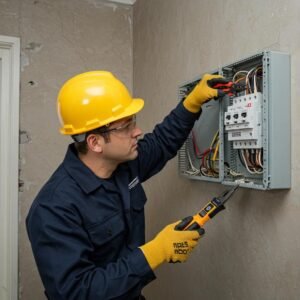
Before any work begins on live circuits, the relevant supply should be isolated and proven dead using a proper test instrument, not just switched off at the consumer unit. This matters particularly in older Fraserburgh properties where circuit labelling is sometimes inaccurate or missing altogether.
The Work Itself
Depending on the job, this might involve installing a new circuit, replacing a consumer unit, fitting an EV charger, or carrying out a periodic inspection. Good practice includes protecting your flooring and furniture, keeping the work area tidy, and explaining anything unusual that is found along the way, rather than saving it all for the end.
Testing Before Handover
Once physical work is complete, proper testing follows. This includes checks such as insulation resistance, earth fault loop impedance, and RCD operation, depending on the work carried out. This is not optional extra work. It is how the electrician confirms the installation is actually safe before signing it off.
Step Five: The Paperwork You Should Receive
This is where many homeowners get caught out, because verbal assurance that “it’s all fine” is not the same as proper documentation.
Electrical Installation Certificate
For new circuits, consumer unit changes, or significant alterations, you should receive an Electrical Installation Certificate. This document records what was installed, the test results, and who carried out the design, construction, and testing. It is your evidence that the work meets BS 7671, and you should keep it permanently, ideally with your property deeds or home file.
For a full explanation of this document and when it applies, see our guide on the Electrical Installation Certificate in Scotland.
Minor Works Certificate
For smaller jobs, such as adding a single socket to an existing circuit, a Minor Electrical Installation Works Certificate is more appropriate than a full installation certificate. Either way, you should be given something in writing.
EICR
If the work you booked was a periodic inspection rather than new installation, you should receive an Electrical Installation Condition Report. This document uses standard codes, C1, C2, C3, and FI, to classify anything found. Our detailed guide on EICR C1, C2, and C3 codes explained covers exactly what each code means and how urgently you should act on it.
Step Six: What Remedial Work Involves
If an inspection identifies issues, remedial work is the process of fixing them. This is a separate step from the inspection itself, and a good electrician will explain what is genuinely urgent versus what can be scheduled for later.
Common remedial findings in Fraserburgh properties include outdated consumer units without RCBO protection, deteriorated wiring insulation in older cottages, and inadequate earthing in outbuildings. Our guide on the most common electrical issues found during EICRs covers this in more depth, and is worth reading if you have an older property and want to know what to expect before you book.
Remedial work should always come with its own certificate once finished, confirming the specific fault has been fixed and retested.
Questions Worth Asking Before You Book
- What is your NICEIC or SELECT registration number, and does it cover this type of work?
- Is the quote fixed or subject to change after a site visit?
- What certificate will I receive at the end?
- How long will the job take, and will the power need to be off during that time?
- Do you carry public liability insurance, and can I see evidence of it?
What a Written Quote Should Look Like
A written quote for Fraserburgh electrical work should be more than a single price on a piece of paper. Look for a breakdown that separates labour, materials, and any specific items such as a new consumer unit or charger unit. It should state whether VAT is included or added separately, roughly how long the job will take, and what certificate or documentation you will receive at completion. If a quote lacks any of this detail, it is reasonable to ask for it before agreeing to go ahead.
It is also worth asking how the quote was reached. For anything beyond a simple job, a proper quote usually follows a site visit rather than a guess based on a phone description, since electrical work is heavily influenced by the specifics of your particular property.
How Local Knowledge Helps in Fraserburgh
An electrician who regularly works in Fraserburgh will already be familiar with common patterns in the town’s housing stock, from the granite terraces near the harbour to the newer estates on the outskirts. This familiarity speeds up diagnosis, since many issues repeat across similar property types, and it also means quotes tend to be more accurate from the outset, with fewer surprises once work begins.
This local knowledge also extends to practical matters like parking, access, and typical weather related wear specific to the town, all of which can affect how a job is planned and executed.
Aftercare and Warranty
Ask what warranty applies to the work carried out. Most reputable electricians offer a workmanship guarantee separate from any manufacturer’s warranty on equipment such as consumer units or chargers. Keep this information along with your certificate, since it may be needed if an issue arises later.
Fraserburgh Specific Considerations
Older harbour area properties often have solid stone or brick walls that make cable routing more time consuming than in modern timber frame housing, which can affect quote accuracy until a site visit happens. Coastal exposure also means outdoor sockets, external lighting, and outbuilding supplies need corrosion resistant fittings rated for the environment, which a competent local electrician should specify without being asked.
If you are booking work related to an EV charger, note that many older Fraserburgh homes need an electrical assessment before installation to confirm the supply and earthing arrangement are suitable. See our guide on EV charger installation in Fraserburgh for what that assessment covers.
How Pricing Works in Practice
Understanding roughly what jobs cost helps you spot a reasonable quote from an unreasonable one. An EICR starts from £150 for a straightforward domestic property, with the final price depending on the number of circuits and the property’s size and condition. A consumer unit upgrade to a full RCBO board starts from £550 plus VAT. An EV charger installation starts from £900 plus VAT. These are all starting prices for straightforward jobs, not fixed ceilings, and older Fraserburgh properties with more complex wiring or access issues will usually cost more than the starting figure.
A transparent electrician will explain what is driving any additional cost above the starting price, rather than simply quoting a single number with no breakdown. If a quote seems unusually low compared with these figures, it is worth asking exactly what is included, since it may not cover full testing or proper certification.
What a Good Electrician Does Differently
Across many Fraserburgh jobs, a few things consistently separate a good experience from a poor one. Good electricians explain what they are doing and why, rather than working in silence and presenting a bill at the end. They flag problems as they find them, rather than saving bad news for a single overwhelming conversation at the end of the job. They leave the work area as clean as they found it. And they follow up with proper paperwork promptly, rather than making you chase for a certificate weeks later.
None of this requires special equipment or extra cost. It is simply a marker of a well run, professional operation, and it is worth paying attention to during your first interactions with any electrician you are considering.
What Happens if Something Is Not Right Later
Even with a well run job, questions sometimes come up after the electrician has left, such as a socket that feels different to use or a light that flickers occasionally. A good electrician will take a follow up call seriously and come back to check, particularly within a reasonable period after the original work. This is part of what you are paying for, not a separate favour.
If you are ever in doubt about whether something from a previous job is safe, do not wait for it to become a bigger problem. A periodic inspection can identify whether a specific circuit or the installation as a whole meets current safety standards, giving you a clear answer rather than ongoing uncertainty.
Frequently Asked Questions
How far in advance should I book?
For non urgent work, a week or two is typical. For safety concerns such as tripping circuits or burning smells, contact an electrician immediately rather than waiting for a routine slot.
Will the power be off during the whole visit?
Only the specific circuit being worked on needs to be isolated in most cases, though a full consumer unit change requires the whole supply to be off for part of the job. A good electrician will tell you this in advance so you can plan around it.
What if I am not happy with the work?
Raise it directly with the electrician first. If unresolved, an NICEIC or SELECT registered contractor gives you access to an independent complaints process through the relevant scheme, which is one of the practical benefits of checking registration before you book.
Do I need to be home for the whole job?
For most work, yes, particularly if access to the consumer unit or affected rooms is needed throughout. Confirm this when booking.
For general guidance on choosing between local electricians, see our page on local electricians across Aberdeenshire, and for Fraserburgh specific services, visit our Fraserburgh electrician page. You can also find our coverage area on the areas we cover page, or get in touch directly via our contact page.
For official guidance on electrical safety standards referenced throughout this process, see the Electricity at Work Regulations 1989 on legislation.gov.uk and the NICEIC website for details on contractor registration.