
Aberdeenshire has one of the largest stocks of older granite and traditional stone homes in Scotland. From Aberdeen’s West End granite tenements to Peterhead’s harbour cottages, Banchory’s Victorian villas, and the rural farm houses scattered across the inland glens, period properties make up a significant share of the housing market. Rewiring these older buildings is genuinely different from rewiring a modern brick or block home. The walls are harder, the cable routes are more constrained, the existing wiring is often older and more varied, and the work needs to respect the building’s character. This guide covers the practical realities of rewiring an Aberdeenshire period property, what it costs, and how to plan the project alongside other renovation work.
What makes older Aberdeenshire properties different to rewire?
Several characteristics set period house rewire Aberdeens apart from standard modern home rewires:
Granite and stone wall construction
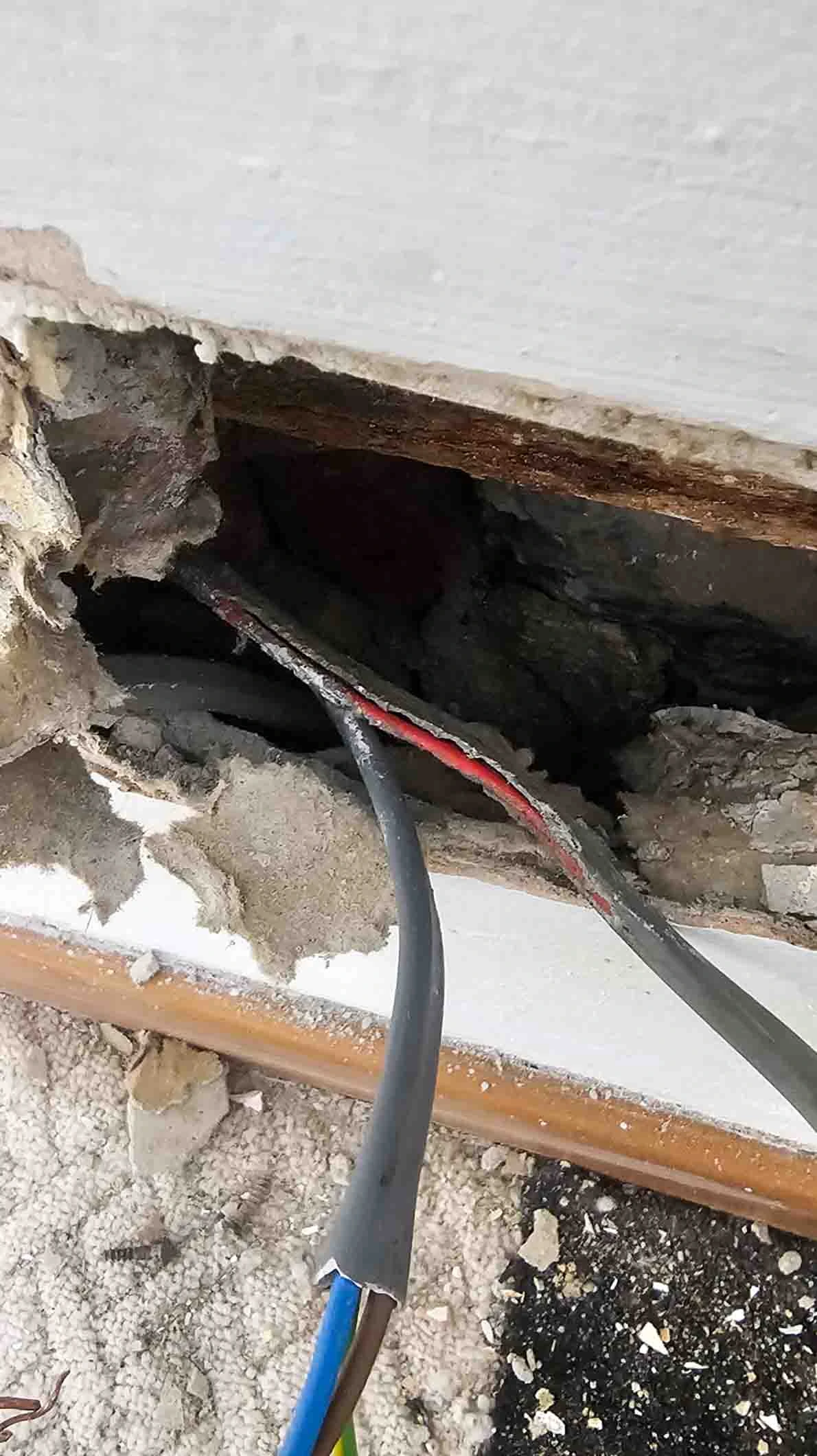
Aberdeenshire’s granite, sandstone, and traditional rubble construction is much harder than typical brick or block. Chasing cables into these walls requires diamond core drilling and significantly more labour than chasing a standard wall. In some places, the wall is too thick or too solid to chase practically and surface mounted trunking or alternative routing is needed.
Lath and plaster ceilings
Many older Aberdeenshire properties have original lath and plaster ceilings rather than modern plasterboard. Lath and plaster is brittle and tends to crack when disturbed. Cable routes through ceiling voids need careful planning to avoid damaging the original ceiling structure.
Original timber floors
Older properties typically have wide solid timber floorboards rather than modern chipboard or engineered floors. Lifting and reinstating period boards needs care to avoid splitting or damage. Some properties have particularly tight nail patterns that make lifting boards genuinely difficult.
Multiple generations of historic alteration
A 150 year old house has typically been rewired at least once, sometimes two or three times, over the decades. The current installation may include original 1920s wiring on some circuits, 1970s additions on others, and 2000s alterations elsewhere. The rewire scope needs to address all of this in a coordinated way.
Listed building considerations
Some older Aberdeenshire properties (particularly in Aberdeen’s West End and the historic centres of smaller towns) are listed. Listed Building Consent may be required for any visible electrical alterations, and some installations may need specific approaches to avoid affecting the building’s character.
Original feature preservation
Cornicing, ceiling roses, period switches, and original light fittings are often features the homeowner wants to preserve. The rewire scope needs to work around these features rather than removing them.
Cost of rewiring an older Aberdeenshire property
Indicative costs are typically 15% to 25% above the standard rewire range for a comparable modern property:
- Smaller granite cottage or terraced house (2 to 3 bedrooms): £4,500 to £7,000.
- Standard granite semi detached or terraced (3 to 4 bedrooms): £5,500 to £10,000.
- Larger granite detached or villa (4 to 5 bedrooms): £7,500 to £14,000.
- Substantial period property with multiple floors and outbuildings: £9,500 to £15,000 or more.
- Listed property with significant original feature preservation: add 20% to 40% to the relevant range.
The premium reflects the additional labour for stone wall chasing, the care required for lath and plaster and original floors, the planning consent process for listed buildings, and the time needed to work around original features. For background on standard rewire pricing, see our companion guide on the full house rewire in Aberdeen.
Cable routing strategies for granite and stone walls
Three approaches cover most period property rewires:
Concealed chasing
Cables are chased into the masonry, fitted, and then patched and decorated. This is the most invisible approach but takes the most labour and creates the most disruption to the wall finish. Suitable for granite or stone walls where the surface finish can accept patching.
Surface mounted trunking
Cables are run in decorative trunking on the wall surface. The trunking is typically painted to match the wall and is significantly less visible than utilitarian conduit. Much faster and less disruptive than chasing. Particularly suitable for areas with significant original plaster, panelling, or other features.
Alternative routing through floors and ceilings
Many cable runs can be routed through floor or ceiling voids rather than walls. This approach minimises wall disturbance but requires lifting floorboards or accessing ceiling voids. Often the right choice for upper floor rooms in period properties.
Faithful Spark plans the cable routing approach at survey based on the specific property’s characteristics and the homeowner’s preferences. A well planned rewire combines all three approaches in different parts of the property.

When to rewire an older property
The strongest triggers for rewiring an older Aberdeenshire property:
During a major renovation
The most common scenario. A property undergoing a kitchen refit, bathroom renovation, extension, or substantial decorative work creates the access opportunities that make rewiring much less disruptive. Rewires done as part of broader renovation work are typically 30% to 50% cheaper than rewires done as standalone projects on the same property.
Recently purchased or inherited property
Buying or inheriting an older property often surfaces electrical issues that the previous owner did not address. A rewire as part of the post purchase work programme establishes a clean baseline.
Failed or marginal EICR
An EICR with multiple C2 issues across an older property typically points to rewiring as the most cost effective response. The threshold is when cumulative remedial cost approaches half the rewire cost.
Adding modern loads
Period properties often have inadequate supply and circuit capacity for modern loads. Heat pumps, ev chargers, induction hobs, electric showers, and home offices all push older installations beyond their original design. A rewire allows the installation to be sized for current needs.
Insurance or sale concerns
An older property’s insurance premium may reflect the age of the wiring. A rewire and a fresh electrical installation certificate often translate into better insurance terms. For property sales, the rewire removes a common buyer concern.
Planning a period property rewire
The planning stage is more involved than for a modern home rewire:
Listed Building Consent
For listed properties, check with Aberdeenshire Council or Aberdeen City Council whether Listed Building Consent is required for the planned work. Most internal electrical work (concealed cables, accessory replacements with discrete fittings) does not require consent. Visible alterations (surface mounted trunking, modern accessories on original features) may need consent.
Conservation area considerations
External work on properties in conservation areas may have additional planning constraints. External light EV charger installation Aberdeens, and outdoor sockets may need careful design to avoid affecting the streetscape character.
Coordination with other contractors
Period property rewires often run alongside plastering, decorating, joinery, and traditional craftsmanship work. Faithful Spark coordinates with the main contractor to sequence the electrical work appropriately within the broader project.
Original feature inventory
Before work starts, agree what original features will be preserved (period switches, ceiling roses, decorative cornicing) and how the rewire will work around them. This is part of the planning conversation rather than a decision made on the day.
Period appropriate accessories
Modern white plastic accessories may look out of place in a period setting. Brass, bronze, and antique style accessories from manufacturers like Crabtree Capital, Hamilton, and Forbes & Lomax are widely used in Aberdeenshire period property rewires. The accessories cost more but the visual fit is much better.
Timeline for an older property rewire
Period property rewires typically take 25% to 50% longer than equivalent modern property rewires:
- 2 to 3 bedroom granite cottage: 7 to 10 working days.
- 3 to 4 bedroom granite semi or terraced: 8 to 12 working days.
- Larger period villa or detached: 12 to 18 working days.
- Substantial period property with extensive original features: 15 to 25 working days.
The longer timeline reflects the additional time for stone wall chasing, the care required for original features and finishes, and the coordination with other contractors on broader renovation projects.
Frequently asked questions
Will the rewire damage my granite walls?
Some chasing and patching is unavoidable where cables are routed through walls. The patches are typically small and address easily by a plasterer. Where wall disturbance is a particular concern (panelling, ornamental plaster, exposed stone), surface mounted decorative trunking is often the better choice.
Can the rewire happen without lifting floorboards?
For most period properties, some floorboard lifting is needed to route cables between floors and to access ceiling voids. The boards are lifted carefully and reinstated; with traditional nail fixings the disturbance is generally minimal. Where original boards are particularly precious, alternative routes may be planned at additional cost.
My listed property has consent restrictions. Can you still rewire it?
Yes. Faithful Spark works with listed building consent processes regularly areas we covershire. The rewire scope is designed to comply with consent requirements, often using concealed cable routes, period appropriate accessories, and minimal visible alteration.
Will the rewire affect the property’s character?
A well planned rewire by an electrician familiar with period properties preserves the character. Visible alterations are minimised, original features are protected, and the new accessories match the period. A poorly planned rewire by a less experienced contractor can damage character significantly. Faithful Spark has substantial experience with Aberdeenshire period properties and prioritises character preservation throughout.
How does the rewire affect property value?
A current Electrical Installation Certificate on an otherwise period property is generally a positive factor for sale. Buyers value the combination of period character with modern Electrical Safety First. The rewire investment is typically reflected in the sale price.
Book a period property rewire survey
Faithful Spark provides period property rewires across Aberdeen, Aberdeenshire, Peterhead, Ellon, Fraserburgh, Banchory, Inverurie, and the wider Aberdeenshire region. NICEIC certified, fixed price quotes, and substantial experience with granite, stone, and listed properties. See our companion guides on the full house rewire in Aberdeen and EICR services in Aberdeen.
Book My Period Property Rewire Survey
Faithful Spark Electricians. niceic approved. Local Aberdeen team. Period property rewires, granite house electrical work, and Electrical Installation Certificates for Aberdeen, Peterhead, Ellon, Fraserburgh, Banchory, Inverurie and across Aberdeenshire.
Related: electricians in Aberdeen


