AB30 to AB54 · Farmhouses, steadings & outbuildings

EICR in Aberdeenshire, for properties with more than one fuse board.

Almost every EICR page in Scotland is written for a flat with a single consumer unit in a hall cupboard. A lot of Aberdeenshire is not that. It is a farmhouse with a board in the house, a board in the converted steading, a board in the workshop, and a buried armoured cable between them that nobody has records for. Inspections carried out and signed personally by Steven Watt, City and Guilds 2391-52.

★★★★★
5.0 from 100+ Google reviews · NICEIC Approved · SELECT · BS 7671
2391-52Inspection qualification
5 yearsLandlord duty cycle
TT & TNBoth earthing types
Section 705Agricultural premises
Three phaseFarm & rural units
Your Aberdeenshire Inspector

The inspection changes when the installation is spread across a yard.

A city EICR is one origin, one consumer unit, six to twelve circuits, and everything within a few metres of the meter. An Aberdeenshire EICR is frequently a distributed installation: several boards, armoured sub mains running between buildings, and decades of work that was never certified because it was done by whoever was on the farm at the time.

That is a different job, and it is the job this page is about. If you want the price, the codes explained, or the landlord rules in full, those live on their own pages and we link to each of them below rather than repeating them here.

  • Multiple boards and sub mains inspected as one installation
  • TT earthing and earth electrode testing, which most city work never touches
  • Agricultural premises assessed against BS 7671 Section 705
  • Three phase boards on farms, workshops and rural units
  • Signed by a City and Guilds 2391-52 inspector, not subcontracted out
2391-52Inspection & testing
2382-22BS 7671 18th Edition
2365-03L3 Installations
NICEICApproved Contractor

2391-52 is the qualification that makes an EICR valid, and Steven Watt holds it personally. NICEIC approval and SELECT membership are scheme memberships held by the business, which is a separate thing, and we never present the two as the same.

The Multi Board Property

Four fuse boards, one report, and a sub main nobody has a record of.

A typical Aberdeenshire farmhouse and steading installation looks nothing like a city flat. There is an intake and meter, sometimes pole mounted, sometimes sitting in an outbuilding rather than the house. From the origin, armoured sub mains run out to wherever the buildings are.

The farmhouse board covers lighting, sockets, cooker, shower and immersion. Then there is usually a board in the converted steading, often now a holiday let or an annexe. A workshop board, which may be three phase. A board at the stables. Sometimes a supply out to a pump house or a borehole. It is one installation, so it is one report, but the work involved scales with every board on it.

Here is what actually changes for the inspector, none of which any competing page mentions:

  • Finding the true origin. On rural property this is often not obvious. Pole mounted intakes, meters in outbuildings, and historic supplies that were split when a steading was sold off all have to be resolved before any testing starts.
  • Verifying every sub main. Each one needs the cable type and size checked against the load and the length, voltage drop over the run, the correct protective device at the supply end, proper isolation at the far end, an adequate protective conductor, and correct glanding where the armour itself is doing the earthing job.
  • A separate schedule per board. Every board gets its own schedule of circuit details and test results. Four boards means four schedules, four sets of readings and four sets of RCD tests.
  • Selectivity between devices. With protection at the origin and protection again at the outbuilding, an earth fault in the stables should trip the stables device and not black out the farmhouse. It is a genuine check and it is commonly missed.
  • Circuit count. A flat might be six circuits. A farmhouse with three outbuildings is routinely twenty five to forty, and every one is individually tested and individually recorded.
  • Physical access. Boards in lofts, in byres, behind stacked feed, at height, or in a building nobody has opened this year. Anything that cannot be reached has to be recorded on the report as an agreed limitation, and that happens far more often out here.
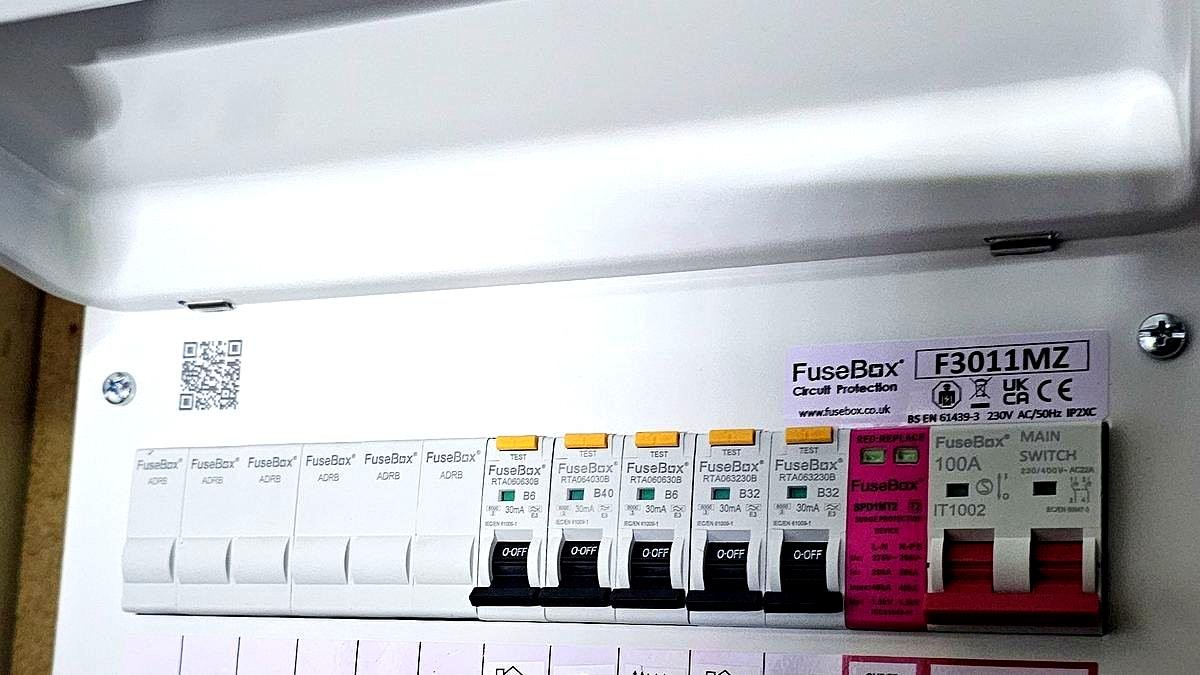
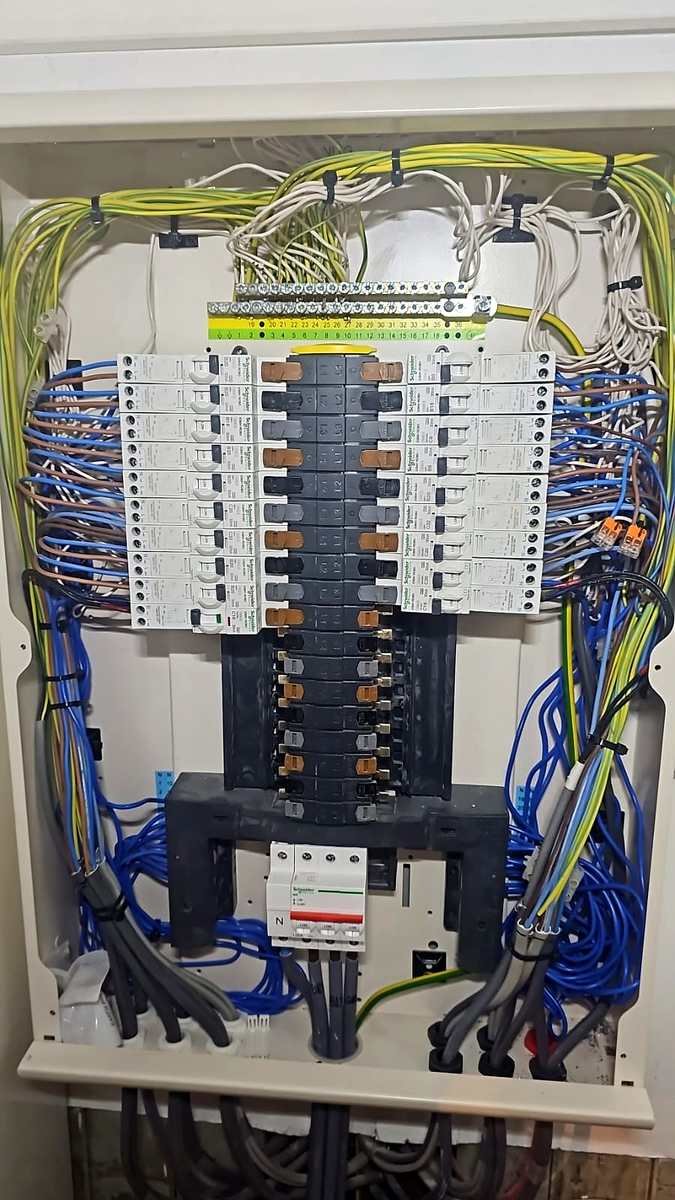
Consumer unit being inspected during an EICR at an Aberdeenshire property
TT Earthing

Out here the RCD is not a backup. It is the protection.

Rural Aberdeenshire is full of overhead supplies, and an overhead supply frequently comes without an earth terminal from the network. When that happens the property stands on its own earth electrode, a rod driven into the ground, and the installation is what the regulations call TT.

The difference matters more than most people realise. On a normal city supply the earth fault path runs back through metal, the impedance is low, and a fault draws enough current to blow a fuse or trip a breaker quickly. On a TT installation the return path goes through the soil. The impedance is enormously higher and the fault current is often far too small to operate a breaker at all.

So on a TT property, the residual current device is not a second line of defence. It is the primary means of disconnection. If it does not work, there is nothing else. That single fact is why old rural properties fail EICRs in ways city properties simply do not.

What that means we actually test:

  • The resistance of the earth electrode itself, and whether that reading is stable rather than a lucky number taken after a wet week.
  • Whether the electrode conductor is still connected at all. We find rods corroded through at ground level, clamps painted over or broken, and connections buried under a later extension surprisingly often.
  • Whether the rod went into undisturbed soil or into made up ground and hardcore, which gives a high and seasonally unstable reading.
  • That the RCD actually operates, and operates within the time required for a TT installation, which is tighter than for a city supply.
  • Selectivity where there is a time delayed device at the origin and 30 mA devices downstream at the outbuildings.
  • Main protective bonding, which matters more here because touch voltages persist longer on TT.

The finding we least like to write is the one where there is no electrode to be found at all, and the installation has been quietly relying on a metal water pipe that was replaced in plastic years ago.

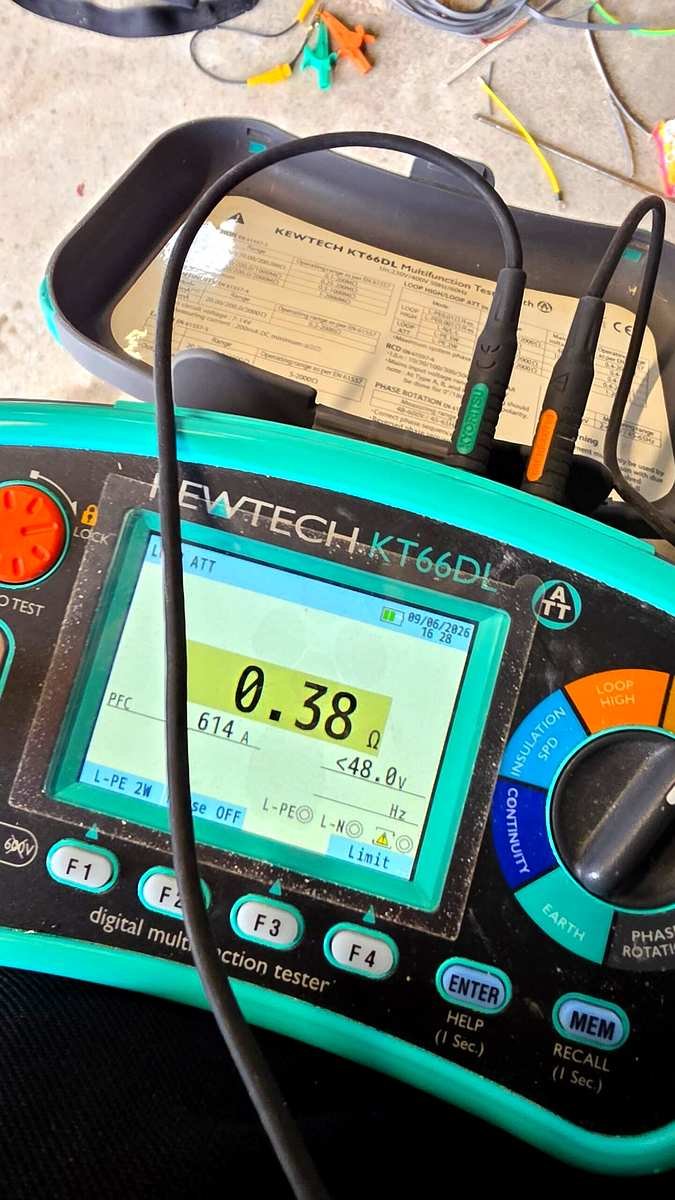
Loop impedance testing being carried out during an EICR by an Aberdeenshire electrician
Agricultural Premises

Farms are a special location, and BS 7671 says so.

Section 705 of BS 7671 covers agricultural and horticultural premises, and it applies to the fixed installation of any building, area or location on them, indoors or out. It exists because these are genuinely harsher environments: livestock, conductive liquids, dust, corrosive atmospheres, damp, rodents and a raised fire risk.

Two consequences matter on an inspection:

  • RCD protection is required irrespective of the earthing system. This is the one that catches people out. A farm on a normal TN supply does not escape the requirement just because its earthing is conventional, so the assumption that "we are not TT, we are fine" does not hold.
  • Supplementary bonding where livestock are kept. Everything an animal can touch has to be tied together. Livestock are far more sensitive to touch voltage than we are, and in slurry conditions bonding corrodes away quietly. A PME earth is also not the recommended arrangement in livestock locations such as milking parlours.

There is also a scoping question that comes up on nearly every farm we inspect. The farmhouse is a dwelling and is assessed as one. The working buildings are agricultural premises and are assessed against Section 705. Judging a byre by domestic expectations produces a wrong report in both directions, so we are clear at the start about which parts of the holding are in scope and on what basis.

If the farmhouse is let, the dwelling carries the legal duty covered further down this page. The working buildings are usually driven by your insurer rather than by housing law, and insurers increasingly ask.

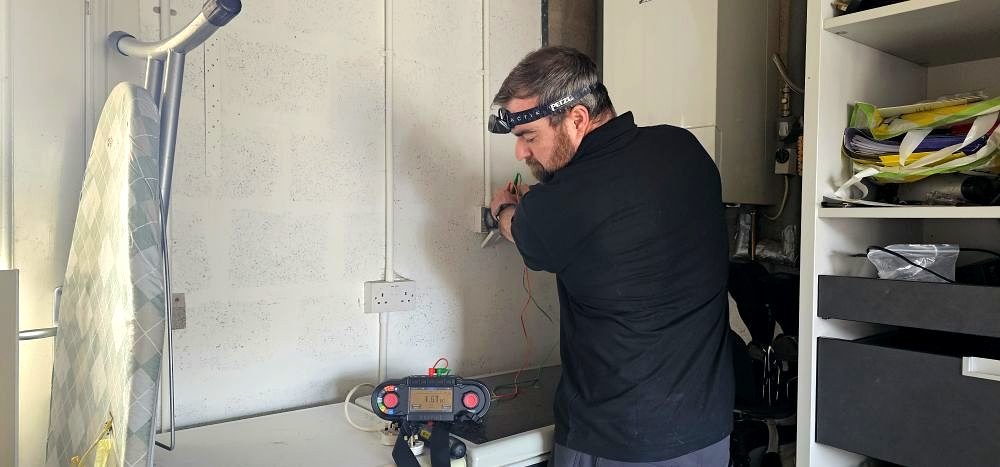
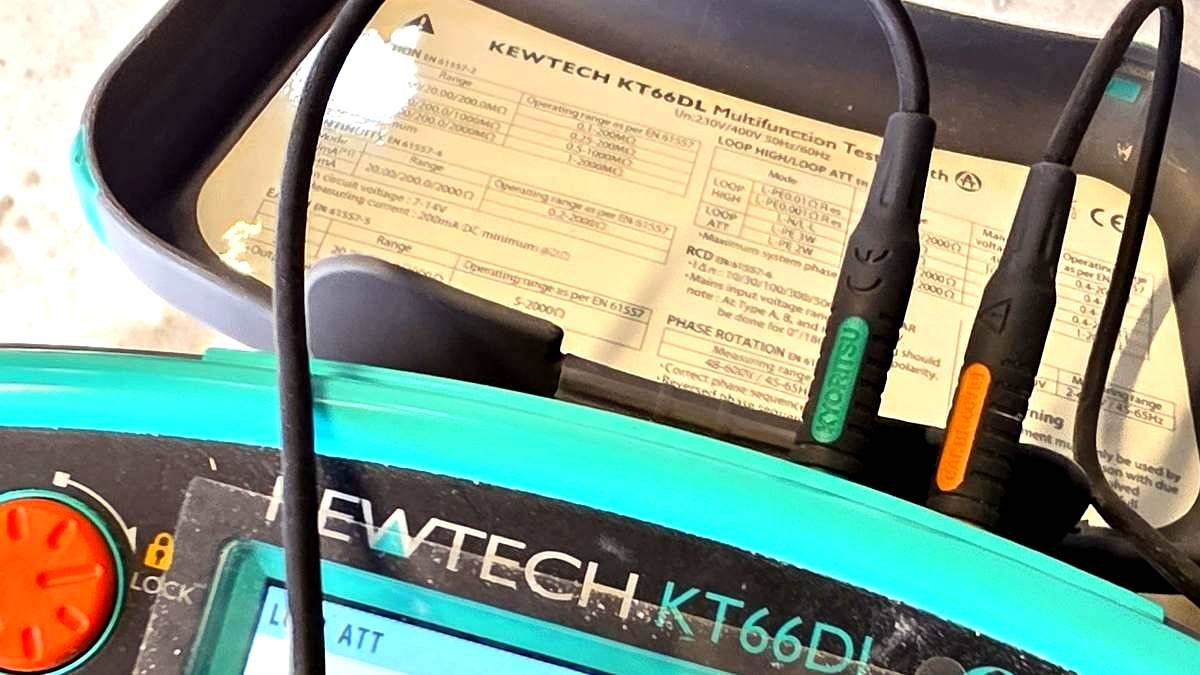
Socket being tested with a multifunction tester during an Aberdeenshire EICR
Three Phase

Grain driers, parlours and workshops change the scope entirely.

Three phase turns up right across rural Aberdeenshire: grain driers, ventilation and extraction, milking parlours, workshop machinery, sawmills, borehole and slurry pumps, and small commercial units around Peterhead, Fraserburgh, Inverurie and Turriff.

A three phase EICR is a materially bigger piece of work than a single phase domestic one, and it is worth understanding why before you book:

  • Insulation resistance testing multiplies. With three line conductors instead of one, you are testing line to line in three combinations, plus each line to neutral and each line to earth. That is ten combinations per circuit rather than three.
  • Phase rotation has to be verified wherever rotating machinery is connected. A pump or fan running backwards is both a functional and a safety problem.
  • Phase balance is assessed. Badly unbalanced loading causes neutral current, overheating and voltage imbalance across the board.
  • Motor circuits, starters, isolators and control gear come into scope, including local isolation for maintenance and emergency stop provision.
  • The outage window is usually the binding constraint. On a working holding, shutting a three phase board down has to be planned around milking, drying, ventilation and livestock welfare rather than around our diary.

For business premises rather than agricultural ones, see our commercial electrical work page.

Three phase distribution board inspected during a commercial EICR
What We Find

The rural fault catalogue, which reads nothing like the city one.

The coding framework is the same everywhere. What differs completely is what actually turns up. These are the findings we see repeatedly on older Aberdeenshire property.

Typically coded C1, danger present: exposed live conductors at a broken outbuilding accessory or a smashed weatherproof enclosure on a byre wall; perished cable within reach in a stable or workshop; a farm distribution board with the enclosure missing and live parts accessible; rodent stripped cable with conductors showing in a loft or feed store; and on a TT installation, a broken or missing connection at the earth electrode, because nothing else is providing protection.

Typically coded C2, potentially dangerous: rubber, lead sheathed or fabric braided cable in pre 1960s farm cottages, which goes hard and then crumbles at the terminations where it has been heat cycled for decades; lighting circuits with no protective conductor, so metal fittings and switch plates have no earth at all; rewireable fuse boards with no RCD protection anywhere; missing or undersized main bonding; missing supplementary bonding in livestock areas; rodent damage not yet exposing conductors; corroded outbuilding accessories where salt air on the Buchan and Banffshire coast has long since defeated the ingress rating; undersized or unprotected sub mains, often plain twin and earth run underground or clipped along a fence; and decades of undocumented additions that cannot be traced.

Typically flagged for further investigation: a concealed sub main between farmhouse and steading of unknown route, cable type and size; circuits that cannot be identified or traced to a load; buildings that could not be accessed on the day; and evidence of heat damage with no identifiable cause.

One thing worth knowing before you book: any C1, C2 or further investigation item makes the report unsatisfactory, and a C3 on its own does not. Rural properties generate further investigation items far more often than city ones, purely because undocumented historic work is normal here, and that code keeps the report unsatisfactory until the investigation is actually done. For the code definitions themselves see our guide to C1, C2 and C3 codes, and if your report has already come back unsatisfactory, what to do next.

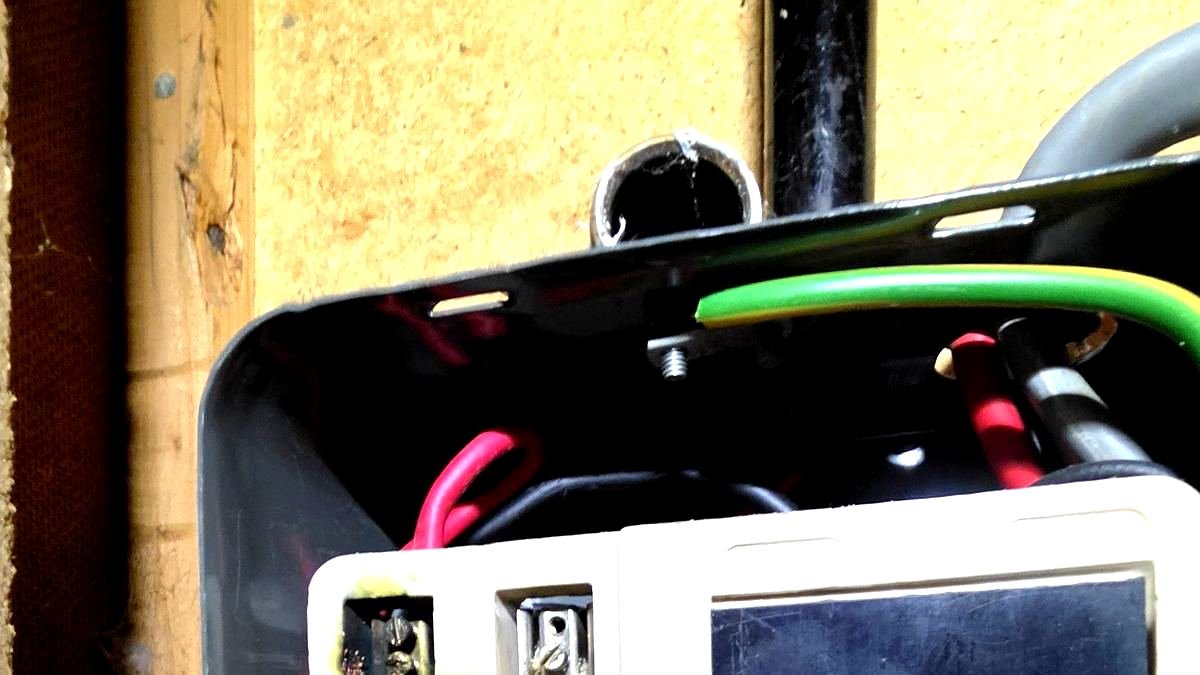
Burnt fuse board found during an EICR failure at an Aberdeenshire property
Time & Cost

Why the Turriff farmhouse takes longer than the Peterhead flat.

Rural EICRs take longer and cost more than city ones, and rather than being vague about it, here are the five honest reasons.

  • More circuits. Twenty five to forty across a farmhouse and outbuildings, against six to twelve in a flat, and each one is individually tested and recorded.
  • More boards. Every board is a separate schedule, separate readings and a separate set of RCD tests, plus the selectivity checks between them.
  • More sub mains. Each needs its cable type, sizing, length, voltage drop, protection and isolation verified.
  • More time on earthing. A TT installation needs electrode testing that a city property on a network earth simply does not have.
  • Travel and access. Turriff, Huntly, Macduff and Ballater are real drives on single carriageway roads, slower in winter, and outbuildings have to be unlocked and cleared before anything can be reached.

Because our pricing is built on boards and circuits rather than bedrooms, that model explains itself once you understand the above: more boards and more circuits means more work, and the price follows the actual installation rather than a guess at the property size. We publish the full breakdown, including exactly how additional boards and extra circuits are charged, in our EICR cost guide for Aberdeen and Aberdeenshire.

25 to 40Circuits on a farmstead
1 reportHowever many boards
Per boardIts own schedule
C1 C2 FIAny one is unsatisfactory
Landlords, The Short Version

Five years, before every new tenancy, and one thing about RCDs.

If you let a property anywhere in Aberdeenshire, Scotland's Repairing Standard sets the duty. The essentials, and then we will point you at the page that covers it properly:

  • An electrical safety inspection before a tenancy starts, and thereafter at intervals of no more than five years.
  • It covers the fixed installation from the intake, all circuits, accessories and fittings, plus any appliances you supply. Tenant owned appliances are excluded.
  • There must be at least one RCD rated at no more than 30 mA in the main or principal consumer unit. Its absence means the house does not comply, which is the single most common reason an older rural rental fails.
  • Tenants cannot be required to pay towards the cost, unless ordered to by the First-tier Tribunal.
  • Annual visual checks are recommended as good practice on longer tenancies, though that is guidance rather than law.

The full picture, including enforcement and what the tribunal can do, is on our landlord EICR guide for Scotland. For a licensed HMO, the same five yearly duty applies and councils commonly attach their own additional conditions, so check with Aberdeenshire Council and see our HMO EICR page.

If you own and live in your own home, there is no law requiring an EICR at all. It is a recommendation rather than a duty, and it becomes relevant at sale, at insurance renewal, and before major work.

Worth clearing up while we are here: Part P does not apply in Scotland. It is part of the Building Regulations for England and Wales. Scotland runs its own building standards system with a building warrant process, and electrical work is certified to BS 7671 either way.

Multifunction tester in use during a landlord EICR in Aberdeenshire
Where We Inspect

Yes, we will come out to Huntly for one EICR.

The question every rural landlord actually asks, answered by postcode district rather than by the words "and surrounding areas".

AB42

Peterhead, Mintlaw & Cruden Bay

Large private rented sector plus working farms inland. See our Peterhead EICR page.

AB43

Fraserburgh & Crimond

Coastal stock where salt air defeats outdoor accessories. See our Fraserburgh EICR page.

AB41

Ellon, Tarves & Pitmedden

Rentals in town, steadings just outside it. See our Ellon EICR page.

AB32

Westhill & Skene

Modern estate housing, usually single board and straightforward. See our Westhill EICR page.

AB51 · AB52

Inverurie, Kintore, Oldmeldrum & Insch

Garioch. Growing estates alongside working holdings, so both ends of the job.

AB53 · AB54

Turriff & Huntly

Inland market towns ringed by farmland. Multi board steadings are routine here.

AB31 · AB34 · AB35

Banchory, Aboyne & Ballater

Deeside. Estate cottages, holiday lets and second homes, frequently off the gas grid.

AB39 · AB30

Stonehaven & Laurencekirk

Kincardine and Mearns, plus agricultural work through the Howe.

AB44 · AB45 · AB33

Macduff, Banff & Alford

The north coast and upper Donside. Planned visits, and we batch where we can.

Portlethen, Balmedie and Newmachar carry an Aberdeen post town but sit in Aberdeenshire council area, and they are well inside our normal patch either way. Inspecting a property in the city itself? See our EICR in Aberdeen city page. For everything else electrical across the county, see electricians in Aberdeenshire.

FAQs

The questions rural owners ask that city pages cannot answer.

Don't see yours? Call 07304 027013 or get in touch. We come back the same business day.

My property has four fuse boards. Does that mean four EICRs?

No. It is one installation and it gets one report. What scales is the work inside it: each board needs its own schedule of circuits and test results, its own RCD tests, and the sub main feeding it has to be verified separately. We also check selectivity between the boards, so a fault in the stables trips the stables device rather than blacking out the house. One report, considerably more testing than a single board property.

Does my farm need an EICR, or just the farmhouse?

They are different scopes. The farmhouse is a dwelling and is assessed as one. The working buildings are agricultural premises and are assessed against BS 7671 Section 705, which brings in extra requirements around livestock, bonding, corrosion, dust and fire risk. If the farmhouse is let, that dwelling carries the legal duty under the Repairing Standard. The working buildings are usually driven by your insurer instead, and insurers increasingly ask for evidence.

What is a TT earthing system and why does my electrician keep mentioning it?

It means your property has its own earth rod rather than an earth provided by the network, which is common where the supply comes in overhead. It matters because the fault path runs through the soil, so the impedance is far higher and a fault often cannot draw enough current to trip a breaker. On a TT installation the RCD is the primary protection rather than a backup, so we test the electrode, the connection to it, and that the RCD actually operates in time.

Do outbuildings, garages, stables and steadings have to be included?

If they are fed from your installation, yes. This is the most common scoping disagreement on rural jobs, so we settle it before we start rather than after. Anything we genuinely cannot reach on the day, because a building is locked or a board is behind stacked feed, gets recorded on the report as an agreed limitation, which is better than quietly leaving it out.

Does an EICR cover a three phase supply, and does it take longer?

Yes and yes. With three line conductors the insulation resistance testing alone goes from three combinations per circuit to ten, and phase rotation, phase balance, prospective fault current, motor circuits, starters and isolation all come into scope. On a working farm the bigger constraint is usually the outage window, because shutting down a three phase board has to be planned around milking, drying or ventilation.

Will you actually travel to Huntly, Ballater or Macduff for one EICR?

Yes. We would rather batch it with other work in that area when we can, which keeps the cost down for everyone, so you may be offered a specific day rather than your first choice. But the answer is not the polite no you may have had elsewhere. Ring and we will tell you honestly when we can be there.

How often does a rented property in Aberdeenshire need one?

Before a tenancy starts, and thereafter at intervals of no more than five years. It covers the fixed wiring plus any appliances you supply, and there must be at least one 30 mA RCD in the main consumer unit or the property does not comply. Full detail is on our landlord EICR guide for Scotland.

What makes a report unsatisfactory?

Any C1, C2 or further investigation item. A C3 on its own does not. Rural properties pick up further investigation items more often than city ones because undocumented historic work is normal, and that keeps the report unsatisfactory until the investigation is completed. See our code guide for the definitions.

Book an EICR anywhere in Aberdeenshire.

Call Steven directly on 07304 027013, message us on WhatsApp, or use the form. Tell us roughly how many buildings have their own fuse board and whether your supply comes in overhead, and we can give you a realistic idea of scope and timing before we arrive.

Request an EICR Quote

Faithful Spark Electricians Ltd · Aberdeenshire & North East Scotland · NICEIC Approved Contractor · SELECT Member · City and Guilds 2391-52 Inspection & Testing · BS 7671 18th Edition · £2M public liability insured