
Rodents do not just damage your food stores and insulation — they damage wiring. Mice and rats gnaw constantly to wear down their teeth, and electrical cable insulation is one of the most common materials they target inside a property. The result is exposed copper conductors sitting inside wall cavities, roof spaces and under floors where no one can see them. When those conductors touch earthed metalwork or each other, the outcome is a fault. When that fault arcs, it can start a fire in material that has been accumulating in the same hidden space for years.
This guide explains the electrical risk from rodent damage, how to identify the signs before something goes wrong, what an inspection of a rodent-affected property actually involves, and what the remediation options are. It is written from direct experience — we carry out inspections in rodent-affected properties across Aberdeen, Peterhead, Fraserburgh and wider Aberdeenshire regularly, and the damage we find is often more extensive than the property owner expected.
Why Rodents Target Electrical Wiring
A rodent’s teeth grow continuously throughout its life. Gnawing is not a behaviour they choose — it is a biological necessity to keep their teeth at a functional length. Inside a building, they gnaw on whatever is accessible: timber joists, plastic pipes, insulation board, and cable sheaths.
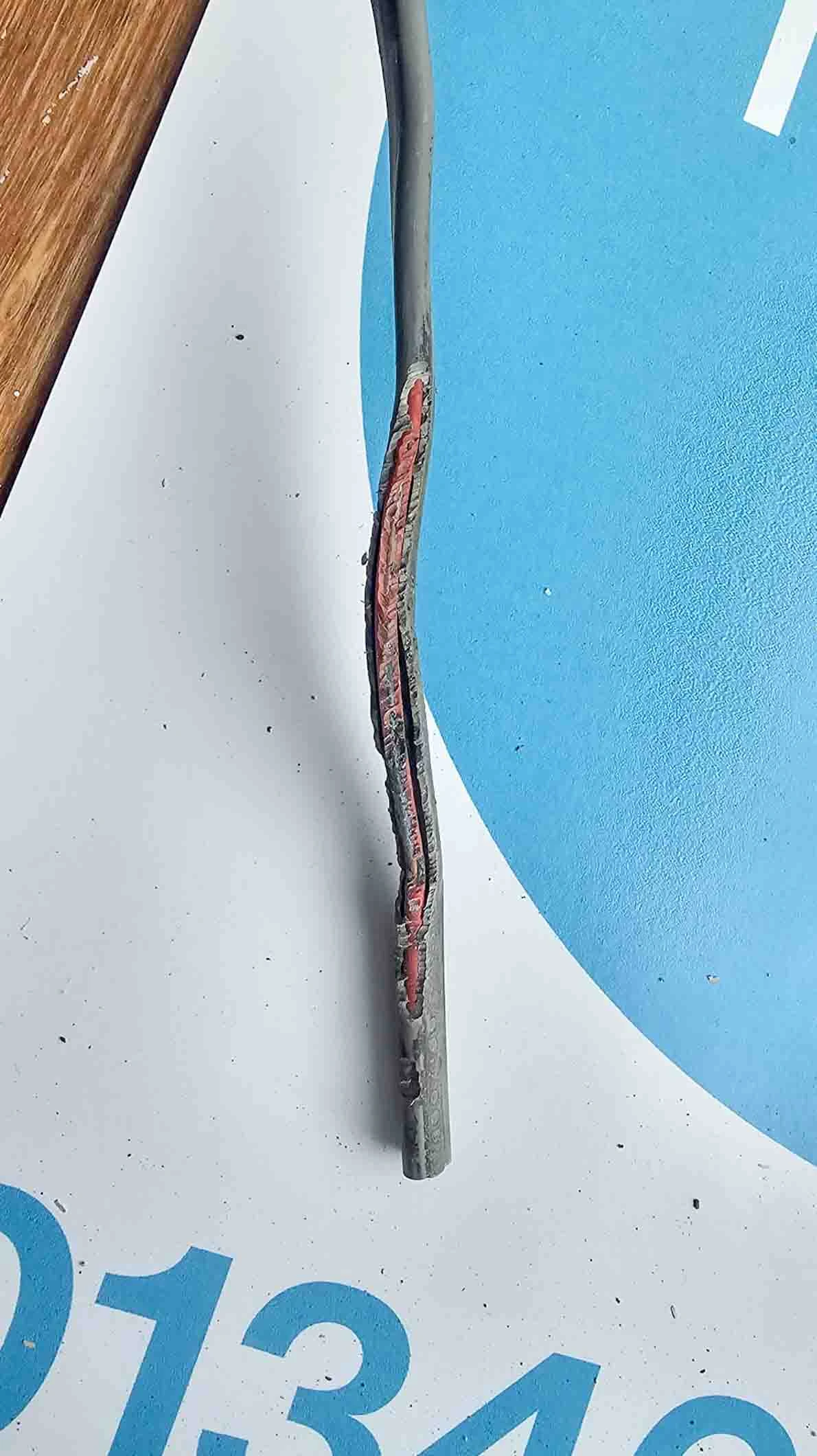
Modern electrical cables are sheathed in PVC, which is soft enough to chew through quickly. Older cables with rubber insulation are even more vulnerable — the rubber becomes brittle with age, and a mouse can strip the insulation cleanly from a conductor without much effort. What remains is an uninsulated live conductor in a concealed location with no protection against contact with other conductors, earthed metalwork, or combustible material.
The risk is compounded by the locations rodents prefer. Roof spaces, underfloor voids, and wall cavities are exactly the spaces where wiring runs, where nest material accumulates, and where a fault-induced arc can ignite dry timber or insulation without anyone being aware. According to Electrical Safety First, electrical faults cause around half of all accidental house fires in the UK. Concealed arc faults from damaged wiring are among the hardest to detect before they cause serious harm.
What Rodent Electrical Damage Looks Like
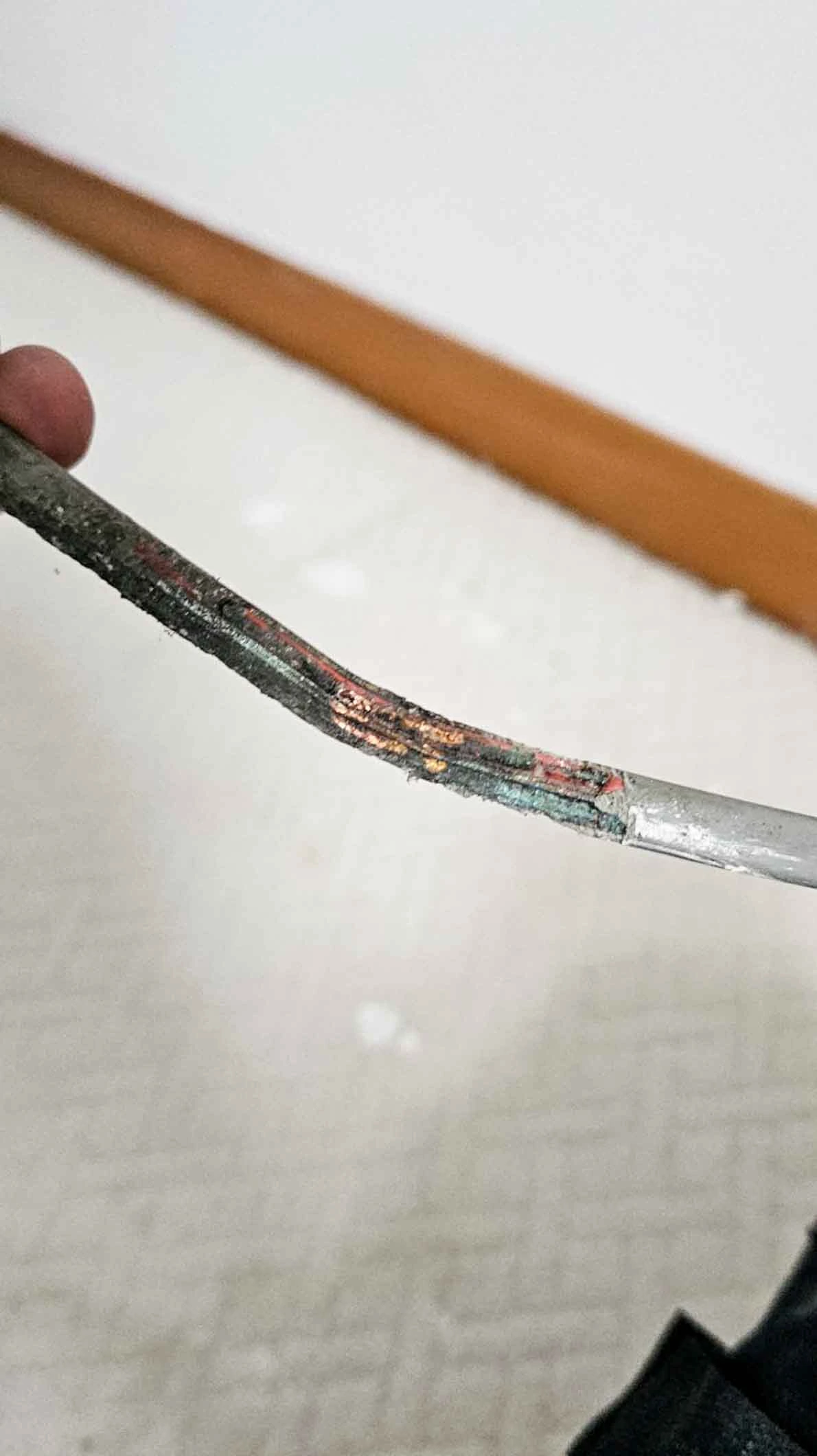
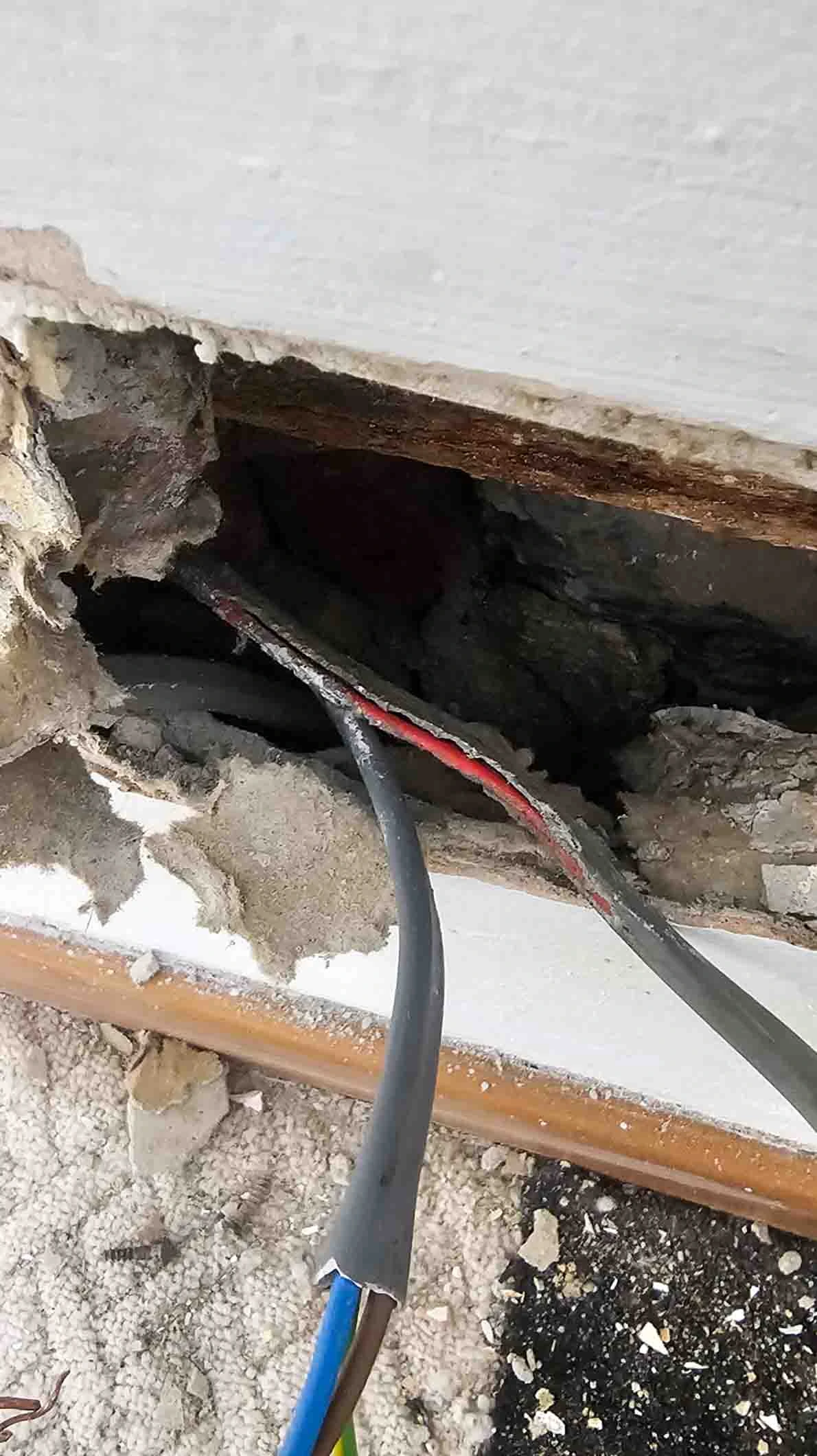
The photographs above show cables inspected during a periodic inspection in Fraserburgh. The insulation has been stripped back to the bare conductor by mouse activity. In both cases, the cables were in a roof space the owner had not accessed in several years. The wiring appeared completely normal from the consumer unit — no tripped breakers, no blown fuses, no visible fault. The damage was only found during the inspection when the roof space was entered and the wiring was physically examined.
This is the nature of rodent electrical damage — it is almost always invisible from below. The signs that might prompt an investigation are indirect:
- Intermittent circuit faults. Lights flickering, sockets cutting out, or circuits tripping without an obvious cause. These symptoms can indicate partial conductor damage where the circuit still functions under normal load but faults under higher demand or movement.
- RCD tripping without explanation. An RCD that trips without a clear cause — no appliance fault, no water ingress — may be responding to a small but persistent earth fault caused by damaged insulation in a concealed location.
- A burning smell without a visible source. The smell of burning plastic or hot insulation without a visible cause is a serious warning sign that requires immediate investigation. Do not ignore it and do not assume it will resolve itself.
- Evidence of rodents in the property. Droppings, gnaw marks on other materials, nesting in loft insulation, or noise from roof spaces or underfloor voids. If there is rodent activity in the building, there is a reasonable probability that wiring has been targeted.
- Visible cable damage at accessible points. Under-sink cupboards, airing cupboards, and meter cupboards where cables pass through are sometimes accessible to rodents and can show damage that gives a visible indicator of the risk in less accessible areas.
The Case for Inspection After Any Rodent Infestation
If you have had a rodent infestation confirmed — by a pest controller, by your own findings, or by the evidence described above — an electrical inspection is not optional. It is the only way to determine whether wiring has been damaged and to what extent.
A visual inspection alone is not sufficient. Insulation resistance testing is required to identify compromised cable insulation that may not be visibly damaged but has been weakened enough to fail under load or in damp conditions. A full EICR on a rodent-affected property should include physical access to the affected areas — roof spaces, underfloor voids where accessible — and insulation resistance testing of all circuits, not just a sample.
Where physical access is limited, we carry out insulation resistance tests from the consumer unit on every circuit and compare results against BS 7671 limits. A circuit that fails insulation resistance testing has compromised insulation somewhere along its length. That does not immediately tell you where, but it confirms that further investigation is required before the circuit can be used safely.
Rodent Damage in Aberdeen and Aberdeenshire Properties
Aberdeen’s older housing stock presents particular risk factors for rodent-related electrical damage. Granite tenements have extensive roof spaces shared across multiple flats, with wiring runs that were installed decades ago and have been modified multiple times. A rodent infestation in one flat’s roof space can cause damage to wiring serving multiple properties in the building — and the fault may not manifest in the flat where the damage occurred.
In rural Aberdeenshire, farm buildings, outbuildings and properties with agricultural land nearby face higher rodent pressure than urban properties. Wiring in outbuildings and garages is particularly vulnerable — these spaces are less visited, less monitored, and often have older wiring that was installed without the protection levels required under current standards. A detached garage with wiring running through the roof space may have sustained significant rodent damage without any visible indication inside the building.
Coastal properties in Peterhead, Fraserburgh and Stonehaven combine the rodent risk with salt air corrosion. Damaged insulation in a damp coastal environment degrades faster than the same damage in a dry inland property. The combination of compromised insulation and moisture accelerates the progression from latent fault to active failure.
Other Pests That Cause Electrical Damage
Rodents cause the most common and most severe electrical damage, but they are not the only pest risk.
Squirrels
Grey squirrels are a significant electrical hazard in properties with roof space access. They are larger than mice, gnaw more aggressively, and can strip cable insulation quickly. They are also more likely to gnaw through structural cables — including mains supply cables in roof spaces — than smaller rodents. Squirrel damage in a roof space often results in complete circuit failure rather than the intermittent faults more typical of mouse damage.
Birds
Nesting birds — particularly starlings and sparrows — do not gnaw wiring but can cause damage through nest material accumulation around cables and junction boxes. Dry nesting material in contact with wiring that runs warm under load is a fire risk. Bird nests also attract secondary pests, including insects and occasionally rodents attracted by food remains in the nest.
Insects
Certain insects — notably carpenter ants in some regions, though less common in Scotland — can damage wiring insulation. More commonly in Scotland, insect activity in wall cavities and roof spaces contributes to the degradation of older rubber-insulated cables by accelerating moisture ingress and insulation breakdown. The electrical risk from insects alone is lower than from rodents, but an insect infestation in a building with older wiring is a reasonable prompt for an inspection.
What Happens During an Inspection of a Rodent-Affected Property
An inspection of a property with known or suspected rodent activity is more involved than a standard periodic EICR. The process typically involves:
- Visual inspection of accessible areas. Roof space, underfloor void if accessible, meter cupboard, consumer unit enclosure, and any other areas where rodent activity has been noted. We are looking for physical damage to cable sheaths, gnaw marks, nesting material around wiring, and evidence of rodent runs along cable routes.
- Insulation resistance testing of all circuits. Every circuit is tested from the consumer unit. Results below BS 7671 limits indicate compromised insulation requiring further investigation or cable replacement.
- Earth fault loop impedance testing. Confirms that protective devices will operate correctly if a fault occurs. Damaged wiring that has not yet caused a fault may still pass impedance tests, which is why insulation resistance testing is essential alongside it.
- RCD operation testing. All RCDs and RCBOs are tested to confirm they operate within the required time parameters. A persistent small earth fault from damaged insulation can in some cases cause an RCD to become less sensitive over time.
- Documentation of findings. All damage found is recorded with the circuit affected, the nature of the damage, and the recommended remediation. This forms the basis of the EICR report and the remediation scope.
For properties where the extent of damage is unclear from accessible areas, we advise on further investigation options including targeted access to specific voids or cable routes where damage is suspected based on test results.
Remediation: What Fixing Rodent-Damaged Wiring Involves
The remediation for rodent-damaged wiring depends on the extent and location of the damage.
Localised Cable Replacement
Where damage is confined to an accessible section of cable and the rest of the circuit is intact, the affected section can be replaced. This is most straightforward where cables are clipped to surfaces or run through accessible conduit. In concealed locations — through roof spaces or under floors — replacement requires access to the full cable run, which may involve lifting floorboards or working in confined roof spaces.
Full Circuit Rewire
Where a circuit has sustained damage across multiple points, or where the cable route passes through areas that cannot be accessed to check the full run, replacing the entire circuit from the consumer unit to the first outlet and then throughout the circuit is often the only reliable option. This gives a clean, fully tested circuit with no uncertainty about concealed damage.
Full or Partial Rewire
Where rodent damage has affected multiple circuits across the property, or where the existing wiring is old enough that a targeted repair leaves unacceptable risk on other circuits, a full or partial rewire gives the most comprehensive solution. Our rewiring guide for Aberdeen properties covers what a full rewire involves and how long it takes.
Consumer Unit Upgrade
Properties with rodent-damaged wiring often also have older consumer units without full RCBO protection. Where remediation work involves replacing circuits, it is logical to combine this with a consumer unit upgrade to ensure the repaired installation has the protection levels required under BS 7671 Amendment 4. Fitting new circuits to an old board with inadequate protection addresses one problem while leaving another.
Prevention: Stopping Rodents from Reaching Your Wiring
Electrical remediation addresses the damage that has already occurred. Preventing re-infestation requires pest control measures that are outside the electrician’s scope but worth coordinating alongside the electrical work.
From an electrical perspective, the most useful prevention measure is appropriate cable protection in vulnerable areas. Metal conduit or steel wire armoured cable in roof spaces and underfloor voids is significantly more resistant to rodent damage than standard PVC-sheathed cable. Where wiring in these areas needs replacing as part of a remediation, specifying conduit or SWA cable in the most exposed sections reduces the risk of repeat damage.
Sealing cable entry points — where cables pass through walls, floors and ceilings — reduces rodent access along cable routes. Fire-rated cable entry seals serve a dual purpose: they prevent rodent movement along cable routes and provide the fire compartmentation that BS 7671 requires at penetrations through fire-rated structures.
What to Do If You Suspect Rodent Damage Right Now
If you have active symptoms — unexplained circuit faults, RCD tripping, burning smells, or confirmed rodent activity — do not wait. A circuit with compromised insulation is a fire risk that does not resolve itself. The correct immediate steps are:
- If there is any smell of burning or visible scorching, isolate the supply at the consumer unit and call an electrician immediately. Do not restore power until the cause has been identified.
- If symptoms are intermittent rather than acute, book an inspection as soon as possible. Do not continue using circuits that are behaving unusually.
- Contact a pest controller alongside the electrician. Addressing the infestation and the electrical damage in parallel prevents the situation recurring.
The Health and Safety Executive provides guidance on electrical safety risks in premises including those caused by damage to wiring. We cover Aberdeen city and the full Aberdeenshire area for rodent damage inspections and electrical remediation work. Call 07304 027013 or email info@faithfulsparkelectricians.co.uk. You can also read about the most common faults found during EICRs in the North East or find out whether your installation needs testing.
Frequently Asked Questions
How do I know if rodents have damaged my wiring?
Unexplained circuit faults, flickering lights, RCD tripping without a clear cause, or a burning smell without a visible source are all indicators. If you have had a confirmed rodent infestation, an electrical inspection is the only way to know for certain whether wiring has been damaged.
Is rodent electrical damage covered by home insurance?
This depends on your policy. Many home insurance policies exclude gradual damage and pest damage. Damage from a sudden event — such as a fire caused by rodent-damaged wiring — may be covered under the buildings section, but the remediation cost for the damaged wiring itself is often excluded. Check your policy wording and contact your insurer before assuming cover applies.
Can I just tape up damaged cable insulation?
No. Electrical tape is not an approved repair method for damaged cable insulation and does not restore the cable to a compliant condition. A cable with gnaw damage should be treated as condemned and replaced. Taping over visible damage also does nothing to identify or address damage in inaccessible sections of the same cable run.
How much does an inspection of a rodent-affected property cost?
An EICR for a rodent-affected property starts from £150 for a standard domestic property. Properties with extensive roof spaces, multiple circuits to test, or limited access may take longer and will be quoted accordingly. We provide a fixed price before work starts.
Do I need to tell my landlord about rodent electrical damage?
Yes. As a tenant, you have an obligation to report defects to the landlord, including evidence of rodent damage to wiring. The landlord then has an obligation under the Housing (Scotland) Act 2006 Repairing Standard to ensure the electrical installation is in a reasonable state of repair. Failure to report a known defect can affect your position if an incident subsequently occurs. For landlords, a landlord EICR is the correct tool for assessing and documenting the installation’s condition.


