
Arc fault detection devices (AFDDs) provide additional protection against electrical fires caused by dangerous arcing. BS 7671 introduced AFDD recommendations in 2018, and Amendment 2 in 2022 made them a requirement for specified socket circuits in particular residential buildings. Whether your property needs them depends on its use, the circuits involved and the electrical work being carried out.
What is an AFDD?
An AFDD monitors a circuit for the electrical characteristics of dangerous arcing and disconnects the supply when it detects an arc fault within its operating criteria. It reduces the risk of a fire developing or spreading.
Some products combine AFDD and RCBO functions in one device. These provide arc fault detection, overcurrent protection and residual current protection. Other AFDD designs have different combinations of protection, so an AFDD should not automatically be described as an RCBO.
Conventional fuses, MCBs and RCDs provide essential protection, but some dangerous arcing faults can occur without operating them. An AFDD addresses this additional risk.
What is an electrical arc and why does it matter?
An electrical arc is a discharge across a gap or damaged insulating material. It can occur at damaged cables, worn contacts or deteriorating connections, producing intense local heat that may ignite nearby combustible material.
Some arcing faults draw too little current to operate an MCB and have no leakage to earth to operate an RCD. AFDDs look for the electrical signature of dangerous arcing. They do not detect every cause of overheating, so damaged wiring and loose connections still need repairing.

AFDD protection is selected for individual circuits. Some devices combine arc fault detection with RCBO protection.
When does the 18th edition require AFDDs?
Regulation 421.1.7 requires AFDD protection for single phase AC final circuits serving socket outlets rated at 32 A or below in:
- High rise residential buildings.
- Houses in multiple occupation (HMOs).
- Purpose built student accommodation.
- Care homes.
These requirements were introduced by Amendment 2 in 2022. Amendment 4 changes the term “higher risk residential buildings” to “high rise residential buildings”. For this BS 7671 provision, that means residential buildings over 18 metres high or with more than six storeys, including the ground floor.
In other premises, AFDDs are recommended for the same category of socket circuits. An ordinary house does not automatically require AFDDs on every circuit simply because its consumer unit is being replaced.
The designer must apply the relevant requirements to new installations and the work being altered. Existing installations need a separate assessment; the rules do not create a blanket requirement to retrofit every older consumer unit.
Do I need to retrofit AFDDs to my existing consumer unit?
An installation does not automatically become unsafe because it was built to an earlier edition of BS 7671. The condition of the wiring, the existing protection and how the building is used all matter.
If you are replacing the consumer unit, rewiring or adding circuits, your electrician should check which AFDD requirements apply to that work. In an HMO or another building covered by Regulation 421.1.7, the replacement design should include AFDD protection for the relevant socket circuits.
A change to the building’s use also needs an electrical and fire safety review. The installation assessment and any applicable licensing conditions should establish what upgrading is needed.
AFDD cost in Aberdeenshire
The additional cost depends on the number of circuits receiving AFDD protection, the device specification and the compatible equipment available for the consumer unit. Protection is selected for individual circuits, so the number of bedrooms alone cannot determine the price.
For a new consumer unit, compare the complete price of the specified AFDD arrangement with the equivalent RCBO arrangement. Where a combined AFDD and RCBO replaces a standard RCBO, the comparison should allow for the RCBO already included in the original quote.
Retrofitting can involve additional work if the existing board cannot accept suitable devices. We assess the board and circuits before quoting. Ask us for an itemised quotation showing the circuits covered, equipment, installation and testing costs, with the VAT position clearly stated.
Are AFDDs worth fitting voluntarily?
Where AFDDs are recommended, they can add protection against dangerous arcing that conventional devices may not detect. Discuss the benefit, the circuits to protect and the additional cost with your electrician.
An AFDD is not a repair for damaged wiring, a loose connection or a faulty appliance. Defects must be investigated and corrected even where extra protection is being installed. We explain the options so you can choose a suitable specification for your property.
AFDDs in HMO properties: a specific note
For new installations and relevant alterations in HMOs, Regulation 421.1.7 requires AFDD protection for the specified single phase socket circuits. This should be included when designing a replacement consumer unit for an HMO.
For an existing HMO, the EICR assesses whether the installation is safe for continued use. The absence of AFDDs should be considered using current inspection guidance and the actual installation findings. Check any property specific licensing conditions separately. A recommendation arising from an EICR does not remove the requirements that apply when new work is designed.
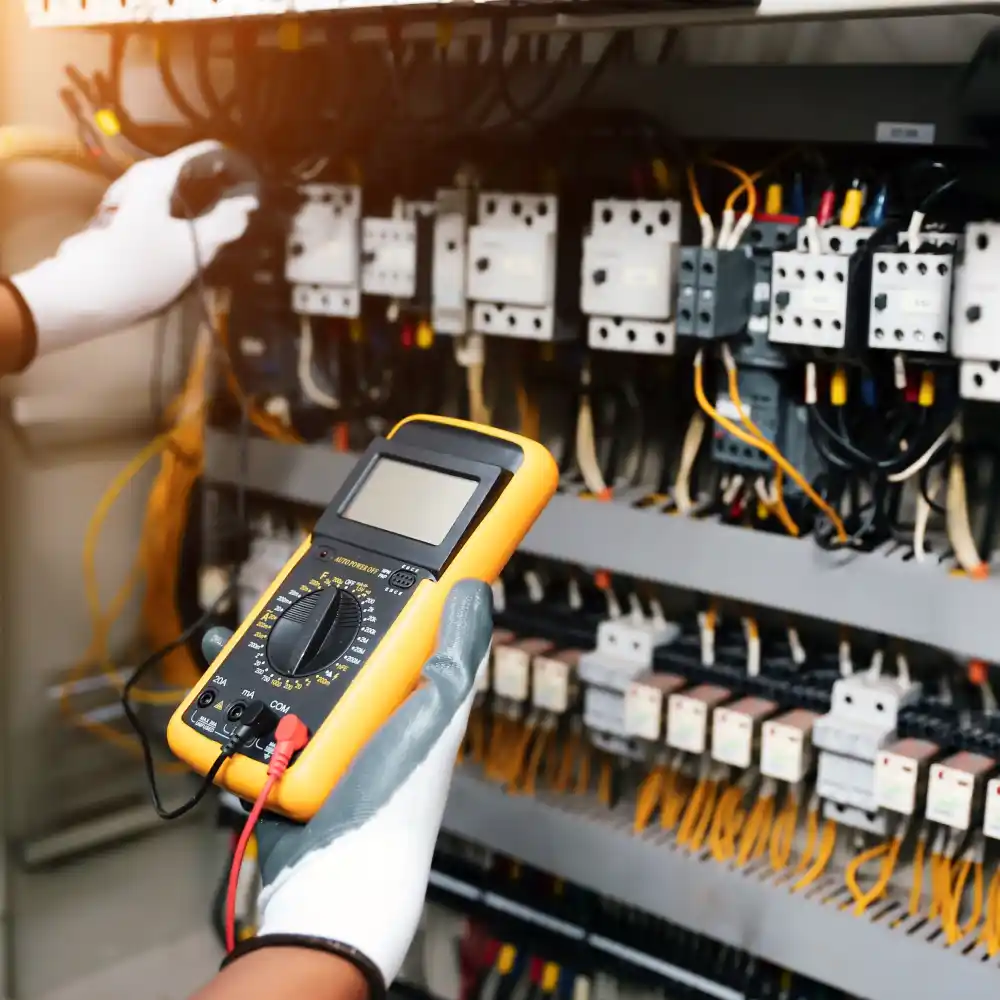
AFDD requirements depend on the building category and the socket circuits involved. Your electrician should confirm the appropriate specification.
Frequently asked questions
Will an AFDD trip when I plug in a vacuum cleaner or hairdryer?
It should not trip simply because a healthy appliance operates normally. AFDDs are designed to distinguish normal switching and motor activity from dangerous arcing. Repeated tripping needs investigation using the manufacturer’s guidance; it should not be dismissed or bypassed.
Can I add AFDDs to my old consumer unit?
Sometimes. Your electrician must check the exact consumer unit and the manufacturer’s compatibility information. Physical fit or matching brand names alone do not establish suitability. A replacement board may be needed where compatible devices cannot be fitted.
Is the EICR going to flag the absence of AFDDs?
Electrical Safety First’s Best Practice Guide 4, Issue 7.4, gives C3, meaning improvement recommended, for missing AFDD protection in the four specified residential building categories. Elsewhere it lists the absence as an observation. The inspector must also assess any actual damage, overheating or other defects, which may justify a different classification. Missing AFDD protection alone should not be described as an automatic C2 simply because of the consumer unit’s installation date. Inspection guidance does not cancel AFDD requirements for new work.
Are AFDDs different from RCBOs?
Yes. An RCBO provides overcurrent and residual current protection. An AFDD detects dangerous arcing. A combined AFDD and RCBO provides all three functions, but not every AFDD includes an RCBO.
Do AFDDs need testing as part of an EICR?
The inspector follows the manufacturer’s instructions for the fitted devices, including any manual test button operation and automatic self test indications. BS 7671 does not require an external instrument test of the arc detection function. Where an AFDD incorporates an RCD or RCBO, the residual current function has its own inspection and testing requirements.
Book a consumer unit survey including AFDD options
Faithful Spark Electricians installs consumer units across Aberdeen and Aberdeenshire, including AFDD protection where appropriate. We explain which circuits require protection and provide a quotation for the work. Contact us to discuss your property or read about our consumer unit replacement service in Aberdeen. For the wider picture on the 2026 regulations see our guide to BS 7671 Amendment 4.
Faithful Spark Electricians. niceic approved. Local Aberdeen team. Consumer unit upgrades, AFDD installations, and electrical installation certificates for Aberdeen, Peterhead, Ellon, Fraserburgh and across Aberdeenshire.


