...
AB42 · Peterhead, Boddam & Buchan · NICEIC Approved

Solar panels on a Peterhead roof are only as good as what holds them down.

Solar PV designed, installed and certified across Peterhead and AB42. NICEIC approved, City and Guilds Level 3 qualified, MCS registered through our Q-Smart partnership. Free roof survey and a fixed written price. Peterhead sits at the easternmost point of mainland Scotland, on an open North Sea coast. Up here the thing that decides whether an array is still earning in twenty five years is not the badge on the panel.

★★★★★
5.0 from 100+ Google reviews · NICEIC Approved · SELECT · BS 7671
AB42Peterhead & Buchan
From £7,000Fully installed
0% VATTo at least March 2027
2,600 kWhTypical 4kWp year
SEG readyExport income from day one
Why Peterhead Is Different

A town that moves an extraordinary amount of electricity, and almost none of it is yours.

There is a power station on the bay. Off this coast, in October 2017, Hywind Scotland became the world's first floating offshore wind farm. And right now, a few minutes south towards Boddam, contractors are building the Peterhead converter station for Eastern Green Link 2, a pair of 525kV stations joined by 436km of subsea cable that will carry Scottish power all the way to Drax in North Yorkshire.

Stand almost anywhere in the town and you are within a few miles of infrastructure shifting gigawatts. None of it changes the number on your own electricity bill. That is the strange thing about living in Buchan's biggest town, a place of just under twenty thousand people and the busiest fishing port in the country. The energy passes through. It does not stop at your meter.

Solar is the one thing that does stop at your meter. Every unit your roof makes and your house uses is a unit you never buy, and at current prices that is worth roughly 24p to you. Everything on this page is about making that happen properly on a coastal roof, and about the questions a Peterhead homeowner should be asking before signing anything.

The energy passes through. It does not stop at your meter.

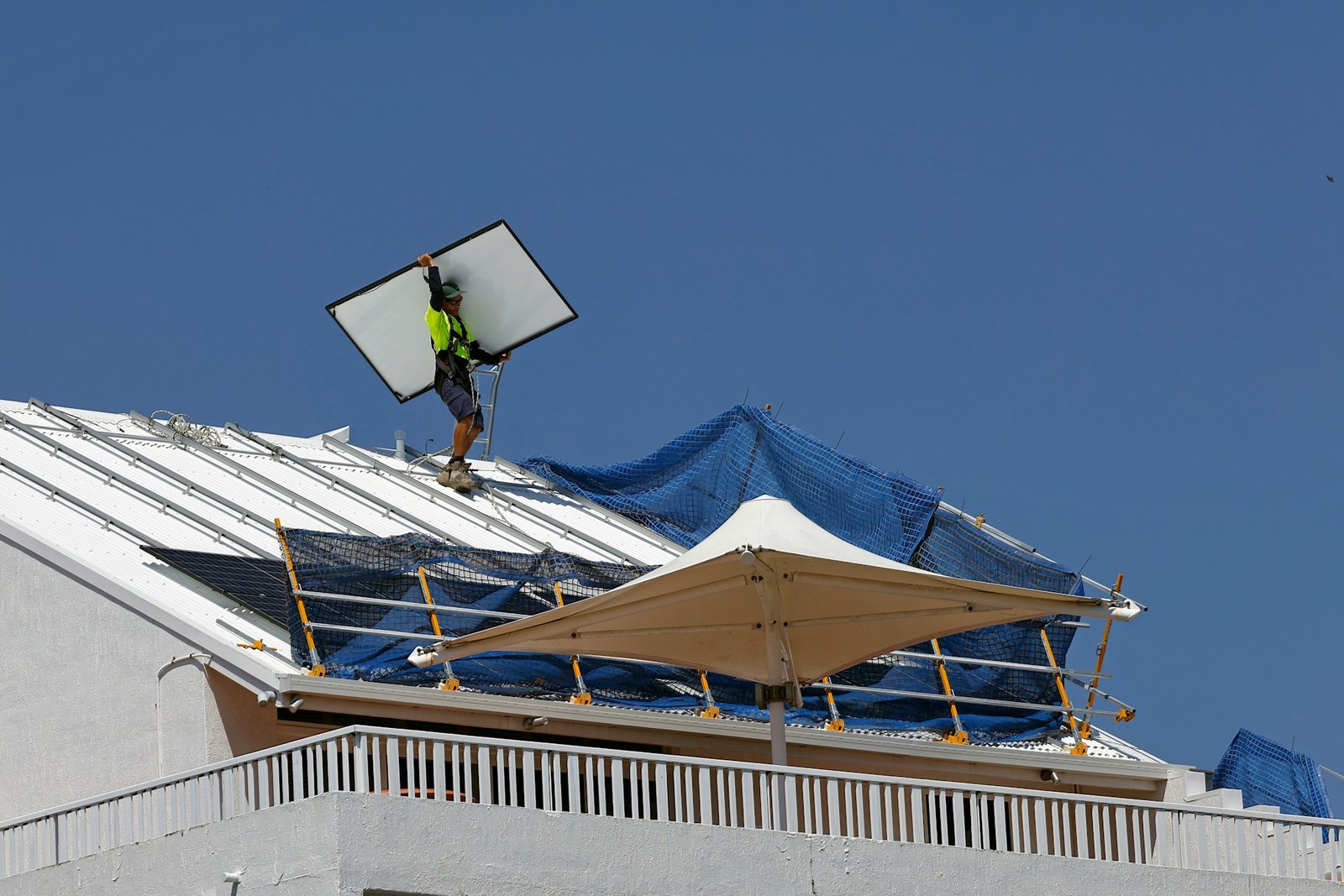
An installer at ridge height securing a module onto its mounting rail, roof anchor and clamp detail visible

Solar PV and battery storage installed by Steven Watt, who holds City and Guilds Level 3 Awards in Small Solar Photovoltaic Systems and in Small Electrical Energy Storage Systems, both awarded April 2026, alongside 2391-52 inspection and testing and an HNC in Engineering Systems. NICEIC Approved Contractor, enrolment 620239. Every installation is fully MCS registered through our Q-Smart partnership.

The Part Nobody Quotes On

On this coast, an array fails at the fixings long before it fails at the panel.

Every quote you receive will list panel wattage, inverter model and warranty length. Very few will tell you how that array is going to be held onto a roof facing the North Sea. Here is what actually decides it in AB42.

01
Load

Wind uplift, not panel weight

The load that governs an exposed east coast roof is not the weight pressing down. It is the suction pulling up. Air flowing over a pitched roof creates negative pressure, strongest at the edges, the ridge and the corners, and a solar array is a large flat surface sitting right in it. The mounting system has to be designed around the site wind speed, the zone of the roof each panel sits in, and the height of the building.

What that means in practice: shorter rail spans, more roof anchors than a default layout would give you, and the array kept back from the edge zones where uplift is worst. It costs a little more in brackets. It is the difference between a system that shrugs off a January gale and one that starts working its fixings loose.

02
Structure

The roof underneath the roof

An array adds roughly 12 to 15 kilograms per square metre before you count what the wind does to it. Peterhead has a great many traditional granite cottages and terraces spreading out from the port, and a great many of them have been recovered at some point without anyone recording what was done to the timbers.

What that means in practice: we look at the structure before we design the array, not after the panels are ordered. This is not only good practice here, it is a Scottish regulation point. The building warrant exemption for domestic solar depends entirely on the existing roof being able to take the load, which is covered in the rules section below.

03
Shading

Chimneys, dormers and tight terraces

Older Peterhead streets are close packed, with chimney stacks, dormers and neighbouring gables that put shade across part of a roof at some point in the day. On a plain string inverter, one shaded panel drags down every panel on that string with it.

What that means in practice: where shade cannot be avoided we specify SolarEdge, with a power optimiser on each panel, so a shaded module costs you that module and nothing more, and you get per panel monitoring into the bargain. Where the roof is clean and unobstructed a hybrid inverter from Fox ESS, Alpha ESS or SolaX is the better value answer. That call comes out of the survey, not out of a catalogue.

Why we lead with this. Look at the solar pages ranking for Peterhead searches and you will find panel brands, payback claims and grant sections. You will not find wind loading, fixing grade or a word about the roof structure. On a sheltered inland bungalow that omission may never cost anybody anything. Ten minutes from the North Sea it is the whole job.

A4 Stainless And MCS 012

Two quotes can look identical on paper and buy you a completely different system.

The difference almost never shows up in the panel line. It shows up in the mounting system, the grade of the fasteners, and whether anybody went into the loft.

What A Coastal Specification Should Say

The lines worth looking for

  • A4 grade stainless steel fixings rather than the A2 that is standard on an inland job.
  • Mounting components specified for a coastal environment, not pulled off a default drawing.
  • Shorter rail spans and more roof anchors than a default layout would give you.
  • The array kept back from the edge zones where uplift is worst.
  • A check on the roof structure before the array is designed rather than after the panels are ordered.
  • A rail layout designed around your roof, which is what coastal specification as standard actually means.
What Most Quotes Say Instead

Panel wattage, inverter model, warranty length

That is usually the whole document. Very few quotes tell you how the array is going to be held onto a roof facing the North Sea, and the parts that decide that are the cheapest lines to trim.

A word on cheaper quotes. You will see solar advertised locally from around £4,000. Before you compare it to our figures, ask three questions: which mounting system does that buy, what grade are the fixings, and is a structural check on the roof included. On a sheltered inland bungalow the lighter specification may be perfectly sound. On an exposed AB42 roof it is a different question entirely, and the honest answer is that the cheap version is often a different product rather than the same product cheaper.

This is the direction the industry itself is moving. MCS 012, the standard that governs how a mounting system meets the building, moved to Issue 3.0 with a much heavier emphasis on accelerated weathering and corrosion resistance. For a town like this, that is exactly the right emphasis.

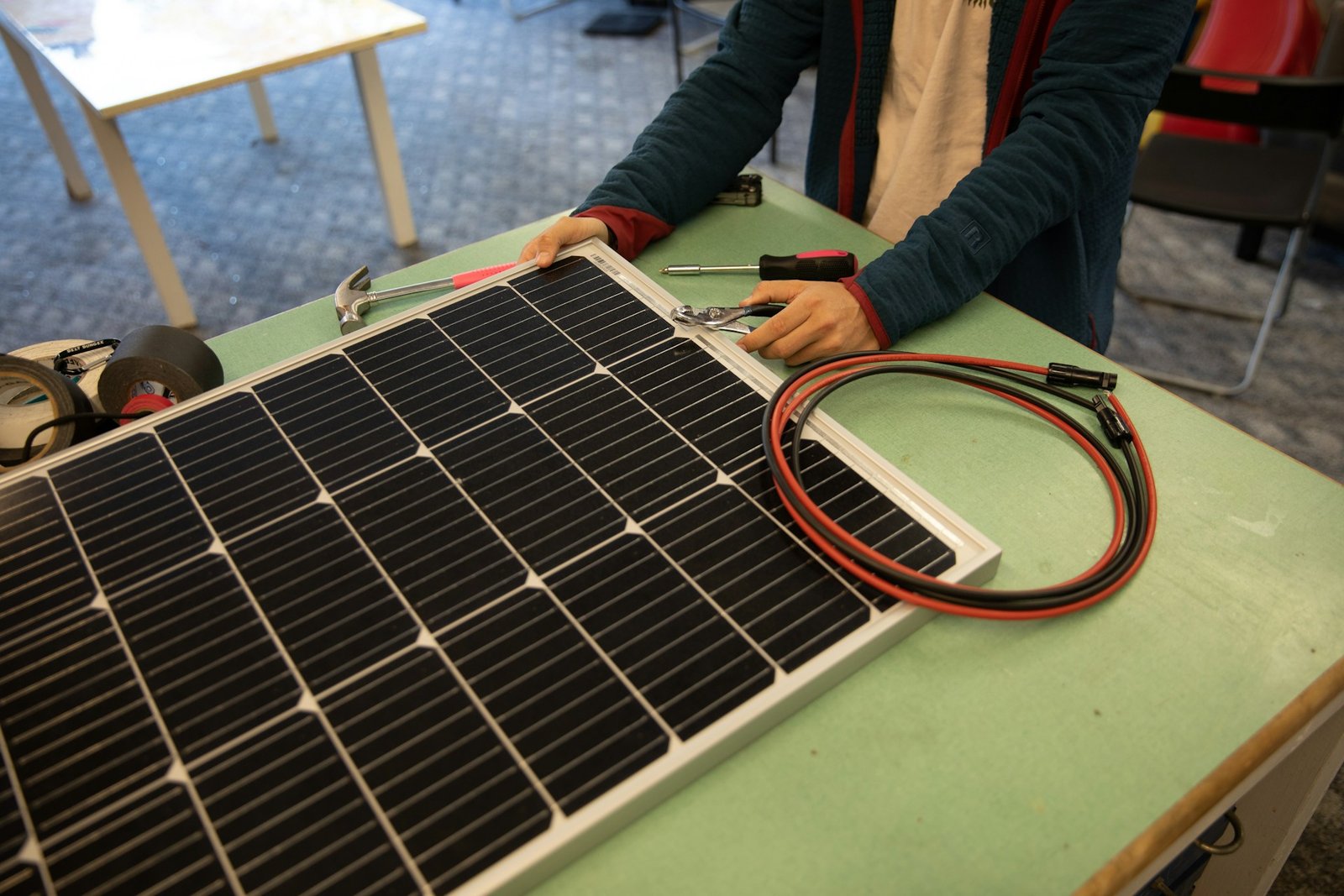
An electrician preparing a solar module on a bench with hand tools and mounting hardware laid out beside it
The Kit

What goes on your roof, what goes on your wall, and why.

Panels. Tier 1 monocrystalline modules with a 25 year performance warranty. We deliberately do not tie ourselves to one panel manufacturer. Module pricing and availability move constantly, and in twenty five years of a well built system the panel is the least likely component to be the problem.

Inverters and storage. We fit SolarEdge, Fox ESS, Alpha ESS and SolaX. SolarEdge goes on shaded or awkward roofs, because a power optimiser on every panel means a shaded module costs you that module alone, and you get per panel monitoring with it. Fox ESS, Alpha ESS and SolaX hybrid inverters go on clean roofs and suit anyone who wants solar and battery on one platform with one app. SolaX Triple Power is lithium iron phosphate, built in 5.8kWh modules stacking to around 23kWh, with a 10 year warranty and SolaX Cloud monitoring.

Mounting. Coastal specification as standard here: A4 stainless fixings, corrosion rated components, and a rail layout designed around your roof rather than pulled off a default drawing.

EV charging. If there is an electric car on the drive, or one coming, a myenergi Zappi or an Ohme Home Pro will divert surplus solar into the car instead of exporting it. Every unit that goes to the car rather than to the grid is worth roughly 10p more to you. EV charger installation in Peterhead covers that side in full.

Salt In The Air

What corrosion actually goes after on a Buchan roof.

Peterhead air carries salt. Not dramatically, not every day, but constantly, and across a twenty five year design life that is the condition the system has to survive.

The conditionConstant airborne salt rather than occasional exposure, over a twenty five year design life.
What copes wellThe panels themselves. They are glass and anodised aluminium and cope with it well.
What suffersThe metalwork underneath, and above all the fasteners.
Fixings we useA4 grade stainless steel, rather than the A2 that is standard on an inland job.
Mounting componentsSpecified for a coastal environment, with a rail layout designed around your roof.
Where the standard is goingMCS 012 moved to Issue 3.0, with a much heavier emphasis on accelerated weathering and corrosion resistance.
Cost effectA coastal fixing specification carries a modest premium over a standard inland kit.
The Honest Answer

Peterhead is at 57.5 degrees north. Yes, solar still works. Here is the real shape of it.

People get this wrong in both directions. The pessimists decide Scotland is too far north and too grey to bother. The optimists quote a yield figure lifted from a brochure written for the Home Counties. The truth sits in between, and it is seasonal rather than small.

Long summers, short winters, and a curve rather than a flat line

In June you get around eighteen hours between sunrise and sunset here. In December it is closer to six. Your generation follows that curve exactly, and roughly three quarters of your annual output arrives between March and September. Plan around that and solar makes sense. Expect a steady year round trickle and you will be disappointed in January.

The half of the story nobody tells you is temperature. Photovoltaic modules lose efficiency as the cells heat up. A cool, bright, breezy Buchan afternoon is close to ideal operating conditions for a panel. It is why a Peterhead array on a clear April day will often out perform the same array sitting in a Midlands heatwave. Cloud is the enemy of solar. Heat is not its friend either.

Panels also generate on overcast days, on diffuse light, at a reduced rate. That is not a sales line, it is how the physics works, and it matters more at this latitude than it does further south because we get a lot of bright grey.

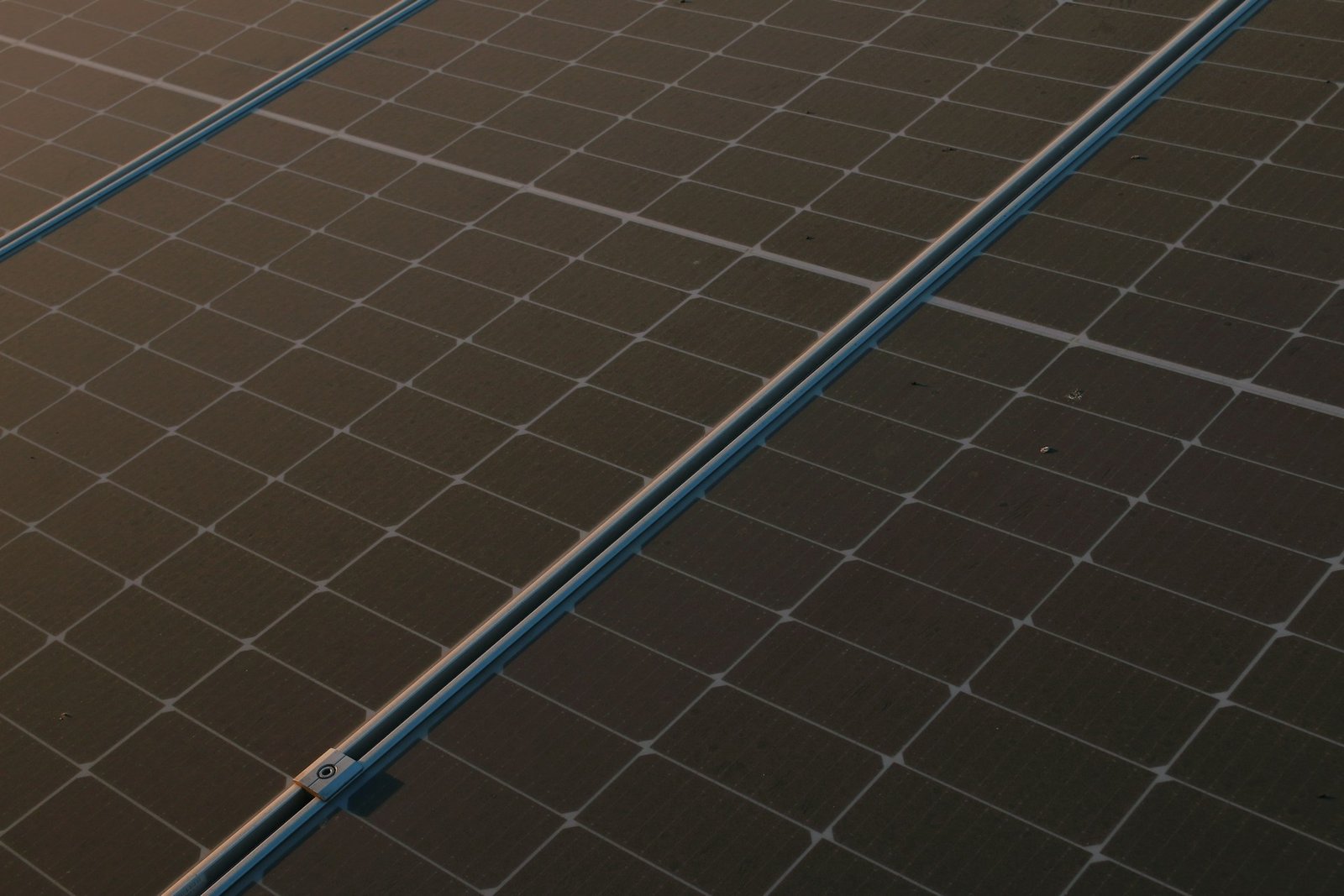
Close view of a photovoltaic module surface showing cell busbars and the anodised aluminium frame edge
Bright, cool and breezy is close to ideal for a photovoltaic panel. Heat is what costs you efficiency.
Who Is Actually On Your Roof

The qualifications behind a Peterhead solar installation.

Solar sits at the point where roofing, electrical work and grid connection meet, so it is worth knowing exactly what the person quoting you is qualified to do. Here is ours, in full, with the certificates rather than a badge on a footer.

Anyone can claim qualifications. We will show you the certificates. Click either image to view the original document.

Held by Steven Watt

  • City and Guilds Level 3 Award in the Installation and Maintenance of Small Solar Photovoltaic Systems (610/4841/0), awarded April 2026
  • City and Guilds Level 3 Award in the Design, Installation and Commissioning of Small Electrical Energy Storage Systems (610/4840/9), awarded April 2026
  • City and Guilds 2391-52, inspection and testing
  • HNC Engineering Systems
  • NICEIC Approved Contractor, enrolment 620239
  • OZEV Authorised Installer

MCS, and exactly how it works here

Every installation we complete is fully MCS registered through our Q-Smart partnership. Q-Smart is a Competent Person Scheme. Faithful Spark Electricians carries out the installation and Q-Smart issues the MCS certificate, so your system qualifies for the Smart Export Guarantee.

We say this plainly rather than burying it, because it is the honest description. MCS is not a direct Faithful Spark accreditation. It reaches you through the Q-Smart partnership, and the outcome for you is identical: a registered installation, a certificate your supplier will accept, and export payments you can actually claim.

Those two Level 3 awards are the reason this page talks about wind loading and stationary secondary batteries rather than payback slogans. The storage award is the formal qualification for designing and commissioning an electrical energy storage system, which is what a home battery is once you stop calling it a battery.

Scottish Rules, Not English Ones

Planning, warrants and grid approval for a solar system in Aberdeenshire.

This is the section where national guides and templated town pages go wrong most often, because they were written for a different country and then had a Scottish place name dropped into them.

Planning permission: almost always not required

Solar on a house in Peterhead is normally permitted development under Class 6HA of the Scottish permitted development rights, set out in Planning Circular 1/2024, which came into force in May 2024. The condition on a dwelling is that no part of the equipment protrudes more than 1 metre from the wall surface, roof plane, roof ridge or chimney. A normal roof mounted array sits far inside that.

On a separate building inside your grounds, a garage or an outbuilding, the rules sit under Class 6HB: the limit drops to 500mm and the building must not be in the front curtilage of the house. Listed buildings and anything within their curtilage are excluded and need consent. In a conservation area it is still permitted development, provided the panels go on a rear elevation, or on a side elevation that does not front a road.

Building warrant: exempt, but only conditionally

You do not need a building warrant to fit solar to the roof of a single or two storey house, provided the existing roof structure can carry the additional load. That proviso is not a technicality, it is the whole rule. If the roof needs strengthening to take the array, a warrant is required, and the responsibility for getting one sits with the owner ordering the work rather than with the contractor.

The exemption also does not extend to flats and maisonettes. Peterhead has plenty of upper flats and converted properties near the harbour, so this comes up more here than it would in a suburb of newer detached housing. It is the reason our survey starts in the loft.

The council is Aberdeenshire, not Aberdeen City

Peterhead sits in Aberdeenshire Council. Planning and building standards both go through Aberdeenshire. This trips up national suppliers regularly, and it is the sort of small thing that tells you whether the company quoting you has actually worked in the area.

What does not apply here at all

You will find national guides, and templated location pages targeting Scottish towns, telling homeowners about Part P and about notifying Building Control. Neither exists in Scotland. Part P is a section of the Building Regulations for England and Wales. Scotland has Building Standards, administered by the local council, and the mechanism is a building warrant rather than a notification. There is no Building Control body to notify here.

If a page is selling you solar in Peterhead and citing Part P, it was not written for Peterhead. That is a reasonable filter to apply to every quote you collect.

Grid connection: G98 and G99 through SSEN

Your distribution network operator in this part of Scotland is SSEN. A domestic system up to 3.68kW per phase connects under G98, which is notified to the network after commissioning. Anything above that threshold, which takes in most 4kWp and larger arrays and effectively every battery installation, needs a G99 application approved before the system is energised.

We handle the application either way, as part of the job. It is not optional, it is not a formality, and an installer who never mentions grid connection is telling you something about how they work.

Wiring regulations: BS 7671, and which amendment

The installation is designed, tested and certified to BS 7671, the 18th Edition wiring regulations. The current amendment is A4:2026, published on 15 April 2026 and mandatory for all new work from 15 October 2026. We are inside the transition window as this page goes live, and we are already working to A4.

Two points make this directly relevant to you rather than trade detail. A4 brings in updated requirements for stationary secondary batteries, which is the formal name for the electrical energy storage system sitting in your garage. And A3:2024 had already introduced Regulation 530.3.201 covering the selection of devices for bidirectional current flow, which is precisely what solar and storage create in a house that was originally wired to take power in one direction only. If an installer is still quoting A2:2022 as current, they are two amendments behind. More on Amendment 4 and what it changes.

Start To Finish

From first phone call to switch on.

Typically four to eight weeks, most of which is the grid application and the equipment lead time rather than anyone being on your roof.

  1. 1

    A conversation

    What your roof faces, roughly what you spend on electricity, and whether there is an electric car or a heat pump in the picture. Five minutes on the phone rules a lot in or out.

  2. 2

    Free site survey

    Roof pitch, orientation and covering, shading through the day, the structure in the loft, your consumer unit, and the cable route from array to board. This is where a Peterhead job is won or lost.

  3. 3

    Written design and fixed price

    System size, panel layout, inverter and battery specification, the mounting system, projected annual generation, and the price. In writing, with no pressure to sign on the day.

  4. 4

    Grid application to SSEN

    G98 notification or a full G99 application, depending on system size. Where G99 approval is needed, we get it before anything is energised.

  5. 5

    Installation

    Usually one to two days for a domestic array, two to three where battery storage is included. Scaffold goes up first, comes down when the roof work is signed off.

  6. 6

    Testing and certification

    Full electrical testing and certification to BS 7671 by us, and the MCS certificate issued by Q-Smart under our partnership, so the installation is fully MCS registered and can be signed up for export payments.

  7. 7

    SEG registration and handover

    We help you apply to your electricity supplier for an SEG tariff, set up your monitoring app, and walk you through what good looks like on a normal day so you know when something is wrong.

What It Costs, What It Returns

Fully installed prices, and what actually moves them on a Peterhead roof.

These are real ranges, not a headline figure with the awkward parts stripped out. The final number comes from the survey, in writing, before you commit to anything. 0% VAT is applied automatically on qualifying residential solar and battery installations until at least March 2027, so there is no VAT to add to any figure on this page.

Entry

3kWp to 4kWp, solar only

£7,000 to £8,500

Generates 1,800 to 2,800 kWh a year. The right starting point for a smaller household, or where you want to prove the roof before committing to storage.

Premium

6kWp or more with 10kWh or more

£12,000 to £15,000

Generates 3,600 to 4,500 kWh a year. For larger detached homes, heat pumps, or households already running an electric car.

Other configurations

  • Battery retrofit to existing solar, 5 to 10kWh: £3,500 to £5,000
  • 4kWp solar with a myenergi Zappi EV charger: £9,500 to £11,500
  • 4kWp solar, 10kWh battery and a Zappi: £12,500 to £15,500
  • 5kWp solar, 10kWh battery and a Zappi: £14,000 to £17,000
  • Commercial 15kWp to 50kWp: from £14,000, priced by survey

What moves the number in Peterhead specifically

Scaffold access on a tight harbour terrace costs more than a detached house with a driveway on both sides. Slate is slower and needs more care than concrete tile. If the roof structure needs strengthening, that is a real cost and it changes the regulatory position too. Distance from the array to your consumer unit drives the cable run. An older board may need upgrading before it can take the new circuit, and a coastal fixing specification carries a modest premium over a standard inland kit.

What a 4kWp array actually returns in a year

SetupGeneratedSelf consumedExportedAnnual benefit
South facing 4kWp 2,600 kWh 1,000 kWh at 24p = £240 1,600 kWh at 14.5p = £232 £472
East west split 4kWp 2,250 kWh 1,150 kWh at 24p = £276 1,100 kWh at 14.5p = £159.50 £436
South facing 4kWp with a 10kWh battery 2,600 kWh 1,800 kWh at 24p = £432 800 kWh at 14.5p = £116 £548

Worked at 24p per kWh import and 14.5p per kWh export, the rates we use across this site in 2026. Your own tariff will move these figures. The battery row is an illustration on the assumption that storage lifts self consumption from around 38% of generation to around 70%, which depends on when your household actually uses electricity.

Look closely at what the battery row is doing. It is not generating a single extra kilowatt hour. It is moving units out of the 14.5p column and into the 24p column. That is the entire argument for storage, and it is a big enough decision that it gets its own page rather than a paragraph. Read the battery storage page for Peterhead.

How export income actually works, including the bit most local pages skip

The Smart Export Guarantee is the Ofgem administered scheme that obliges larger electricity suppliers to pay you for the units your system sends back to the grid. Rates from major suppliers in 2026 run from roughly 5p to 15p per kWh, with leading tariffs such as Octopus Outgoing currently paying around 14.5p. Our full guide to the Smart Export Guarantee in Scotland goes through the supplier by supplier picture.

Here is the part that matters, and that a lot of pages selling solar in Peterhead quietly leave out. To register for an SEG tariff, your installation has to be certified under the MCS scheme or the Flexi Orb scheme. Your supplier will ask for that certificate before they pay you anything at all. An installation without one is still a perfectly good installation. It simply cannot be registered for export payments, and you would never know until you tried.

How we handle it. Every installation we complete is fully MCS registered through our Q-Smart partnership. Q-Smart is a Competent Person Scheme. Faithful Spark Electricians carries out the installation and Q-Smart issues the MCS certificate, so your system qualifies for the Smart Export Guarantee. We design, install, test and certify the electrical work to BS 7671 ourselves, as NICEIC Approved Contractors under enrolment 620239. Ask any other installer quoting you how your MCS or Flexi Orb certificate will be issued and who issues it. If they cannot answer that clearly, it is worth knowing before you sign anything.

Grants in Scotland, the honest position in 2026

There is no Scottish government grant or interest free loan for domestic solar right now. The Home Energy Scotland loan, which once offered up to £6,000 towards solar and a further £6,000 towards battery storage at 0% interest, was withdrawn in June 2024 and has not returned. ECO4 and Warmer Homes Scotland do exist, but they are heating and insulation schemes aimed at benefit eligible households and they very rarely fund solar.

If a company quoting you in Peterhead leads with a solar grant, ask them to name the scheme and show you its official page. What genuinely exists is 0% VAT on the installation until at least March 2027, and SEG income on everything you export. That is the real support, and on the numbers above it is enough.

The money, in one place

  • 0% VAT until at least March 2027, applied automatically
  • 24p per kWh saved on every unit you use yourself
  • Around 14.5p per kWh on a leading SEG export tariff
  • Around £500 a year typical return on a 4kWp system
  • No grant for domestic solar in Scotland in 2026, and anyone saying otherwise should be asked to prove it
Call 07304 027013
Where We Work

Solar across Peterhead and the wider Buchan coast.

We are based here, which is why this page is about wind and salt rather than about panel brochures. We install solar and battery storage across Peterhead itself, including Buchanhaven and Roanheads, and out through Boddam, Burnhaven, Longhaven, Inverugie, Rattray, St Fergus, Crimond, Longside, Mintlaw, Hatton and Cruden Bay.

Peterhead AB42BoddamBurnhavenLonghavenInverugieRattraySt FergusCrimondLongsideMintlawHattonCruden Bay

Already read up on the basics? Our longer guides cover solar and battery storage in Peterhead for homeowners, whether solar panels genuinely work in Scotland, and what solar actually costs in Scotland.

Related in Peterhead: Battery Storage Peterhead · Solar PV & Battery Storage · Solar Across Aberdeenshire · EV Chargers Peterhead · EICR Peterhead · Consumer Units Peterhead · Rewires Peterhead · All Areas We Cover

Straight Answers

What Peterhead homeowners ask us before they commit.

If yours is not here, phone and ask. We would rather talk you out of a system that will not pay than sell you one that will. Get in touch.

Do solar panels actually work in Peterhead?

Yes. A south facing 4kWp array here generates in the region of 2,600 kWh a year, which is worth around £472 annually at 24p import and 14.5p export. The output is strongly seasonal, with roughly three quarters of it between March and September, and the cool breezy climate is genuinely good for panel efficiency because modules lose output as they heat up. What Peterhead demands is not different panels, it is a better thought out mounting system.

Do I need planning permission for solar panels in Peterhead?

Almost certainly not. Solar on a house is permitted development under Class 6HA of the Scottish permitted development rights, set out in Planning Circular 1/2024, provided no part of the equipment protrudes more than 1 metre from the wall, roof plane, ridge or chimney. On a garage or outbuilding the limit is 500mm and it must not be in the front curtilage. Listed buildings are excluded and need consent, and in a conservation area the panels must go on a rear elevation or a side elevation that does not front a road.

Do I need a building warrant for solar in Scotland?

Not for a single or two storey house, provided the existing roof structure can carry the extra load. If the roof needs strengthening, a warrant is required, and the duty to obtain it sits with the owner ordering the work. The exemption does not apply to flats or maisonettes. This is why we check the roof structure at survey rather than assuming, and it is the main reason older harbour properties get more attention than newer detached homes.

Does Part P apply in Scotland?

No. Part P is a section of the Building Regulations for England and Wales. Scotland has Building Standards, administered by the local council, and the mechanism is a building warrant rather than a notification. There is no Building Control body to notify here. Peterhead sits within Aberdeenshire Council. Any page telling Scottish homeowners to comply with Part P was written for a different country.

How much does solar cost in Peterhead?

A 3kWp to 4kWp solar only system is £7,000 to £8,500 fully installed. A 4kWp system with a 10kWh battery, which is what most households choose, is £10,000 to £12,000. A 6kWp system with 10kWh or more of storage is £12,000 to £15,000. Battery retrofit to an existing array is £3,500 to £5,000. All of these carry 0% VAT until at least March 2027, so there is nothing to add. What moves the price locally is scaffold access, roof covering, whether the structure needs strengthening, cable run length and the coastal fixing specification.

Can I get paid for exported electricity if you install my system?

Yes. To register for a Smart Export Guarantee tariff your installation has to be certified under the MCS scheme or Flexi Orb, because your supplier will ask for that certificate before paying you. Every installation we complete is fully MCS registered through our Q-Smart partnership. Q-Smart is a Competent Person Scheme: Faithful Spark Electricians carries out the installation and Q-Smart issues the MCS certificate, so your system qualifies for the Smart Export Guarantee. Leading export tariffs currently pay around 14.5p per kWh, with the wider market between roughly 5p and 15p.

Is there a grant for solar panels in Scotland in 2026?

No. There is no Scottish government grant or interest free loan for domestic solar at present. The Home Energy Scotland loan, which offered up to £6,000 for solar and a further £6,000 for battery storage at 0% interest, was withdrawn in June 2024 and has not returned. ECO4 and Warmer Homes Scotland are heating and insulation schemes for benefit eligible households and rarely fund solar. The real support is 0% VAT until at least March 2027 and SEG export income. If a company names a solar grant, ask them to show you its official scheme page.

Will the wind and salt off the North Sea damage the panels?

Not if the system is specified for the location. The panels themselves are glass and anodised aluminium and handle coastal conditions well. The vulnerable parts are the fixings and the mounting metalwork, which is why we use A4 grade stainless steel rather than the A2 that is standard inland, and components rated for a coastal environment. The bigger design issue is wind uplift, the suction that pulls up on a roof rather than the weight pressing down. We answer that with shorter rail spans, more roof anchors and keeping the array out of the high uplift zones at the roof edges.

How long does the installation take, and do I lose power?

A domestic solar array is usually one to two days on site, or two to three where battery storage is included. Scaffold goes up beforehand and comes down once the roof work is signed off. You will lose power for a short period while we connect into the consumer unit and test, typically an hour or two, and we tell you when that is happening rather than surprising you with it.

Should I add a battery now or later?

Either works, and both are honest answers depending on your budget. Adding storage at the same time as the solar is cheaper overall because the scaffold, the electrical work and the grid application happen once. Retrofitting later costs £3,500 to £5,000 for a 5 to 10kWh unit. What a battery does is move units out of the 14.5p export column and into the 24p saved column, so its value scales with how much of your usage sits outside daylight hours. If you are out all day and home all evening, storage is where most of your saving comes from.

Find out what your Peterhead roof can actually do.

Call Steven directly on 07304 027013 or use the form. Tell us which way the roof faces, roughly what you spend on electricity, and whether there is an electric car in the picture. We will survey it properly, check the structure before we design anything, and put a fixed price in writing. NICEIC Approved Contractor, enrolment 620239. OZEV Authorised Installer. City and Guilds Level 3 Awards in Small Solar Photovoltaic Systems and Small Electrical Energy Storage Systems, plus 2391-52 inspection and testing and an HNC in Engineering Systems. Every installation fully MCS registered through our Q-Smart partnership. £2M public liability insured.

Request a Free Solar Survey

Faithful Spark Electricians · 17 Thomson Road, Peterhead, AB42 3FJ · 07304 027013 · Company registration SC821026 · NICEIC Approved Contractor, enrolment 620239 · OZEV Authorised Installer, EVHS/WCS14254 · SELECT Member · MCS registered through our Q-Smart partnership · BS 7671 18th Edition · 0% VAT on qualifying residential solar and battery installations until at least March 2027 · £2M public liability insured