...
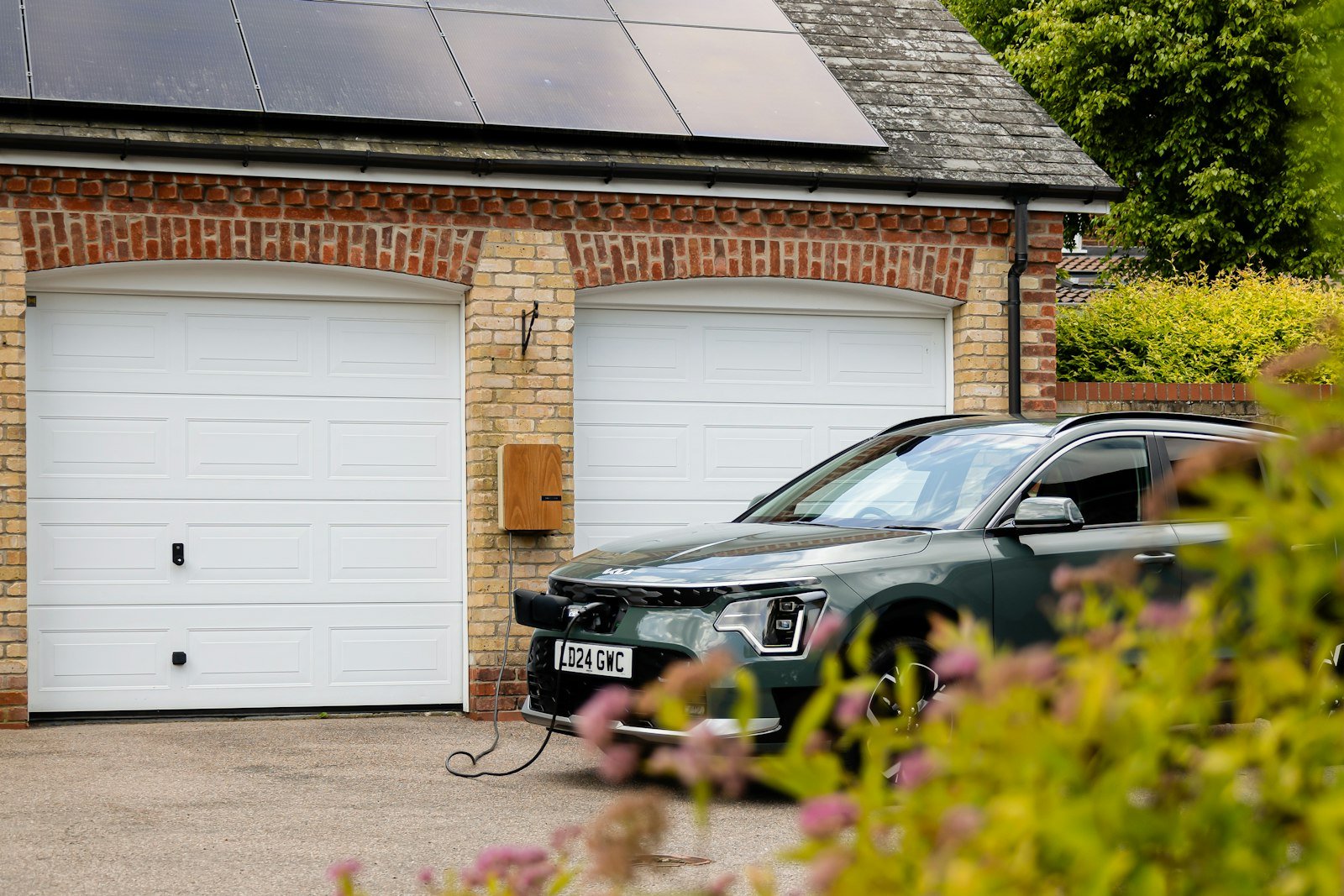
A car sitting on the driveway of a family home while the solar panels above it work through the middle of the day
AB41 · Ellon, Newburgh & the Ythan Valley · NICEIC

Solar panel installation in Ellon, for houses that are empty when the panels work hardest.

Solar PV for Ellon and AB41, sized around when your household is actually at home. From £7,000 fully installed with 0% VAT, after a free survey. Ellon is a dormitory town for Aberdeen, sixteen miles south, and the biggest single travel to work group here commutes into that band every morning. Which creates a problem no solar company in Aberdeenshire will mention: the array is at full output while the house is empty. MCS's own methodology puts an out all day household at 16% self consumption against 30% for a house with somebody in it.

★★★★★
5.0 from 100+ Google reviews · NICEIC Approved · SELECT · BS 7671
AB41Ellon & the Ythan
16%Kept if you are out all day
57%With a 5 to 6kWh battery
From £7,000Solar, 0% VAT
620239NICEIC enrolment
Why Ellon Is Different

A town built to leave in the morning.

Ellon has been a crossing point on the Ythan since long before anybody was counting, and it was the main seat of power in Buchan through the Pictish era and the later Earldom. But the town you actually live in was mostly built after 1970. Sixteen miles from Aberdeen, it was perfectly placed when the oil arrived, and it has grown dramatically ever since. It is now, in Wikipedia's phrasing and everybody else's, one of the main dormitory towns for Aberdeen.

The official town profile data makes it concrete. Of Ellon residents in work, 18.6% travel between 10 and 30 kilometres, which is the band Aberdeen sits in at 26km. That is more than double the 8.0% who work within 5km of home. Another 12.2% work from home. Around 87% of households run at least one car, and 43.1% run two. There is a park and ride, because people leave.

None of which matters at all until you put photovoltaic panels on the roof. Then it becomes the only thing that matters, because a solar array does not care whether you are in. It generates from mid morning to mid afternoon, peaks around the middle of the day, and whatever the house does not use in that moment goes to the grid for roughly half of what you would otherwise have paid for it.

That is the Ellon question. Not which way does my roof face, not will it work this far north. It is: who is in the house at one o'clock on a Wednesday?

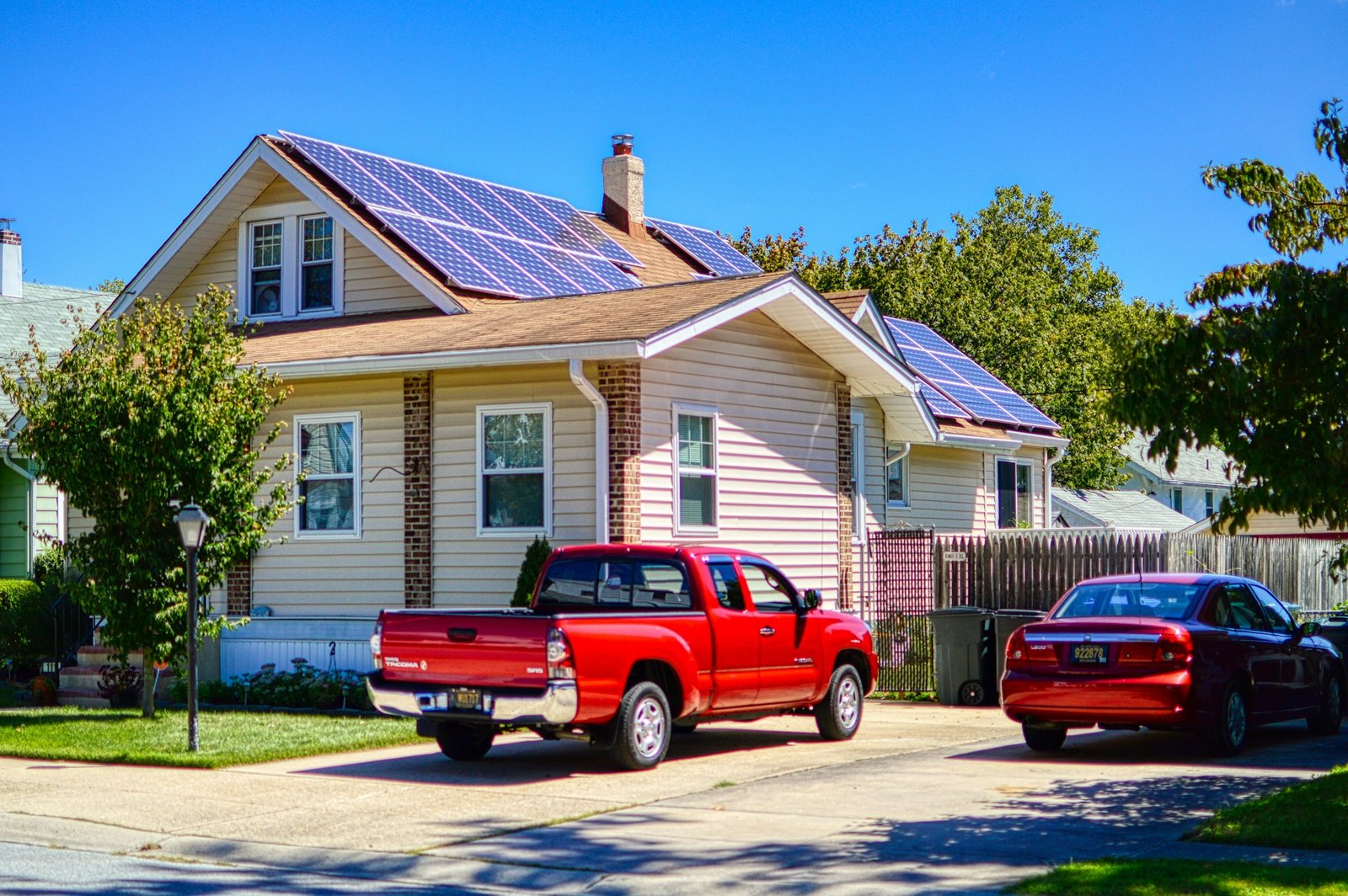
A pickup truck standing outside a detached home whose main roof slope is filled with solar panels

Panels filling a single unbroken slope, which is the arrangement we most often find on the post 1970s estates around Ellon. Designed and installed by Steven Watt, City and Guilds Level 3 in Small Solar Photovoltaic Systems, under our NICEIC approved contractor status.

The Empty House

Who is actually in during the generating hours?

Your roof is not the issue in Ellon. Ellon has the easiest roofs in the north east. The issue is the diary. An array peaks around the middle of the day, which in a commuter town is precisely the stretch when the driveway is empty, the kettle is cold and the only load in the house is a fridge and a router.

Everything a solar system saves you turns on that one fact, because a kilowatt hour you use yourself is worth the price you would have paid for it, and a kilowatt hour you export is worth roughly half that. So the first question we ask in Ellon is not about the roof. It is about the week.

We would rather tell you honestly that your working week does not suit solar on its own than sell you an array that exports most of what it makes. Usually the answer is not no. It is that the system needs somewhere to put the middle of the day.

  • 10,126 people, Scotland's Census 2022
  • 16 miles to Aberdeen
  • 18.6% commute 10 to 30km, the largest travel to work band
  • 12.2% work from home, and they are the ones solar suits best
  • 79.2% owner occupation, so most people can just decide
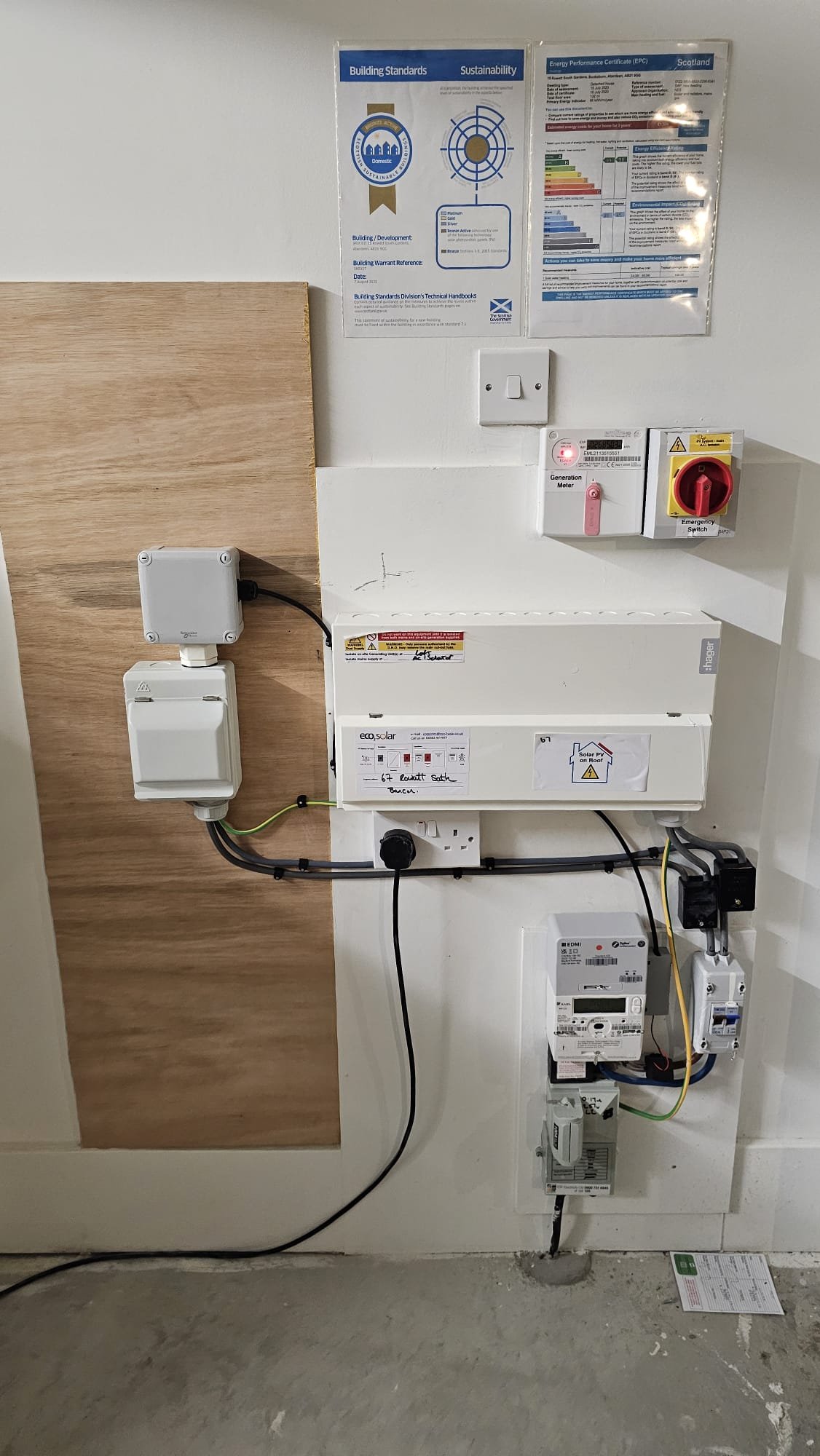
A generation meter and a wall mounted charge point wired in together on a newly built Aberdeenshire property

Generation metering and a charge point commissioned on the same visit, which is cheaper than doing the two jobs a year apart.

The Industry's Own Numbers

How much of your own solar you actually keep, by who is home.

These are not our estimates. They come from MCS MGD 003, the industry standard self consumption methodology, built on Loughborough University occupancy modelling. The occupancy categories are MCS's own words. We have never seen another installer publish them.

Self consumption with a 4kWp array and no battery

MCS occupancy categoryWhat that meansYou keepYou export
Home all dayAt least one person in on weekdays, 9am to 5pm30%70%
In half the dayEmpty all morning, or all afternoon24%76%
Out all dayTypically empty on weekdays. The Ellon commuter.16%84%

MCS MGD 003, Solar PV Self Consumption, Issue 2.0, 1 April 2022. Figures are for a 4kWp array generating in the 3,600 to 3,899 kWh band, in a household using 3,500 to 3,999 kWh a year. Tables 7-5, 7-14 and 7-23 respectively. Note the mechanism that catches people out: self consumption falls as the array gets bigger relative to demand, so a larger array does not automatically mean a better return.

And what a battery does to the out all day household

Usable battery capacitySelf consumptionGain on no battery
None16%
1.1 to 2.1 kWh29%+13 points
3.1 to 4.1 kWh37%+21 points
5.1 to 6.1 kWh57%+41 points
7.1 to 8.1 kWh66%+50 points
9.1 to 10.1 kWh70%+54 points
14.1 to 15.1 kWh72%+56 points

Same source, same table, same household. Read the last two rows carefully. Going from 10kWh to 15kWh of usable storage buys you two percentage points. The curve flattens hard above about 10kWh, which is why we will talk you out of an oversized battery. The 5 to 10kWh band is where the money is.

What this table is really telling you

For a household that is out all day, the battery is not an accessory to the solar. It is roughly two thirds of the reason the solar works at all. Going from 16% to 57% means keeping three and a half times as much of your own generation, and at Ellon prices a kept unit is worth close to twice an exported one. Anybody quoting you solar for an empty house without having that conversation first is selling you panels, not a system.

The Counterintuitive Bit

Using more electricity does almost nothing. Using it at the right time does everything.

Here is the finding that surprises people most, and it comes out of the same MCS table. Take the identical Ellon household, out all day, same 4kWp array. Now increase how much electricity it uses over a year and watch what happens to self consumption.

Household uses 3,500 to 3,999 kWh a year16%
Household uses 4,500 to 4,999 kWh a year17%
Household uses 5,500 to 5,999 kWh a year17%

Two thousand extra kilowatt hours a year moves the needle by one percentage point. Because if the house is empty in the middle of the day, extra demand simply happens in the evening, and evening demand is bought from the grid at full price no matter how much your roof made at noon.

The Car On The Drive

Why an electric car does not automatically help.

An EV that spends Monday to Friday in a car park in Dyce or on Union Street contributes precisely nothing to your solar economics. The same car, plugged in on the drive and set to charge from surplus, is transformative, because a 7.4kW charger can absorb the entire output of a 4kWp array on its own. A 4kWp system peaks somewhere around 3 to 3.5kW. The charger will take all of it and ask for more.

So the question is not whether you own an electric car. It is whether it is at home during daylight, on the days when it could be. Weekend charging alone changes the arithmetic. We fit EV chargers in Ellon and we will happily set one up to prioritise solar surplus.

Four Levers

What actually fixes an empty house, honestly ranked.

In order of how much difference they make to an empty Ellon house, including the two we cannot put a number on. We have given a figure where MCS publishes one and said so plainly where they do not, rather than inventing one.

1
Measured: 16% to 57%

Battery storage

Not close. A 5 to 6kWh usable battery takes the out all day household from 16% to 57% self consumption, and around 10kWh takes it to 70%. Above that the curve flattens to almost nothing. This is the single decision that determines whether solar pays in a commuter household, and it is the reason most of our Ellon systems go in as solar and storage together rather than solar alone.

2
Large, but MCS publishes no figure

Timed or solar matched EV charging

Mechanically very powerful, because a 7.4kW charger outguns a 4kWp array comfortably. MCS does not publish a self consumption factor for scheduled charging, so we will not invent a percentage. What we will say is that the mechanism is sound, the effect is large on the days the car is home, and it costs nothing extra if you are having a charger anyway.

3
Cheap, and only for some houses

A solar diverter to the immersion heater

A diverter senses surplus about to be exported and sends it to your immersion instead, storing it as hot water. Far cheaper than a battery. But here is the gate nobody mentions: it only works if you have a hot water cylinder. A lot of newer Ellon estate housing runs a combi boiler and has no cylinder at all, in which case a diverter is simply not an option. We check at survey. And we will not quote you an uplift percentage, because there is no authoritative figure to quote.

4
Free, and small

Delay timers on appliances

Running the dishwasher and washing machine on a delay so they start at midday is free, sensible and worth doing. It is also about one kilowatt hour a cycle against a year of roughly two and a half thousand. Good housekeeping rather than a strategy. Anyone presenting this as the answer to an empty house is avoiding the real conversation.

The Good News

Everything above is the hard part. Your roof is the easy part.

Worth knowing before you assume solar is a fight. Technically, Ellon is the easiest town in the north east to fit.

0.7%

The pitch argument is worth almost nothing

Modelled for Ellon's coordinates, the optimum slope is 43 degrees. A typical estate roof sits around 35. The difference between the two is 27 kilowatt hours a year, or 0.7%. In other words the pitch question that gets debated endlessly changes very little here. Your roof was built correctly by accident.

1970s

Estate stock, and an easy covering

Ellon expanded after the oil arrived, so most of the housing is estate built from the 1970s onward. On those estates we mostly find concrete interlocking tile on regular unbroken pitches, which is the quickest and cheapest covering to work on. That is our own experience on Ellon roofs rather than a published statistic, but it holds up job after job.

16km

Inland, so a lighter fixing specification

Ellon sits inland on the Ythan rather than on an exposed sea front. Salt loading and wind uplift are still designed for, as they are on every job we do, but the specification is less demanding than it is ten minutes from the North Sea at Peterhead or Fraserburgh. That shows up as a slightly lower fixing cost.

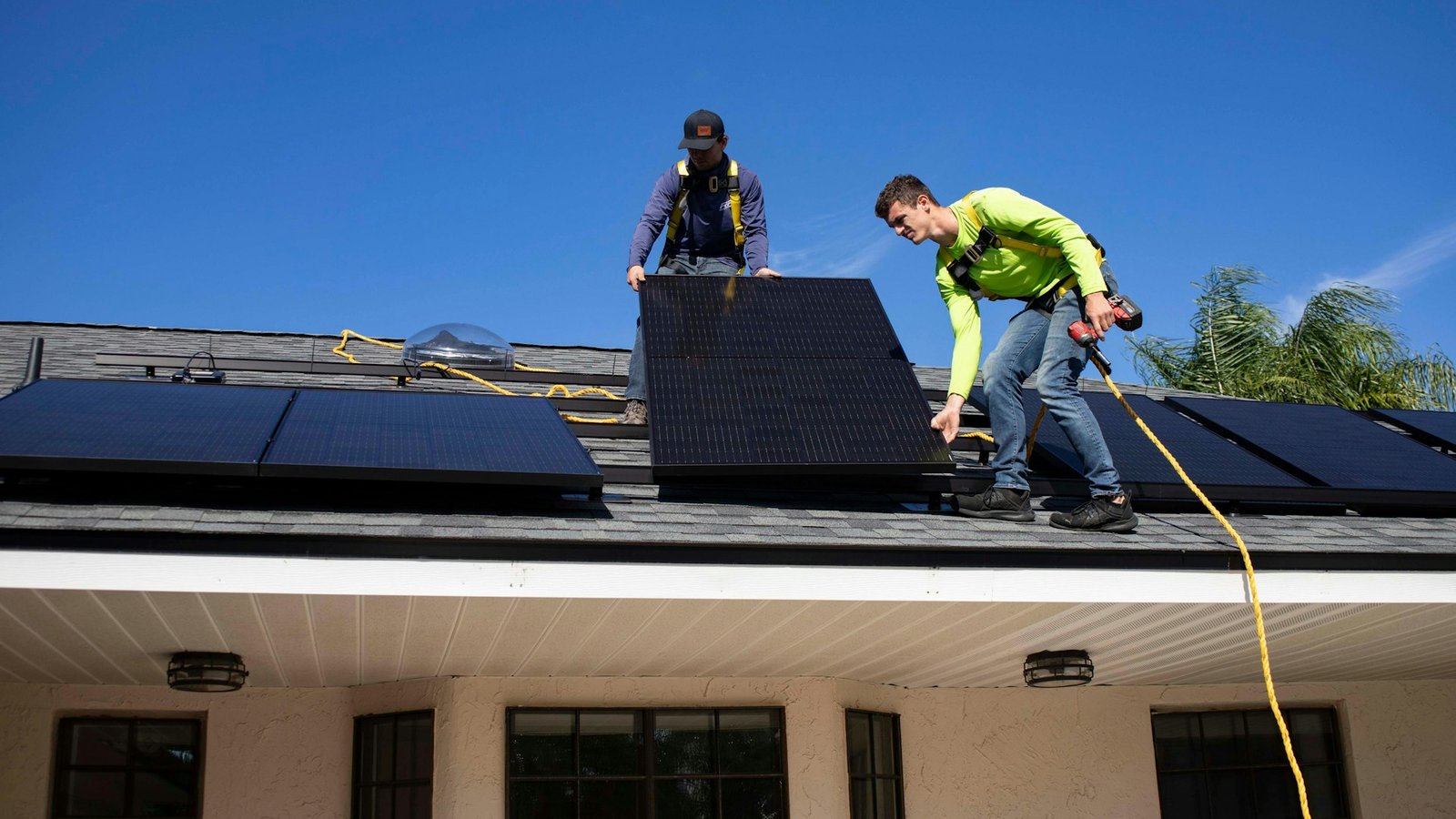
Two installers working along the ridge of a pitched tiled roof, setting panels into their mounting rails

The exceptions, and we check every one. The older stock near the Auld Brig and the town centre is a different proposition from the estates, and the bridge itself is Category A listed and dates from 1793. Listed buildings and anything inside their curtilage are excluded from permitted development and need consent, and conservation area status changes where panels may go. We establish both at survey with Aberdeenshire Council rather than assuming, because getting that wrong is expensive and slow.

And the seasonality. May brings around 507 kWh from a south facing 4kWp array here against roughly 80 kWh in December, a 6.4 times swing between best and worst month.

The Arithmetic

Why a kept unit is worth nearly two exported ones in Ellon.

Ellon households on an Octopus rate are typically importing at around 27.2p per kWh. For context, Ofgem's price cap for North Scotland sat at 26.42p per kWh for July to September 2026, one of the highest regional rates in Great Britain, so 27.2p is a real and unremarkable number here rather than a worst case. Export is worth far less. Rates across major suppliers in 2026 run from roughly 5p to 15p per kWh, and a leading export rate of 14.5p is about as good as it currently gets.

A 4kWp array in Ellon, on our conservative design figure

ScenarioKeptExportedAnnual benefit
Out all day, no battery
16% kept
416 kWh at 27.2p = £113.152,184 kWh at 14.5p = £316.68£430
Home all day, no battery
30% kept
780 kWh at 27.2p = £212.161,820 kWh at 14.5p = £263.90£476
Out all day, 5 to 6kWh battery
57% kept
1,482 kWh at 27.2p = £403.101,118 kWh at 14.5p = £162.11£565
Out all day, 10kWh battery
70% kept
1,820 kWh at 27.2p = £495.04780 kWh at 14.5p = £113.10£608

Worked on 2,600 kWh a year generated, which is our conservative planning figure for a south facing 4kWp array, at 27.2p import and 14.5p export. Self consumption percentages are MCS MGD 003 Issue 2.0. For transparency: PVGIS models 3,679 kWh a year at Ellon's coordinates for the same array, and we quote 2,600 because PVGIS assumes an unshaded free standing array with no soiling, no snow, no chimney or dormer shading and no degradation. We would rather the system beat our number than miss it.

Do the division

An exported unit returns about 53% of what a self consumed unit saves you. Every kilowatt hour your empty house pushes to the grid at one o'clock is a kilowatt hour you buy back at nearly twice the price at seven. That single ratio is the whole reason this page exists, and it is why the occupancy question comes before the panel question.

Who Is On Your Roof

Solar sits where roofing, electrical work and grid connection meet.

Here are our credentials in full, with the certificates rather than a badge in a footer. Solar PV designed and installed by Steven Watt, who holds the City and Guilds Level 3 Award in the Installation and Maintenance of Small Solar Photovoltaic Systems (610/4841/0), awarded April 2026. NICEIC Approved Contractor, enrolment 620239.

Anyone can claim qualifications. We will show you the certificates. Click either image to view the original document.

Held by Steven Watt

  • City and Guilds Level 3 Award in the Installation and Maintenance of Small Solar Photovoltaic Systems (610/4841/0), awarded April 2026
  • City and Guilds Level 3 Award in the Design, Installation and Commissioning of Small Electrical Energy Storage Systems (610/4840/9), awarded April 2026
  • City and Guilds 2391-52, inspection and testing
  • HNC Engineering Systems
  • NICEIC Approved Contractor, enrolment 620239
  • OZEV Authorised Installer
MCS, And Exactly How It Works Here

Every installation we complete is fully MCS registered through our Q-Smart partnership. Q-Smart is a Competent Person Scheme. Faithful Spark Electricians carries out the installation and Q-Smart issues the MCS certificate, so your system qualifies for the Smart Export Guarantee.

Worth noting given everything above: MCS is also the body whose self consumption methodology this page is built on. Working inside that scheme is the reason we have those tables to hand rather than a rule of thumb.

MCS or Flexi Orb certification is required for Smart Export Guarantee payments and is increasingly asked for during conveyancing, but it is not a legal requirement in order to install. What is true is that without it you cannot be paid for a single exported unit, which matters rather a lot when your house is exporting 84% of what it makes.

Scottish Rules, Not English Ones

Permitted development, warrants and grid approval in Aberdeenshire.

Most of the solar industry is quoting Ellon homeowners the wrong country's rules. One of the pages currently ranking for this town cites Areas of Outstanding Natural Beauty, which do not exist in Scotland.

The 200mm figure is English. In Scotland it is 1 metre.

Search solar planning rules and nearly every result quotes a 200mm protrusion limit, plus tests about Areas of Outstanding Natural Beauty. Both come from the England and Wales General Permitted Development Order. Neither applies here. Scotland has National Scenic Areas, not AONBs.

In Scotland, solar on a dwelling sits under Class 6HA, inserted by SSI 2024/102 and in force since 24 May 2024. The limit is that no part of the equipment protrudes more than 1 metre from the wall surface, roof plane, roof ridge or chimney. Five times the English allowance. On a garage or outbuilding, Class 6HB applies, the limit is 500mm, and the building must not sit in the front curtilage. Planning Circular 1/2024 has the detail.

Listed buildings and conservation areas

Development is not permitted on a listed building or within its curtilage, and consent is needed. Inside a conservation area solar remains permitted development provided the panels go on a rear elevation, or a side elevation that does not front a road.

On most Ellon estate housing neither applies and the question never arises. On the older stock around the town centre and the river it might, so we check the designation with Aberdeenshire Council at survey rather than telling you either way from a desk.

Building warrant: exempt, conditionally

You do not need a building warrant to fit solar to the roof of a single or two storey house, provided the existing roof structure can carry the additional load. That condition is the rule, not a footnote. If the roof needs strengthening a warrant is required, and the duty to obtain it sits with the owner ordering the work. The exemption does not extend to flats and maisonettes. Our survey starts in the loft.

There is no Part P here, and no Building Control to notify

National guides and templated town pages routinely tell Scottish homeowners about Part P and about notifying Building Control. Neither exists in Scotland. Part P is a section of the Building Regulations for England and Wales. Scotland has Building Standards, administered by the local council, and the mechanism is a building warrant rather than a notification.

Ellon is Aberdeenshire Council, not Aberdeen City, despite most of the town working in it.

Grid connection: G98 and G99 through SSEN

Your distribution network operator here is SSEN, Scottish Hydro Electric Power Distribution. A system up to 3.68kW per phase connects under G98 and is notified to the network after commissioning. Above that, which takes in most 4kWp and larger arrays, a G99 application must be approved before the system is energised.

One point that matters given everything above: a battery or hybrid inverter counts towards the same per phase total. So the storage that makes solar work in Ellon can also be the thing that tips a simple G98 notification into a full G99 application. We handle it either way, but it changes the timeline and you should hear that up front rather than three weeks in.

BS 7671, and which amendment your installer is on

The installation is designed, tested and certified to BS 7671, the 18th Edition wiring regulations. The current amendment is A4:2026, published 15 April 2026 and mandatory for all new work from 15 October 2026. We are inside the transition window and already working to A4. It reworks requirements for solar and prosumer installations and for stationary secondary batteries, and A3:2024 had already introduced Regulation 530.3.201 on devices for bidirectional current flow. More on Amendment 4.

From First Call To Switch On

Typically four to eight weeks.

Most of it grid application and equipment lead time rather than anyone being on your roof.

1

The occupancy conversation

Who is in the house on a weekday, how many days you work from home, whether there is an EV and where it spends Tuesday. This comes first because it decides everything else.

2

Your meter data

A year of half hourly consumption from your supplier, which is free to request. It tells us your real shape rather than an assumed one, and it is what we size storage against.

3

Free site survey

Aspect and pitch measured properly, shading through the day, the structure in the loft, whether there is a hot water cylinder, your consumer unit, and the cable route.

4

Written design and fixed price

Array size, storage size with the MCS self consumption figure for your actual occupancy, the mounting specification, projected generation on our conservative figure, and the price. In writing.

5

Grid application to SSEN

G98 notification or a full G99 application depending on total system size, remembering the battery counts. G99 approval comes before anything is energised.

6

Installation

Usually one to two days for a domestic array, two to three with battery storage. Scaffold up first, down when the roof work is signed off.

7

Certification, SEG and setup

Testing and certification to BS 7671, the MCS certificate issued by Q-Smart under our partnership, help registering for an export tariff, and charge windows set to your tariff and your working week.

What It Costs

Real ranges, not a headline with the awkward parts removed.

The final figure comes from the survey, in writing, and we push storage here for the reason the MCS tables set out. 0% VAT is applied automatically on qualifying residential solar and battery installations until at least March 2027, so there is nothing to add to any figure on this page.

Entry

3kWp to 4kWp, solar only

£7,000 to £8,500

Right for a household with someone home during the day, or a smaller roof. On an out all day household we will tell you honestly that this is the weakest version of the offer.

The Ellon default

4kWp with a 10kWh battery

£10,000 to £12,000

Takes an empty house from keeping 16% of its generation to keeping about 70%. In a commuter town this is not the upgrade, it is the product.

Premium

6kWp or more with 10kWh or more

£12,000 to £15,000

Larger detached homes, heat pumps, or households already running an electric car at home during the week. Remember that a bigger array lowers your self consumption percentage unless storage grows with it.

Other configurations

  • Battery retrofit to existing solar, 5 to 10kWh: £3,500 to £5,000
  • 4kWp solar with a myenergi Zappi EV charger: £9,500 to £11,500
  • 4kWp solar, 10kWh battery and a Zappi: £12,500 to £15,500
  • 5kWp solar, 10kWh battery and a Zappi: £14,000 to £17,000
  • Commercial 15kWp to 50kWp: from £14,000, priced by survey

0% VAT is applied automatically on qualifying residential solar and battery installations until at least March 2027. There is no VAT to add to any figure on this page.

What shifts the number in Ellon

Mostly storage, because that is the decision that changes the outcome here. Beyond that: scaffold access on a tight estate plot, whether the existing consumer unit can take the new circuit, the cable run from array to board, whether a diverter is possible (cylinder or combi), and whether an EV charger is going in at the same time, which is cheaper done together than a year apart.

On the cheaper quotes. You will see 4kWp advertised locally from around £4,995. Before you compare, ask what generation figure it assumes and what self consumption figure sits behind the savings claim. A saving calculated at 40% self consumption for a household that is out all day is not a saving, it is arithmetic done on the wrong house. That is the question that separates the quotes, not the panel brand.

Call 07304 027013
Where We Cover

Ellon, the Ythan valley and out through Buchan.

We install solar and battery storage across Ellon itself and out through Newburgh, Foveran, Balmedie, Udny Green, Pitmedden, Methlick, Tarves, Cruden Bay, Hatton and Auchnagatt.

Ellon AB41NewburghFoveranBalmedieUdny GreenPitmeddenMethlickTarvesCruden BayHattonAuchnagatt

Elsewhere on the site: solar PV and battery storage, solar panels in Peterhead, solar panels in Fraserburgh, solar across Aberdeenshire, EV chargers in Ellon, EICR testing in Ellon, consumer units in Ellon, rewires in Ellon, an electrician in Ellon and all the areas we cover.

Our companion guide covers solar panel installation in Ellon and what it does to your bills, including new build properties and the NHBC warranty question. We also have guides on whether solar panels genuinely work in Scotland and whether battery storage is worth it.

FAQs

Straight answers for Ellon homeowners.

What people ask before they commit. If yours is not here, phone and ask it. We would rather tell you your working week does not suit solar than sell you an array that exports most of what it makes. Call 07304 027013 or get in touch.

I commute to Aberdeen and the house is empty all day. Is solar still worth it?

It is, but not as solar alone. MCS's own self consumption methodology puts an out all day household with a 4kWp array at 16% self consumption, against 30% for a household with somebody home. That means 84% of what you generate goes to the grid at roughly half what you pay to buy it back. Add a 5 to 6kWh battery and that 16% becomes 57%. Add around 10kWh and it becomes 70%. In a commuter town like Ellon, storage is not an upgrade to the solar, it is most of the reason the solar pays.

What size battery do I actually need in Ellon?

For an out all day household with a 4kWp array, MCS MGD 003 gives 29% self consumption at 1 to 2kWh usable, 37% at 3 to 4kWh, 57% at 5 to 6kWh, 66% at 7 to 8kWh and 70% at around 10kWh. Above that it flattens: 15kWh only gets you to 72%. So the 5 to 10kWh band is where the value sits, and we will actively talk you out of a larger battery unless you have a heat pump or an EV charging at home during the week.

Will my electric car use my solar power?

Only if it is at home during daylight and the charger is set to draw from surplus. This is the counterintuitive part: MCS's tables show that adding 2,000 kWh a year of untimed demand moves an out all day household's self consumption from 16% to 17%. One percentage point. A car sitting in a car park in Aberdeen all week contributes nothing. The same car on the drive at the weekend, on a charger set to solar match, absorbs the entire output of a 4kWp array, because a 7.4kW charger comfortably outguns a system that peaks around 3 to 3.5kW.

How much will solar actually save me in Ellon?

On our conservative 2,600 kWh design figure for a south facing 4kWp array, at 27.2p import and 14.5p export: an out all day household with no battery is around £430 a year. Home all day with no battery, about £476. Out all day with a 5 to 6kWh battery, about £565. Out all day with 10kWh, about £608. We deliberately give you a range by occupancy rather than a single number, because a single number is how people end up disappointed.

What roof pitch do I need, and is my estate roof any good?

Almost certainly yes. Modelled for Ellon's coordinates the optimum slope is 43 degrees. A typical estate roof sits around 35 degrees, and the difference between the two is 27 kilowatt hours a year, or 0.7%. On the post 1970s estates we mostly find concrete interlocking tile on regular unbroken pitches, which is the fastest and cheapest covering to work on. Ellon is technically the easiest of the north east towns we cover.

Is a solar diverter better value than a battery?

Only for some houses, and there is a hard gate on it. A diverter sends surplus that was about to be exported into your immersion heater instead, storing it as hot water, and it is far cheaper than a battery. But it only works if you have a hot water cylinder. A lot of newer Ellon estate housing runs a combi boiler with no cylinder, in which case a diverter is not an option at all. We check at survey. We will not quote you an uplift figure, because MCS publishes no self consumption factor for diverters and we are not going to invent one.

Do I need planning permission for solar panels in Ellon?

Usually not. Solar on a house is permitted development in Scotland under Class 6HA, inserted by SSI 2024/102 and in force since 24 May 2024, provided no part of the equipment protrudes more than 1 metre from the wall, roof plane, ridge or chimney. Be aware that the 200mm limit and the Areas of Outstanding Natural Beauty tests quoted on most UK solar websites are England and Wales rules and do not apply in Scotland, which has National Scenic Areas. Listed buildings are excluded entirely, and in a conservation area panels must go on a rear elevation or a side elevation that does not front a road. We confirm the designation with Aberdeenshire Council at survey.

How much does solar cost in Ellon?

A 3kWp to 4kWp solar only system is £7,000 to £8,500 fully installed. A 4kWp system with a 10kWh battery, which is what we usually recommend here, is £10,000 to £12,000. A 6kWp system with 10kWh or more of storage is £12,000 to £15,000. Battery retrofit to an existing array is £3,500 to £5,000. All carry 0% VAT until at least March 2027, so there is nothing to add.

Do I need a building warrant for solar in Scotland?

Not for a single or two storey house, provided the existing roof structure can carry the extra load. If the roof needs strengthening a warrant is required, and the duty to obtain it sits with the owner ordering the work. The exemption does not extend to flats or maisonettes. Ellon sits within Aberdeenshire Council, not Aberdeen City, despite most of the town working in the city.

Does Part P apply in Scotland?

No. Part P is a section of the Building Regulations for England and Wales. Scotland has Building Standards, administered by the local council, and the mechanism is a building warrant rather than a notification. There is no Building Control body to notify here. Any page telling Scottish homeowners to comply with Part P was written for a different country.

Will solar work through an Aberdeenshire winter?

It works, but the seasonality is severe and you should know the shape of it. Modelled at Ellon's coordinates, a south facing 4kWp array produces around 507 kWh in May against around 80 kWh in December. That is a 6.4 times swing between best and worst month. Roughly three quarters of your annual generation arrives between March and September. Plan around that and solar makes sense here. Expect a steady year round trickle and January will disappoint you.

Who is the network operator, and do I need their permission?

SSEN, Scottish Hydro Electric Power Distribution. A system up to 3.68kW per phase connects under G98 and is notified after commissioning. Above that a G99 application must be approved before the system is energised. Note that a battery or hybrid inverter counts towards the same per phase total, so adding the storage that makes solar work in a commuter household can tip the job from a G98 notification into a full G99 application. We handle the paperwork either way.

Tell us who is in the house on a Wednesday.

Call Steven directly on 07304 027013 or use the form. Tell us your working week, how many days anyone is home, and whether there is an electric car and where it spends the day. Send a year of meter data and we will run your actual occupancy through the MCS tables rather than guessing, then put a fixed price in writing. NICEIC Approved Contractor, enrolment 620239. OZEV Authorised Installer. City and Guilds Level 3 Awards in Small Solar Photovoltaic Systems and Small Electrical Energy Storage Systems, plus 2391-52 inspection and testing and an HNC in Engineering Systems. Every installation fully MCS registered through our Q-Smart partnership. £2M public liability insured.

Request a Free Solar Survey

Faithful Spark Electricians · 17 Thomson Road, Peterhead, AB42 3FJ · 07304 027013 · Company registration SC821026 · NICEIC Approved Contractor, enrolment 620239 · OZEV Authorised Installer, EVHS/WCS14254 · SELECT Member · MCS registered through our Q-Smart partnership · BS 7671 18th Edition · 0% VAT on qualifying residential solar and battery installations until at least March 2027 · £2M public liability insured