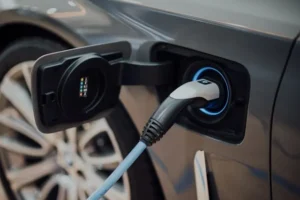
Yes, an EV charger survey can often be done remotely. For many straightforward home installations, a good set of photographs and a short video can give an experienced EV charger installer enough information to assess the proposed job and prepare a quotation without making a separate survey visit.
The important word there is good.
A photograph of your driveway and a message saying “the fuse box is in the hall” isn’t really a survey.
To assess an EV charger installation properly, we need to understand your electrical supply, consumer unit, meter position, visible main fuse information, earthing and bonding arrangements, proposed charger position and, crucially, the route the new cable will need to take.
At Faithful Spark Electricians, we can carry out the initial survey for many domestic EV charger installations across Aberdeen and Aberdeenshire remotely.
This guide shows exactly what to send us, why we ask for it and when we will still recommend coming to the property.
Remote EV charger survey: the quick checklist

If you have been asked to send photographs for an EV charger quote, this is what we normally need:
- A clear photo of your consumer unit
- A wider photo showing the area around the consumer unit
- A photo of the electricity meter and surrounding equipment
- A photo of the meter box if you have one
- A clear photo of the incoming electrical supply and main cut out
- A photo showing the main fuse rating or label, if safely visible
- Photos of the gas and water bonding where the incoming services are metallic
- A video following the proposed cable route from the electrical supply to the charger
- A photo of the wall or structure where you want the charger
- A wider photo showing the driveway or parking space
- Your vehicle make and model
- An approximate cable route length if you can measure it
You do not need to remove electrical covers, open sealed equipment or understand what every component does.
Send us what you can safely see. We will do the electrical assessment.
What is a remote EV charger survey?
A remote EV charger survey is a pre installation assessment completed using photographs, video and information supplied by the customer rather than automatically sending an electrician to the property for an initial visit.
For a typical domestic charger, we are trying to establish several things before providing a quote.
What electricity supply does the property have? What can we establish about the main fuse? Where is the consumer unit? What type of consumer unit is installed? What are the visible earthing and bonding arrangements? Where will the charger be mounted? Where will the vehicle normally park? How can we physically get the new electrical circuit from the supply to the charger? How long is that route likely to be? Are there walls, lofts, floors, garages, paths or other obstacles involved? Does anything we can see suggest that further investigation is required?
When the photographs and video answer those questions clearly, physically driving to the property simply to look at the same things may not be necessary.
It can make the quotation process considerably quicker for both the customer and installer.
But there is an important distinction.
A remote survey does not replace electrical inspection and testing.
It helps us plan and quote the installation. The electrician still has to verify that the electrical installation is suitable and carry out the necessary testing associated with the work.
Why do EV charger installers need so much information?
An EV charger isn’t simply another appliance being plugged into your house.
A typical 7kW home chargepoint can draw around 32 amps when charging at full power. It can continue doing that for hours.
That makes EV charging a significant electrical load.
The installation therefore needs to be designed around the property rather than treating the charger as an isolated box on an outside wall.
The EV charging requirements of BS 7671 are primarily contained within Section 722. Installers also have to consider the existing electrical installation, earthing arrangements, protective devices, supply capacity and equipment manufacturer’s instructions.
That is why a proper survey starts at the electricity supply rather than at the driveway.
1. Take a clear photograph of the consumer unit

The first thing we normally want to see is your consumer unit.
Many homeowners still call this the fuse box. Either description is fine. We will know what you mean.
Take one clear photograph directly in front of it.
If it has a normal user operated front flap or door, you can open that so we can see the switches and circuit labels.
Try to get the entire consumer unit into the photograph.
We want to be able to see the protective devices and any useful labelling.
Why do we need to see the consumer unit?
The EV charger will require an appropriately designed circuit and protective arrangements.
Seeing the existing consumer unit can immediately give an electrician useful preliminary information about its type and approximate age, existing circuit arrangements, protective devices, available space, whether RCBOs or other arrangements are present, existing EV related equipment, circuit labelling and anything visible that deserves further investigation.
A photograph cannot prove that the existing installation is suitable for an EV charger. It can, however, tell an experienced electrician quite a lot before arriving.
Do not remove the consumer unit cover
We don’t need homeowners taking electrical equipment apart for the sake of a survey.
Do not unscrew or remove the consumer unit cover. Do not touch exposed electrical equipment.
Photograph what is normally accessible to you. If we need to inspect inside the consumer unit, that is our job.
2. Take another photo showing the area around the consumer unit
This is one of the most useful photographs and one of the most commonly forgotten.
After taking the close photograph, step backwards.
Show us the whole area.
If the consumer unit is under the stairs, show us the cupboard. If it is in the garage, show us the surrounding wall. If it is in a utility cupboard, let us see the cupboard and nearby surfaces.
If there is a door, ceiling, external wall or loft access nearby, try to include that in the wider view.
Why does this matter?
Because eventually a cable has to leave this area.
A beautiful close up photograph of twelve circuit breakers tells us very little about whether there is a granite wall six inches to the right of the consumer unit.
The wider photograph helps us assess available working space, possible cable exits, wall construction, cupboards and obstructions, accessibility, nearby external walls, potential routes into a loft or garage and where additional equipment might be positioned.
For remote surveying, context is incredibly useful.
Send the close view and the wide view.
3. Photograph the electricity meter
Next, photograph your electricity meter and the equipment surrounding it.
If everything is contained within an external meter box, open the normal meter box door and take a clear photograph of the complete arrangement.
Do not remove covers. Do not break seals. Do not move equipment to make the photograph prettier.
We want to see it as it actually is.
Why is the electricity meter relevant?
It helps us understand the layout of the electrical supply.
Depending on the property, the meter area can also show the incoming supply equipment, meter tails, isolating equipment, existing additional equipment, available physical space, the relationship between the supply and consumer unit and anything unusual that may need further investigation.
The arrangement varies considerably between properties. That is exactly why photographs are useful.
4. Photograph the main cut out and visible fuse label
We also want to see the incoming supply equipment.
The service head, often referred to as the main cut out, is where the electricity supply enters the property and contains the main service fuse.
Take a clear photograph of it.
If there is a visible label indicating the fuse rating, make sure the label is readable.
You may see something such as 60A, 80A or 100A.
Never remove the main fuse
Do not open the DNO cut out, remove the main fuse or interfere with seals to obtain information for us.
If you cannot see the rating, that’s fine. Send the photograph. We can determine what needs to be confirmed.
Why is the main fuse important for an EV charger?
Because we are adding a substantial electrical load to the property.
A home could already have an electric shower, electric oven, hob, immersion heater, tumble dryer, electric heating or heat pump.
Now we are potentially adding another load capable of drawing around 32 amps.
That doesn’t mean an electrician simply adds every appliance rating together and declares the house overloaded. Maximum demand is more nuanced than that.
But the available electrical supply is clearly something that must be considered.
This is also where load management can become important.
5. Photograph the complete meter box
If your meter and service equipment are located in a meter box, take a second photograph showing the entire box.
The close up gives us detail. The wider photograph gives us context.
We can see how much room exists, where cables currently enter and leave, what other equipment is installed and how accessible everything is.
This is particularly useful if the proposed charger will be on an outside wall relatively close to the meter position.
Don’t worry if you don’t know which piece of equipment is which. That’s our job.
6. Show us the gas bonding where the incoming gas service is metallic
If your property has gas, photograph the gas meter and incoming pipework.
Where the incoming service and relevant pipework are metallic, we also want to see the main protective bonding arrangement where applicable.
You may see a green and yellow conductor attached to the pipe with a clamp.
Take one photograph showing the general area and another closer photograph if the connection is easily accessible.
Why does an EV charger installer care about gas bonding?
Because we aren’t assessing the EV circuit in complete isolation from the existing electrical installation.
The earthing and bonding arrangements form part of the safety assessment.
Main protective bonding helps manage dangerous potential differences involving extraneous conductive parts under fault conditions.
Not every piece of metal pipe in a property automatically requires main protective bonding. Whether a service is an extraneous conductive part requires proper assessment.
So don’t add a bonding clamp because you have read an EV survey checklist online.
Show us what is there. We’ll assess it.
7. Photograph the incoming water service and bonding
Do the same with the incoming water supply.
The useful place to photograph is usually around the point where the water enters the property or around the main stop tap.
If there is a visible green and yellow bonding conductor and clamp, include it.
What if my incoming water pipe is plastic?
Tell us.
The fact that there is copper pipework elsewhere in the house does not necessarily mean the incoming service is metallic or that the pipework constitutes an extraneous conductive part.
A clear photograph is far more useful than guessing.
The same applies to gas.
We would much rather receive a photograph and the words “I don’t know if this is what you need” than have someone alter their electrical installation unnecessarily.
8. Record a video of the proposed EV charger cable route
If you only remember one thing from this article, remember this:
The cable route video is one of the most valuable things you can send your EV installer.
Start where the electrical supply or consumer unit is located.
Then slowly walk towards the proposed charger position while recording.
Show us the route a cable could realistically take.
For example:
Consumer unit → utility room → outside wall → side of house → driveway → charger.
Or:
Consumer unit → cupboard → loft → across house → garage → charger.
Or:
Supply position → external wall → underground duct → detached garage → charger.
Every property is different.
Don’t hide the difficult bits
We aren’t judging your house.
If there is an awkward granite wall, show us. If a conservatory blocks the obvious route, show us. If the cable may need to cross a garage, show us. If you have existing ducting, show where you believe each end is. If the route involves a loft, show us the loft access.
If it passes through a finished room, include that.
If the charger is on the opposite side of the house from the consumer unit, that’s exactly what we need to know.
An awkward route doesn’t necessarily prevent installation. It just needs to be designed and priced properly.
Why is video better than a collection of photos?
Individual photographs lose context surprisingly quickly.
We might receive a consumer unit, garage, driveway and outside wall photo but not know how those places connect.
A continuous video allows an electrician to mentally walk the cable route with you.
That helps us estimate actual cable length, containment, wall penetrations, loft access, external cable runs, underground sections, difficult surfaces, labour and likely materials.
That can make the difference between a vague estimate and a properly considered quotation.
9. Photograph the proposed charger location

Take at least two photographs.
The first should clearly show the wall, post or structure where you think the charger should be installed.
The second should be taken from further back so we can see the charger location in relation to the parking area.
Think about the charging port on your car
Where is your vehicle’s charging port?
Front? Rear? Near side? Off side?
Do you normally reverse into your driveway or drive in forwards?
Will a tethered charging lead reach comfortably? Would the lead need to go behind the vehicle? Could it cross a walkway?
A charger can be electrically perfect and still be frustrating to use every evening if it has been put in the wrong place.
Tell us which vehicle you have or which one you are buying.
The survey isn’t only about whether we can install a charger somewhere. It’s about where the charger will work best.
10. Show us the driveway and parking arrangement
Take a photograph from far enough away that we can see the entire parking area.
For a private driveway, this may be very straightforward.
But the wider picture can reveal details such as shared access, a detached garage, boundary walls, communal parking, pathways, potential trip hazards, no suitable mounting wall, long cable distances or barriers between the property and car.
These details matter.
What if I park on the street?
Tell us at the beginning of the enquiry.
Running a charging cable across a public pavement is not equivalent to charging a vehicle on your own driveway.
Cross pavement charging can involve local authority requirements and additional infrastructure. It therefore needs to be considered separately from a normal off street domestic EV charger installation.
11. Measure the approximate cable route
If possible, give us an approximate measurement.
But measure the route the cable is actually likely to follow.
Don’t measure a straight line through the middle of your house.
If the charger is eight metres from the consumer unit but the cable needs to travel up into a loft, across the building and down another wall, the cable run clearly won’t be eight metres.
If you cannot measure it accurately, don’t worry. Send the video.
We can usually get a reasonable understanding of the route from that and confirm dimensions where necessary.
What information should I send about my car?
Tell us the make, model, whether you already own it, where the charging port is located and typical daily mileage if known.
It can also help to tell us what you expect from the charger.
Do you want a tethered cable? Would you prefer untethered? Do you want to charge primarily on a cheap overnight tariff? Do you have solar panels? Are you planning solar? Do you have battery storage? Do you expect to change to another EV in the next few years?
Those answers can be just as important as the photographs when deciding which charger suits you.
Do I need to choose my EV charger before the survey?
No.
Some customers contact us knowing exactly which charger they want.
Others simply say: “I’ve ordered an EV. What should I install?”
Both are fine.
Faithful Spark Electricians installs a wide range of EV charging equipment and is an approved installer for Tesla, Easee, Ohme and myenergi, as well as installing Hypervolt chargers.
That means we don’t need to force the same charger onto every property.
The right choice depends on the vehicle, electrical supply, parking arrangement, electricity tariff, solar setup and features you actually need.
Someone with solar PV may prioritise solar aware charging.
Someone on an EV specific overnight tariff may care more about tariff integration.
Someone who changes company cars regularly may prioritise compatibility and convenience.
Someone else may simply want a dependable tethered charger that they can plug in every night without thinking about it.
The survey helps us understand the installation.
The conversation helps us understand you.
Can a remote survey determine whether my consumer unit needs upgrading?
Sometimes it can identify that additional work is likely.
But a photograph alone cannot conclusively prove that the consumer unit and existing installation are suitable.
If the photograph shows an arrangement that clearly requires further consideration, we can raise that before installation day.
That is one of the big advantages of doing the survey properly.
Potential issues can be identified during quotation rather than after an electrician has arrived with the charger.
We have a separate guide explaining whether a consumer unit needs upgrading for an EV charger. Keeping that technical subject on its own page also means this guide can stay focused on remote surveying.
Does every EV charger require a new consumer unit?
No.
An EV charger does not automatically mean replacing the main consumer unit.
The correct arrangement depends on the existing installation and the design of the new circuit.
In some properties, a separate EV distribution unit may be appropriate.
In others, the existing equipment may accommodate the required arrangement.
In some installations, other upgrading work may genuinely be necessary.
We decide that from the electrical installation, not from a blanket rule that every EV owner needs a new fuse box.
Why does supply capacity matter?
A common home charger is around 7kW and can draw approximately 32A at full output.
Now consider what else may be operating in the property: electric shower, induction hob, oven, immersion heater, tumble dryer, washing machine, dishwasher, electric heating, heat pump and everything else.
The installer needs to assess the additional demand sensibly.
This is why we ask for information about the incoming supply and main fuse.
What is EV charger load management?
Load management allows EV charging demand to be controlled in relation to the electrical demand of the property.
In simple terms, the system can monitor how much electricity the property is using and reduce the charger’s demand when necessary.
Imagine the house is relatively quiet overnight. The charger may be able to operate at full power.
Then several significant loads operate at the same time.
A suitable load management arrangement can reduce the charging current rather than allowing total demand to exceed the designed limit.
This can be extremely useful.
But load management isn’t an excuse to ignore the electrical supply. It is part of the design.
Does the electricity network operator need to know about my charger?
EV chargepoint installations are subject to the appropriate Distribution Network Operator process.
Your DNO is responsible for the local electricity distribution network rather than your electricity tariff.
Depending on the supply characteristics and proposed installation, the process can involve notification or an application that needs dealing with before installation.
The Energy Networks Association provides the industry process for connecting technologies such as EV chargepoints and heat pumps.
For a Faithful Spark installation, we deal with the relevant DNO process rather than expecting the homeowner to navigate network forms themselves.
Can an EV charger survey be done remotely if I have solar panels?
Often, yes.
Tell us you have solar PV and include relevant information with your survey.
If you also have battery storage, tell us that too.
The existing system may influence charger selection and how you want the property to operate.
Some EV owners specifically want to maximise charging from surplus solar generation. Others mainly want to take advantage of low overnight electricity prices. Some want both.
If you are planning solar rather than already having it, mention that as well.
It makes sense to consider where the property is heading rather than designing everything around today’s setup and discovering six months later that the two systems could have been planned better together.
What Happens After You Send the Remote Survey?
Once we have reviewed the information, there are normally three possible outcomes.
Outcome 1: We have enough information to quote
The electrical arrangement is reasonably clear, we understand the proposed cable route and nothing in the survey creates a question that needs answering before quotation. We can then move forward with the quotation.
Outcome 2: We need one or two more details
Perhaps one photograph is blurry, we cannot see an incoming service clearly, the cable route video misses an important section, or we need a measurement. Often one additional photograph or short video answers the question without an unnecessary visit.
Outcome 3: We recommend an onsite survey
Sometimes the remote survey reveals that the property needs to be seen in person. Unusual supply arrangements, unclear earthing, substantial groundworks, shared supplies, communal parking, multiple chargers or complex commercial and three phase installations are examples.
This does not mean the remote survey failed. It identified exactly what needs investigating before the installation proceeds.
Aberdeen Granite Properties Need Particular Attention

Aberdeen and parts of Aberdeenshire have large numbers of granite properties. A cable route that looks straightforward on a floor plan may be much less straightforward when solid stone construction is involved.
That does not mean an EV charger cannot be installed. It means the route needs thought. Sometimes an alternative route through a loft, garage or existing opening produces a neater result than forcing the most direct route.
If your property has granite walls, make that obvious in the route video and show us any wall the cable may need to cross. This is exactly the sort of local detail that makes a remote survey more useful.
What can an electrician actually determine remotely?
With good information, quite a lot.
The existing electrical arrangement
The photographs give us an initial view of the consumer unit, meter area and supply equipment.
The likely cable route
The video allows us to understand how the new circuit could get from one end of the property to the other.
Approximate cable length
This affects both design and cost.
Installation complexity
A charger three metres from the supply is a very different job from a charger at a detached garage on the opposite side of a large property.
Proposed charger location
We can consider whether the position makes practical sense for the vehicle.
Visible bonding arrangements
Photographs can provide useful preliminary information about incoming services and visible main protective bonding.
Whether further investigation is necessary
Sometimes the most valuable result of a remote survey is discovering that this particular property shouldn’t be surveyed remotely.
There is nothing wrong with that.
Good surveying is about obtaining enough information to make responsible decisions.
What can’t we test remotely?
A photograph cannot measure electrical characteristics.
It cannot perform insulation resistance testing, verify continuity, test an RCD, measure earth fault loop impedance, inspect concealed wiring, confirm conductor condition inside closed equipment, establish every aspect of the earthing arrangement or certify the new circuit.
Remote surveying is therefore a pre installation planning and quotation process.
It is not remote electrical testing.
The required electrical checks, testing and certification still have to be completed by the installer.
When should an EV charger survey be done on site?
There are installations where we would much rather see the property ourselves.
Examples include:
- unclear or unusual electrical supplies
- complex three phase installations
- multiple EV chargers
- commercial car parks
- long underground routes
- significant trenching
- communal supplies
- blocks of flats
- shared parking areas
- complex landlord or factor arrangements
- substantial distribution work
- unusual earthing arrangements
- major supply alterations
- large solar and battery installations
- installations requiring significant civil engineering
- anything the photographs simply don’t explain properly
There is no prize for completing every survey remotely.
The point is to avoid unnecessary visits on straightforward jobs while still visiting properties where being on site genuinely improves the design.
Can commercial EV charger surveys be done remotely?
A remote initial assessment can certainly be useful.
A final commercial survey is a different matter.
Installing one charger at a small office may not be radically different from some domestic installations.
Installing multiple 22kW, 40kW or higher powered chargers across a commercial car park can involve considerably more.
Potential considerations include three phase supplies, maximum demand, available network capacity, load management, distribution boards, feeder pillars, underground ducting, trenching, civil works, impact protection, parking layout, multiple charging bays, future expansion, accessibility and back office systems.
For substantial commercial EV infrastructure, plans, photographs and video are excellent starting points.
We would generally expect to inspect the site before finalising a significant commercial design.
How accurate is an EV charger quote from photographs?
It can be very accurate when the information is comprehensive.
The biggest problem isn’t usually image quality. It is missing information.
Someone might tell us: “The charger is about five metres from the fuse box.”
Then the video shows that the route has to leave an internal cupboard, cross a finished room, pass through a thick external wall, run around an extension and finally reach the driveway.
That isn’t really a five metre installation.
Showing us the real route gives us a much better opportunity to price the job correctly.
And that benefits the customer as much as the electrician.
Nobody wants an attractive quote based on incomplete information followed by a list of unexpected extras on installation day.
Can I get an EV charger quote just by sending photos?
Often, yes.
For straightforward domestic installations, photographs plus a route video can frequently give us enough information to prepare a quotation.
But it depends on what those photographs show.
If something needs to be physically checked before we can quote responsibly, we’ll tell you.
A remote survey should make the process more efficient.
It shouldn’t turn a professional electrical assessment into guesswork.
Remote EV charger survey checklist
Before sending your enquiry, run through this list:
- Consumer unit: one clear front photograph showing the protective devices and labels.
- Area around consumer unit: one wider photograph showing the surrounding cupboard, room or wall.
- Electricity meter: a clear photograph of the meter and surrounding equipment.
- Main cut out: a clear photograph of the service head and any fuse rating information that is already visible.
- Meter box: one wider photograph showing the entire meter box arrangement if applicable.
- Gas service: photograph the incoming gas area and visible main protective bonding where applicable.
- Water service: photograph the incoming water service and visible main protective bonding where applicable.
- Cable route: record a slow video following the realistic route from the electrical supply or consumer unit to the proposed charger.
- Charger position: take one close photograph of the mounting position.
- Parking area: take one wide photograph showing where the vehicle normally sits.
- Vehicle: tell us the make and model.
- Cable distance: give us an approximate route length if you can.
- Existing technology: tell us about solar PV, battery storage, heat pumps or other substantial electrical loads.
- Charger preference: if you already want Tesla, Easee, Ohme, myenergi Zappi, Hypervolt or another particular charger, tell us. If you don’t know, that’s fine too.
Frequently asked questions about remote EV charger surveys
Can an EV charger survey really be done remotely?
Yes. Many straightforward domestic installations can be assessed initially from good photographs, video and property information. More complex or unclear installations may still require an onsite survey.
Do you need a photo inside my consumer unit?
No. Do not remove the consumer unit cover. Send a clear photograph of the normally accessible front and circuit labels. Internal inspection is the electrician’s job.
Do I need to remove the main fuse so you can check its rating?
No. Never remove the DNO service fuse or interfere with sealed supply equipment. Photograph the outside and any information that is safely visible.
What if I can’t find my gas or water bonding?
Send photographs of the incoming services and tell us you cannot identify the bonding. We can decide what needs to be checked.
What if my incoming water pipe is plastic?
Tell us and send a photograph if requested. The bonding requirement depends on the actual installation and whether the service is an extraneous conductive part.
Why do you need a video of the cable route?
Because distance alone doesn’t show how the cable will get there. A video reveals walls, lofts, garages, cupboards, external runs and other obstacles that affect the installation.
Can an old house have an EV charger?
Potentially, yes. The age of the house itself isn’t the deciding factor. The electrical supply, existing installation, earthing, bonding, consumer unit and proposed circuit all need to be assessed.
Can a remote survey tell you if I need a new consumer unit?
It may identify that additional work is likely, but photographs cannot replace proper inspection and testing. An older consumer unit does not automatically mean it must be replaced simply because an EV charger is being installed.
Can you remotely survey a granite house?
Often, yes. In Aberdeen and Aberdeenshire, the route video is particularly useful in older granite properties because wall construction can significantly affect cable routing and drilling. Show us any wall the proposed route needs to cross.
Can a 7kW EV charger work on a 60A supply?
Potentially, but it cannot be answered responsibly from the fuse rating alone. Existing maximum demand, the charging equipment, load management and the overall installation need to be considered.
Can I have a 22kW charger at home?
A 22kW AC charger normally requires a suitable three phase supply, and the vehicle must also be capable of accepting the relevant AC charging rate to benefit from it. For many UK homes with a single phase supply, a 7kW class charger is the more typical arrangement.
Does an EV charger need its own electrical circuit?
EV charging equipment has specific requirements under BS 7671 Section 722 and must be installed as part of a properly designed electrical installation. It is not a case of simply connecting a fixed charger to whichever socket circuit happens to be nearby.
Will you still test the installation if the survey is remote?
Yes. The remote survey is for assessment, design planning and quotation. It does not remove the requirement for proper electrical inspection, testing and certification.
Which EV chargers can Faithful Spark install?
Faithful Spark Electricians is an approved installer for Tesla, Easee, Ohme and myenergi, and we also install Hypervolt EV charging equipment. We can recommend a charger based on the property, vehicle, tariff, solar setup and features required rather than treating one brand as the answer for every customer.
Can the whole process be completed without an initial site visit?
For many straightforward domestic installations, yes. If the remote survey provides enough information, we can often progress without a separate survey visit. If the property needs closer inspection, we will arrange that rather than guessing.
Remote EV charger surveys in Aberdeen and Aberdeenshire
Faithful Spark Electricians provides EV charger installation across Aberdeen, Peterhead, Ellon, Balmedie, Mintlaw, Fraserburgh and throughout the wider Aberdeenshire area.
Remote surveys are particularly useful across a large service area.
Instead of asking a customer to wait for us to drive to their property simply to photograph a consumer unit, measure a cable route and look inside a meter box, we can often collect that information before the appointment.
It means we arrive knowing much more about the job.
And where a property genuinely needs an onsite survey, the photographs frequently help us identify that in advance too.
For the wider EV installation process, charger options and local service information, see our EV Charger Installation Aberdeen page.
If you’re unsure about your existing fuse box, read Does My Consumer Unit Need Upgrading for an EV Charger?
Once your installation is booked, our EV Charger Installation Checklist: 10 Things to Do Before Your Installer Arrives explains how to prepare for installation day.
Those guides answer different questions.
This one has a simpler purpose:
Give us enough information to understand your property before we quote.
Ready to send your EV charger survey?
You don’t need technical knowledge.
You don’t need to know your earthing arrangement.
You don’t need to identify every cable.
And you definitely don’t need to open electrical equipment.
Send us your consumer unit, the area around it, electricity meter, meter box, incoming supply and visible fuse label, relevant gas and water bonding, proposed charger position, parking area and a short video following the cable route.
Tell us which vehicle you have and whether you already have a charger in mind.
From there, we can assess whether we have enough information to quote remotely or whether there is a genuine reason to visit the property first.
A remote EV charger survey should make the installation process quicker and easier without lowering the standard of the electrical assessment.
Done properly, that’s exactly what it does.