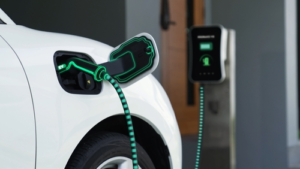
Every Aberdeen and Aberdeenshire homeowner booking an ev charger install faces the same early question: tethered or untethered? The answer is not obvious from a brochure, and the wrong choice leads to either a permanently trailing cable that nobody ever moves or a bare socket that a household keeps forgetting to pair with its cable. This guide covers the practical difference between tethered and untethered EV chargers, which households in Scotland suit each type, what the leading brands offer in both formats, and how to make a confident choice before your Faithful Spark survey.

What is a tethered EV charger?
A tethered EV charger has a permanent cable factory assembled into the unit. When you approach the charger on your driveway, the cable is already there, coiled or hanging from the unit’s built in cable holder. You pick it up, plug it into your car’s charging port, and charging begins. When the session is over, you unplug from the car, re coil the cable onto the hook, and the charger is ready for next time. There is no separate cable to store, retrieve, or plug into the unit itself.
Most tethered home chargers in the UK use a Type 2 connector (IEC 62196) as standard. Type 2 is compatible with the overwhelming majority of electric cars sold in Britain today. That includes all Volkswagen Group vehicles (VW, Audi, Skoda, Seat, Cupra, Porsche), BMW, Mercedes, Kia, Hyundai, Polestar, Volvo, Renault, Vauxhall, and most Tesla models when using the included adapter. A Type 2 tethered cable works for virtually every new EV sold in the UK.
Tethered chargers are available with cable lengths of 5 metres and 7.5 metres. The 7.5 metre option suits driveways where the car sometimes parks at different distances from the wall, or properties where the cable needs to reach across a wider bay. For most Aberdeen driveways we recommend 7.5 metres.
What is an untethered EV charger?
An untethered EV charger has no permanently attached cable. The wall unit contains a Type 2 socket (the female port), and you supply and connect a separate Mode 3 charging cable each time you charge. You plug one end of the cable into the charger socket and the other end into your car’s charging port. Between sessions, the cable is typically stored in the car’s boot or in a dedicated cable box or hook near the charger.
The advantage is that the charging cable is interchangeable. If you switch to a car with a different cable length preference, you simply use a different cable. If the cable develops a fault or wears out, you replace only the cable rather than the whole unit. If you have two EVs with different connector types, an untethered socket accommodates both. The socket itself is compact and clean on the wall.
The main practical concern with untethered is cable discipline. Many untethered charger owners end up leaving their cable permanently connected to the socket and coiled on the ground, which removes the visual advantage and risks cable damage from weather and foot traffic. For untethered to work well, the household needs a consistent cable storage habit.
The practical case for a tethered charger
For most single EV households in Aberdeen and Aberdeenshire, a tethered charger is the more practical everyday choice. The reason is simplicity and speed. When you arrive home after a long day or a dark winter commute from Dyce or Bridge of Don, you do not want to open the boot, locate the charging cable, unravel it, plug it into the charger socket, and then plug it into the car. You want to walk to the charger, pick up the cable that is already there, and plug the car in. That is what tethered gives you.
Over the life of an EV, that 30 to 45 second convenience difference accumulates into something real. Assuming you charge 4 to 5 nights per week, across a five year ownership period you will make roughly 1,000 to 1,300 charging connections. With a tethered charger, each connection takes around 8 seconds. With an untethered charger where the cable is stored separately, each connection takes 30 to 60 seconds. The tethered convenience is not dramatic on any single evening, but across years of use it is genuinely appreciated by owners.
The other argument for tethered is reliability. The cable is always available because it is part of the unit. There is no scenario where the cable is in the car when the car is parked elsewhere, or where a family member has moved the cable and it cannot be found at 07:15 on a Monday morning. Tethered chargers are particularly well suited to households with a clear, consistent charging routine: same car, same driver, same parking spot every night.
The practical case for an untethered charger
Untethered chargers suit households where flexibility is genuinely needed. The most common reasons Aberdeen and Aberdeenshire homeowners choose untethered are:
- Two or more electric cars in the household, particularly if they have different cable length preferences or different Type 2 connector orientations.
- Forthcoming car change, where the current vehicle is on a lease ending in 12 to 18 months and the next car has not been decided. An untethered socket is maximally adaptable to any future vehicle.
- Aesthetic preference. An untethered charger with no trailing cable has a cleaner, less industrial appearance on a driveway. Several Aberdeen homeowners in premium granite suburbs choose untethered purely for visual reasons.
- Rental properties and landlord installs, where the tenant supplies and stores their own charging cable. This avoids any debate about cable ownership, cable condition liability, or cable preference mismatches between successive tenants.
- Households where guests regularly charge. A visitor with their own Type 2 cable can plug into an untethered socket without needing your specific cable or a particular cable length.

Cable standards: what you actually need to know
The tethered vs untethered decision connects directly to connector types. In the UK in 2026, there are two relevant connector types for domestic AC charging:
Type 2 (IEC 62196): The universal European standard for AC home charging. Every modern electric car sold in the UK accepts Type 2 on the AC charging side. This covers VW Group, BMW, Mercedes, Kia, Hyundai, Polestar, Volvo, Renault, Vauxhall, MG, BYD, and most of the current market. A Type 2 tethered charger works with essentially every EV sold in the UK today, including Tesla with the standard adapter.
Type 1 (J1772): An older American standard, used on early generation Nissan Leaf models up to 2018 and some older Mitsubishi Outlander PHEVs. If your household has one of these older vehicles alongside a modern EV, an untethered socket with two separate cables (one Type 1 to Type 2, one Type 2 to Type 2) handles both vehicles without issue.
For the vast majority of Aberdeen and Aberdeenshire households buying or leasing a current vehicle, Type 2 tethered is the straightforwardly correct answer. The only households for whom connector type creates a genuine argument for untethered are those with older pre 2019 Nissans or those planning to accommodate guests with genuinely varied connector needs.
What the leading charger brands offer
The three chargers we most commonly fit in Aberdeen and Aberdeenshire all offer both tethered and untethered configurations:
zappi v2 by myenergi
Available in tethered (Type 2, 6.5 metre cable) and untethered (socket only) versions. The tethered Zappi is the most popular choice for solar households because the longer cable accommodates most residential driveways and the solar diversion works identically in both formats. The untethered version is preferred by landlords and households expecting to change vehicles within 2 to 3 years. For a full solar and Zappi analysis, see our guide on the myenergi Zappi for solar panel owners.
Ohme Home Pro
Available in tethered (7.5 metre Type 2) and untethered (socket) formats. The Ohme is notable for its energy tariff integration: it communicates directly with Octopus Energy and EDF tariffs to schedule charging automatically at the cheapest off peak rate. Both tethered and untethered variants retain full tariff integration. The tethered Ohme is one of the most compact and visually refined home chargers on the UK market.
Easee One
Available tethered (7.5 metre Type 2) and untethered. The Easee is our recommended option for budget conscious buyers who still need OCPP compliance and a quality app experience. At lower price points, the untethered Easee is a strong choice for landlord installs and second car installs. For a full comparison, see our Zappi vs Ohme vs Easee breakdown.
Landlord installs: why untethered is usually the better choice
For rental properties, untethered chargers almost always make more practical sense than tethered. The reasons are straightforward:
- Tenants supply and are responsible for their own charging cable. No debate about cable ownership when the tenancy ends.
- Different tenants may prefer different cable lengths. An untethered socket accommodates all of them with their own cable.
- In a property with multiple tenants (an HMO or a block of flats with shared parking), an untethered socket allows any resident with a standard Type 2 cable to charge, regardless of vehicle.
- The socket unit has no protruding cable to be snagged, driven over, or weathered over years of outdoor exposure on a property you are managing remotely.
The OZEV grant applies equally to tethered and untethered landlord installs. For the full landlord installation picture, see our guide on EV charger installation for landlords in Scotland.
The cost difference between tethered and untethered
In the UK in 2026, tethered charger units typically cost £30 to £80 + VAT more than their untethered equivalents from the same manufacturer. This is because the tethered unit includes a factory certified cable, while the untethered unit does not. The installation labour cost is identical: the same dedicated circuit, the same consumer unit work, the same wall bracket, and the same commissioning apply regardless of whether a cable is factory fitted.
If you choose an untethered charger, you still need to purchase a separate Mode 3 Type 2 charging cable. These cost between £30 and £90 + VAT depending on length and brand. A 7.5 metre cable from a reputable supplier costs around £45 to £55 + VAT. In most cases, the total cost of an untethered charger plus a quality cable is broadly equivalent to the tethered charger from the same range. The OZEV grant applies equally to both.
For a full breakdown of all install costs including the grant landscape, see our guide on EV charger installation costs in Scotland.
Frequently asked questions
Can I switch from tethered to untethered later?
Not without replacing the wall unit. The cable on a tethered charger is not detachable as a user operation; it is factory assembled and forms part of the unit’s safety certification. To move from tethered to untethered, you would need to replace the charger head. The dedicated circuit from the consumer unit replacement Aberdeen can be reused, which reduces the cost of swapping, but it is still a new unit purchase and a revisit from an electrician. Making the right choice at survey saves this cost.
What cable length should I choose for a tethered charger?
Measure the furthest distance between the wall where the charger will be mounted and your car’s charging port in its normal parked position. Add 1.5 to 2 metres for comfortable slack. If that total is under 5 metres, the standard 5 metre cable is sufficient. For longer runs or corner garages, the 7.5 metre option avoids having the cable under tension. Most Aberdeen driveway installs use the 7.5 metre option because Scottish driveways tend to be wider than the southern England average.
Is an untethered charger harder to use in the dark or heavy rain?
Slightly, yes. Plugging a separate cable into a socket in heavy Aberdeenshire rain, or in the dark at 07:00 in January, is marginally more fiddly than picking up a cable that is already attached to the unit. Most untethered users find the difference negligible in practice, but for households who charge primarily in winter darkness or during heavy weather, the tethered convenience is a genuine benefit worth weighing.
Do tethered chargers wear out faster?
The cable on a tethered charger is exposed to UV, weather, and mechanical flex every time it is used. Over time (typically 6 to 10 years of regular use) the cable sheath may show weathering. This is normal and does not affect Electrical Safety First: the inner conductors remain protected. Keeping the cable coiled on its hook and off the ground significantly extends its service life. The charger manufacturers design the cable as a serviceable component in most premium units.
Which is better for a Tesla in the UK?
All Tesla models in the UK use a Type 2 AC inlet for home charging. Both tethered and untethered Type 2 chargers work with all UK Tesla models. The main consideration is cable length: the Tesla charging port is at the rear offside corner on most UK models, which can mean a longer cable run depending on how the car is parked. A 7.5 metre tethered cable or a 7.5 metre separate cable on an untethered charger accommodates most Tesla driveway configurations without the cable under tension.
What does Faithful Spark recommend?
For a single EV household with a consistent daily charging routine: tethered. The everyday convenience is real and the install is slightly simpler to commission. For a household with two EVs, a rental property, or a car change expected within 2 years: untethered. We discuss your specific parking layout, vehicle, and household habits at the free survey and make a firm recommendation before quoting. There is no cost to the survey and no obligation to proceed.
Book your free Aberdeen EV charger survey
Faithful Spark surveys are free and no obligation. We assess your driveway, your consumer unit, your car’s connector, your parking layout, and how your household charges in practice. The tethered vs untethered recommendation is part of the written, itemised quote we provide within 24 to 48 hours of the survey visit. Serving Aberdeen, Peterhead, Ellon, Fraserburgh, and the wider Aberdeenshire area.
Book My Free EV Charger Survey
Faithful Spark Electricians. NICEIC approved. OZEV listed. Local Aberdeen team. Serving Aberdeen, Peterhead, Ellon, Fraserburgh and areas we covershire.