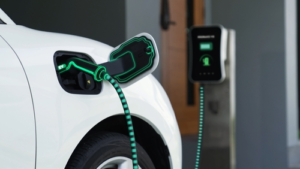
EV Charger Installation in Ellon: What Homeowners Need to Know
Ellon has grown quickly over the past two decades, and many homes across its newer estates already have modern consumer units and reasonably straightforward electrical layouts. That makes a lot of Ellon properties good candidates for EV charger installation, but it does not mean the job is automatic. There are still checks, choices, and costs worth understanding before you commit.
This guide walks through what is actually involved in fitting a home EV charger in Ellon, from the initial assessment through to what you can expect to pay.
Why Ellon’s Housing Stock Matters
Many Ellon properties, particularly on estates built from the 1990s onward, already have consumer units with reasonable spare capacity and modern protective devices. This is a genuine advantage compared with some of the older granite housing found elsewhere in Aberdeenshire, because it often means less preparatory electrical work is needed before the charger itself can go in.
That said, “newer” does not automatically mean “ready.” Some newer consumer units are still split load boards without full RCBO protection on every circuit, and some do not have a spare way available for a dedicated EV circuit. Every installation still needs a proper assessment rather than an assumption based on the age of the estate.
If you want a structured way to check your own home before booking, our related guide, is your Ellon home ready for an EV charger, walks through the five specific checks an electrician will carry out.
What Is Actually Involved in an EV Charger Installation
1. Initial Assessment
Before any quote is finalised, a competent installer needs to check your main fuse rating, the condition and capacity of your consumer unit, the route the cable will take from the board to the charging point, and your property’s earthing arrangement. This assessment also confirms whether Distribution Network Operator notification is required, which depends on the charger’s power rating and your local network capacity.
2. Choosing a Charger
Most homeowners choose a 7kW smart charger, which suits the vast majority of single phase domestic supplies and modern EVs. Smart chargers connect to an app, allow scheduled charging during cheaper overnight tariff periods, and in many cases integrate with home solar generation.
We are approved installers for several of the main charger brands, including Ohme, Myenergi Zappi, Andersen EV, and ICS, and we are also OZEV authorised, meaning we can process grant applications where a household is eligible. If you are trying to choose between brands, our comparison guide on Zappi vs Ohme vs Easee EV chargers covers the practical differences.
3. The Installation Itself
A typical domestic installation involves running a dedicated circuit from the consumer unit to the charger location, fitting appropriate RCBO protection for that circuit, installing the charger unit itself, and carrying out full testing before handover. Most straightforward domestic jobs are completed within a day.
4. Certification and Handover
You should receive an Electrical Installation Certificate confirming the work meets BS 7671, along with instructions on using the charger and its associated app. Keep this certificate with your other property documents, since it may be requested by insurers or when selling the property.
The OZEV Grant: What Ellon Homeowners Should Know
The government’s home charging grant scheme has changed substantially over the past few years. It no longer applies to homeowners with off street parking at a detached or semi detached house in the way it once did. Current eligibility is generally aimed at renters, flat owners, and landlords installing chargers for tenants, where a dedicated OZEV authorised installer processes the claim on the applicant’s behalf.
If you fall into an eligible category, the process works like this: you get a dated quote from an OZEV authorised installer, you apply through the relevant government platform, and once approved, the grant is deducted from your final invoice by the installer rather than paid to you directly. Eligibility criteria and grant values change periodically, so check current status on the UK government’s chargepoint grant guidance before assuming you qualify.
Because Faithful Spark is OZEV authorised, we can confirm your eligibility and handle the application as part of the installation process where applicable.
What It Costs in Ellon
EV charger installation starts from £900 plus VAT for a straightforward domestic job with a suitable consumer unit and a short cable run. This is a starting price rather than a fixed ceiling. The final cost depends on factors including:
- The distance and route between the consumer unit and the charging location.
- Whether the consumer unit needs upgrading before the charger circuit can be added safely.
- Whether the cable run requires chasing into walls, trunking, or underground ducting.
- The specific charger model chosen.
- Whether DNO notification and approval introduces any delay or additional work.
If your consumer unit needs upgrading first, that is a separate cost starting from £550 plus VAT for a full RCBO consumer unit upgrade. We explain why full RCBO boards, rather than older split load arrangements, are now considered best practice in our guide to consumer unit upgrades and full RCBO protection.
Smart Charger Features Worth Understanding
Most modern smart chargers offer scheduled charging, so you can set your car to charge overnight when electricity is cheaper under time of use tariffs. Many also offer solar integration, diverting excess solar generation into the car rather than exporting it to the grid at a lower rate. If you have solar panels or are considering them, our guide on the Zappi EV charger and solar panels explains how this works in practice, or see our full Zappi GLO review for a detailed look at one specific model.
What to Expect on Installation Day
A typical single day job in Ellon looks like this. The electrician arrives, confirms the agreed charger location, isolates the relevant circuit, runs the new cable, fits the charger and its associated RCBO protection at the consumer unit, tests the full installation, and demonstrates the app and charging schedule before leaving. You should be left with a working charger, a certificate, and a clear explanation of how to use it.
Battery Storage and Future Proofing
Some Ellon homeowners installing an EV charger are also considering home battery storage, either now or in a few years. If this applies to you, it is worth mentioning at the assessment stage, since some chargers integrate more easily with battery systems than others, and the electrical design of your installation can take this into account from the outset rather than requiring rework later.
Even if you are not planning battery storage immediately, choosing a charger with wider smart home integration, such as the Zappi range, keeps that option open without a second full installation down the line. Our detailed look at the Zappi GLO EV charger covers this in more depth.
Maintenance and Longevity
Home EV chargers are built to be left outside or in a garage for years with minimal attention, but a few simple habits help. Keep the charging socket cover closed when not in use to reduce dirt and moisture ingress. Avoid using excessive force when connecting or disconnecting the cable. And if you notice any error messages, unusual noises, or the unit failing to charge at the expected rate, get it checked rather than continuing to use it and hoping the issue resolves itself.
Most quality chargers carry a manufacturer’s warranty, typically three years as standard, so keep your installation paperwork and proof of purchase somewhere safe in case you need to make a claim.
Choosing an Installer
Not every electrician is approved to install every charger brand, and OZEV authorisation is a separate registration from general electrical qualifications. Before booking, ask whether the installer is specifically approved for the charger brand you want, and whether they are OZEV authorised if you believe you may be eligible for a grant. Checking NICEIC or SELECT registration on the relevant public register is also worthwhile, for the same reasons it matters with any electrical work. Our guide on why NICEIC approval matters explains this verification process, and the same logic applies regardless of which Aberdeenshire town you are in.
Common Questions From Ellon Homeowners
Do I need permission from my energy network to install a charger?
In most cases a notification to your Distribution Network Operator is required after installation, which your installer should handle as standard practice. Pre approval is occasionally needed for higher power installations or in areas with limited local network capacity.
Can I install a charger if I live in a new build?
Usually yes, and often more easily than in an older property, since the consumer unit and supply are typically modern. Some newer developments have specific requirements around external appearance or shared driveway access, which is worth checking with your installer.
How long does the whole process take from enquiry to installation?
For a straightforward domestic job, from initial enquiry to completed installation is often one to two weeks, depending on charger availability and any DNO notification requirements.
What if my consumer unit is old or does not have a spare way?
This needs to be addressed before the charger circuit can be added safely, usually through a consumer unit upgrade to a full RCBO board. This is a common finding during the initial assessment and should be flagged in your quote rather than discovered halfway through the job.
Comparing Ellon to Other Aberdeenshire Towns
Ellon’s relatively modern housing stock generally makes EV charger installation more straightforward than in some older Aberdeenshire towns, where granite construction and older wiring add complexity. That said, every property still needs its own assessment. A newer Ellon home with an outdated consumer unit installed a decade ago under older wiring practices can still need preparatory work, just as an older property might turn out to be perfectly ready if it has already had a recent consumer unit upgrade.
The right approach is always to assess the specific property rather than assume based on the general age of the surrounding estate or town.
Living With an EV Charger Day to Day
Once installed, most homeowners find using a home EV charger becomes routine within the first few weeks. Plugging in when you arrive home and letting the scheduled charging handle the rest, without needing to think about it further, is the typical pattern. The main adjustment for most people is remembering to plug in consistently rather than occasionally, since a charger only helps if it is actually used every time the car is parked at home.
For households that also drive longer distances regularly, understanding your charger’s maximum output and your vehicle’s onboard charger capacity helps set realistic expectations for how long a full charge actually takes overnight.
Insurance and Your EV Charger
Once your charger is installed, it is worth informing your home insurer, since some policies specifically ask about EV chargers or home electric vehicle equipment as a condition of cover. Keep your Electrical Installation Certificate on file, since insurers may request it if you ever need to make a claim connected to the charger or the electrical circuit it uses. This is a small administrative step that is easy to overlook once the excitement of a new charger has worn off, but it matters if you ever need to rely on your policy.
Final Checklist Before You Book
Before arranging your EV charger installation in Ellon, it helps to have a few things ready. Know roughly where you want the charger positioned and how far that is from your consumer unit. Check whether you might be eligible for the current OZEV grant based on your tenancy or ownership situation. Decide whether solar or battery integration is a current or future priority, so this can be factored into charger choice. And have your consumer unit accessible for the initial assessment, since this speeds up the whole process considerably.
Related Reading
For other Aberdeenshire towns, see our guides to EV charger installation in Aberdeen and EV charger installation in Fraserburgh. For Ellon specific services and to get a quote, visit our Ellon EV charger page. You can also see our full coverage area on the areas we cover page or get in touch through our contact page.
For official background on wiring standards referenced during EV charger installation, see the UK government guidance on vehicle charge point requirements and the NICEIC website for information on approved EV installer registration.